
Gonocephalum macleayi
Gonocephalum macleayi
Description
How to identify
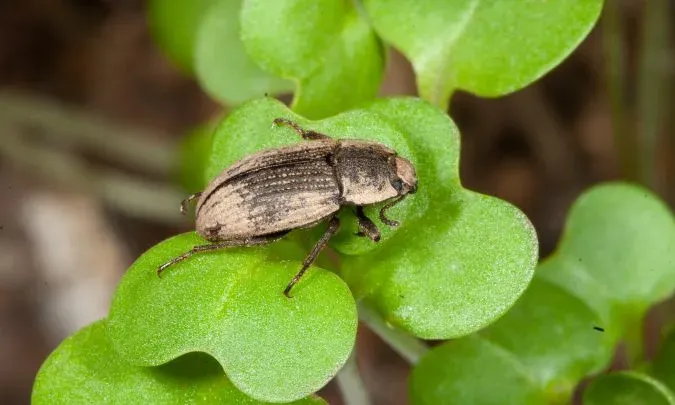
Gonocephalum macleayi is a species of beetle belonging to the Tenebrionidae family (darkling beetles). These insects are small to medium-sized, typically possessing a dark, dull, or slightly matte chitinous exoskeleton adapted for soil dwelling.
The body is dorso-ventrally flattened, allowing the beetle to navigate through soil crevices and underneath plant debris. The head and pronotum are often granular in texture, which serves as a critical morphological feature for identification within the genus.
The larvae of this pest are commonly referred to as "false wireworms." They exhibit a cylindrical body shape with hardened, brownish-yellow cuticles, which provides significant structural protection while they burrow through soil layers.
Adult beetles are generally nocturnal and cryptic, remaining hidden under soil clods or organic mulch during daylight hours to avoid desiccation and predators. This behavior makes visual scouting challenging for farmers and agronomists.
The life cycle is intimately linked to soil moisture and the presence of organic matter. Favorable conditions for population spikes include fields with high levels of decaying vegetation, which provides essential nutrition for early-stage larvae.
What it damages
The most severe damage is caused by the larvae, which live underground and feed on roots, subterranean stems, and germinating seeds. This feeding activity often results in stunted growth, patchiness, or total failure of seed emergence.
The range of affected crops is diverse, spanning cereals, vegetable crops, and legumes. The most vulnerable period is during the germination stage and early seedling establishment, as the plants lack sufficient root biomass to compensate for losses.
Adult beetles may also contribute to crop injury by feeding on above-ground plant parts. They may scrape leaf tissues or damage buds, particularly under dry conditions when alternative green vegetation is scarce.
High population densities can lead to significant yield losses. In extreme cases, farmers may be forced to replant crops if the initial stand is decimated by high larvae concentrations in the seedbed.
Furthermore, larval feeding creates entry points for soil-borne pathogens. This biological damage often leads to secondary infections such as root rots, which ultimately result in the wilting and death of the plant.
Control measures
Integrated Pest Management (IPM) is essential for controlling Gonocephalum macleayi. Deep plowing and mechanical soil tillage in the autumn help expose larvae to environmental stressors, effectively reducing their overwintering survival rates.
Seed treatment with systemic insecticides is a highly recommended practice for early-season protection. Providing a chemical barrier around the seed and the emerging roots significantly minimizes damage during the plant's most susceptible phase.
Weed control is a crucial component of long-term management. Since many weed species can act as a refuge for the beetle population, keeping field margins and fallow areas clean helps restrict the insect's habitat.
In cases of high pest pressure, applying soil-applied granular or liquid insecticides at the time of planting can provide localized protection. These treatments are often targeted at the root zone to deter larval feeding activity.
- Implementing diverse crop rotations to disrupt life cycles.
- Ensuring thorough soil preparation to destroy larval galleries.
- Utilizing prophylactic seed treatments with registered insecticides.
- Regular field scouting and monitoring to assess pest density.
Taxonomy
- Latin name
- Gonocephalum macleayi
- Order
- Coleoptera (beetles)
- Family
- Tenebrionidae
- EPPO code
- GONAMA
Discussion
No discussions yet — be the first.