
Gonocephalum
Gonocephalum
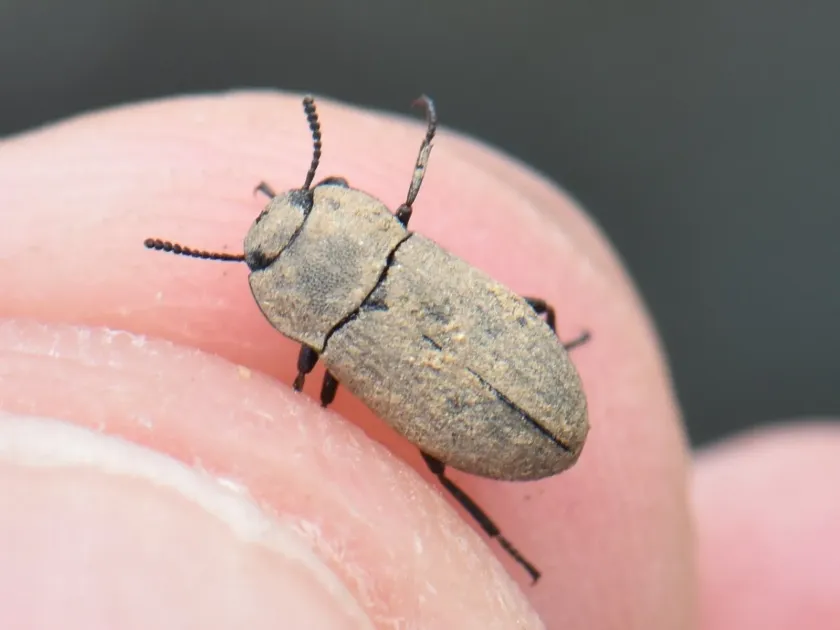
Description
How to identify
Beetles of the genus Gonocephalum belong to the family Tenebrionidae (darkling beetles) in the order Coleoptera. Adult beetles are typically matte, dark brown to black, reaching up to 10 mm in length.
The body is dorsoventrally flattened and covered with fine tubercles and short setae, giving it a rough, dull appearance. The pronotum is broad with serrated margins, and the elytra feature distinct longitudinal ridges.
The larvae, known as "false wireworms," possess an elongated, cylindrical body. They are yellowish-brown in color and have heavily sclerotized (hardened) integuments, which make them resistant to environmental stress.
A key characteristic of these larvae is their agility; they are equipped with three pairs of thoracic legs, allowing them to move rapidly through the soil profile while searching for food sources.
The life cycle follows a complete metamorphosis: egg, larva, pupa, and adult. Generally, there is one generation per year, although the duration of the cycle can vary significantly based on local temperature and moisture levels.
What it damages
Gonocephalum species are polyphagous pests that cause substantial damage to a wide variety of crops, including cereal grains, corn, sunflowers, and sugar beets.
Adult beetles primarily target seeds, seedlings, and young plants. They feed on cotyledons and terminal buds, often leading to total crop stand loss shortly after germination.
Larvae, which reside in the soil, feed on underground plant tissues. They chew on roots, sever the hypocotyl, and bore into germinating seeds, severely compromising the plant's structural integrity and nutrient uptake.
The damage is most pronounced in arid or semi-arid regions where stressed seedlings lack the vigor to compensate for root system destruction caused by the pest.
The economic threshold for intervention varies by crop density; however, significant infestations can result in stand thinning that reduces overall yields by 30% to 50%.
When it appears
Overwintering typically occurs in the adult stage within the soil or beneath crop residues, hedgerows, and field margins, where sufficient humidity levels are maintained.
In early spring, as temperatures rise, the overwintered adults emerge to the surface and begin feeding on early weeds and emerging crop seedlings.
Peak activity for adults usually occurs from late spring to early summer, which coincides with the mating season and the deposition of eggs directly into the upper soil layer.
Larvae emerge in early summer and continue their development throughout the warm season, feeding on root systems until the onset of autumn cooling initiates a decline in activity.
Pupation takes place underground, after which the newly emerged adult generation prepares for winter, thereby completing the annual cycle.
Signs of infestation
The primary symptom of an infestation is the appearance of patchy or missing stands, which is frequently mistaken for poor seed germination or soil-borne pathogens.
Close inspection of affected plants often reveals damaged cotyledons or small, jagged feeding holes in the stem near the soil line, eventually causing the plant to wilt and collapse.
To confirm the presence of larvae, soil samples should be taken around the root zones of wilting plants, where the distinct hard-bodied false wireworms can be manually extracted.
Adult feeding activity is often confirmed by their presence in the immediate vicinity of damaged seedlings, where they remain concealed under soil clods or surface debris during daylight hours.
- Sudden seedling death without obvious fungal disease symptoms.
- Presence of yellowish-brown, rigid-bodied larvae in the root zone.
- Visible damage to underground parts such as taproots or hypocotyls.
Control measures
Agronomic control relies heavily on crop rotation, which breaks the pest's cycle by disrupting the food supply and habitat availability in fields susceptible to infestation.
Deep autumn tillage is a highly effective practice, as it physically disturbs the soil, exposing larvae and adults to natural predators and desiccating them in the dry surface layers.
Rigorous weed management is crucial, as weeds serve as a secondary food source and shelter for the beetles during the early stages of the season before the main crop has emerged.
Chemical control usually involves seed treatments with systemic insecticides, which protect the seedling during the most vulnerable stage of development immediately after sowing.
In cases of high larval density, granular soil insecticides or the use of targeted insecticidal baits applied at night can be employed to reduce beetle populations effectively.
Taxonomy
- Latin name
- Gonocephalum
- Order
- Coleoptera (beetles)
- Family
- Tenebrionidae
- EPPO code
- GONASP
Discussion
No discussions yet — be the first.