
Brown flour mite
Gohieria fusca
Description
How to identify
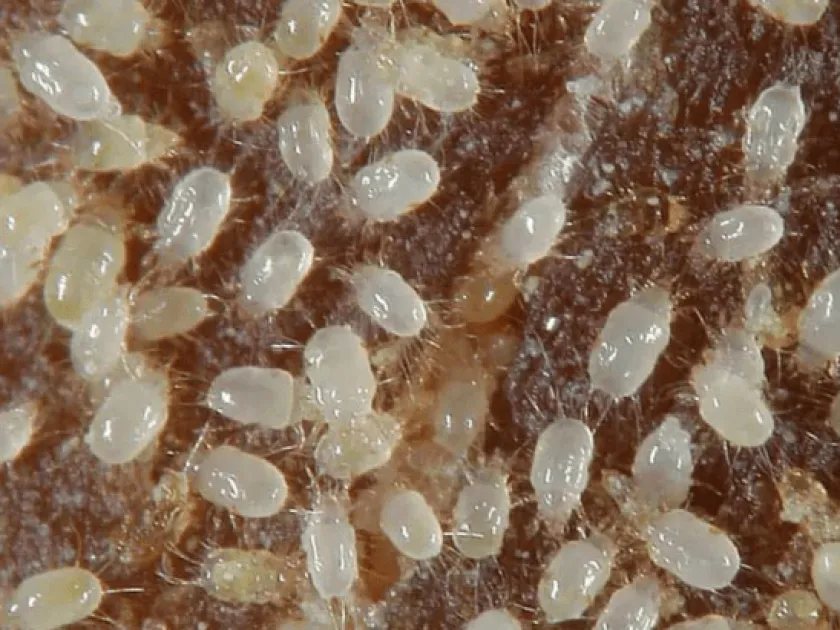
The brown flour mite (Gohieria fusca) is a member of the Acariformes order and the Glycyphagidae family. It is a tiny, brownish mite covered with long setae, which are specialized hairs used for sensing its environment.
Unlike other storage pests, this mite is specifically adapted to living within tightly packed bulk materials. Its morphology allows it to navigate through flour, grain dust, and stored seeds with high efficiency.
The life cycle of Gohieria fusca progresses through egg, larva, protonymph, deutonymph, and adult stages. Under harsh conditions, the mite can enter a hypopus stage, a quiescent phase that resists drying and starvation.
These mites thrive in environments where the relative humidity exceeds 65%. They are most active at temperatures ranging from +18 to +25 degrees Celsius, making grain storage facilities ideal habitats.
The reproduction rate of this pest is remarkably high. In optimal conditions, the transition from egg to adult can occur in less than two weeks, leading to massive population outbreaks in grain stores.
What it damages
The brown flour mite primarily infests stored grain, flour, cereal products, and animal feed. It causes significant losses by consuming the germ of the grain, which impacts seed germination and nutritional quality.
As the mites feed, they secrete substances that promote the growth of molds and fungi. This secondary infection significantly degrades the quality of the stored goods, rendering them toxic or unpalatable.
Infested products often develop a characteristic sweet, honey-like odor, which is a hallmark of mite presence. Furthermore, the accumulation of feces and shed skins contaminates the food supply.
In addition to cereals, this species can infest dried fruits, nuts, and pharmaceutical herbs. The damage leads to clumping of materials and loss of weight in the stored inventory.
Mite activity contributes to the heating of grain piles. This self-heating process creates a cycle that attracts other secondary pests and speeds up the degradation of the entire grain batch.
Signs of infestation
Early signs of infestation include the aforementioned sweet odor and the presence of a fine dust layer on the surface of the grain or flour. This dust is actually a mixture of mites and their debris.
If a small amount of infested material is spread on a flat surface, the movement of the mites can be detected by the naked eye. Microscopic examination is necessary to confirm the species identification.
A visible crust or clumping in the grain mass often indicates heavy infestation. These clumps are often held together by silk-like webbing or fungal growth associated with the mite colonies.
Stored seeds may show small puncture marks where the mites have fed on the embryo. Over time, the color of the grain shifts from bright to a dull, muted tone as the infestation progresses.
The presence of mite-damaged products is often linked to increased moisture content in the storage area, which facilitates the rapid expansion of the mite population throughout the bin.
Control measures
The most effective strategy for managing Gohieria fusca is moisture control. Keeping grain moisture levels below 14% prevents the mites from reproducing and essentially halts their activity.
Maintaining high sanitary standards is critical. This includes regularly cleaning up spills, dust, and old grain residues in storage facilities to deny the mites their food source.
Thermal treatment remains one of the best ways to eliminate mites from grain. Heating the product to above +50 degrees Celsius for a specific duration effectively kills all developmental stages.
In cases of severe infestation, fumigation with phosphine-based products is the standard procedure. This must be carried out by professionals to ensure the total eradication of the pest while maintaining safety.
- Maintain grain moisture below the critical threshold.
- Conduct regular facility sanitation and cleaning.
- Use active aeration to lower the temperature of grain piles.
- Inspect all incoming grain batches for signs of mite activity.
- Ensure airtight storage conditions for long-term grain stocks.
Taxonomy
- Latin name
- Gohieria fusca
- Order
- Mites
- Family
- Glycyphagidae
- EPPO code
- GOHIFU
Discussion
No discussions yet — be the first.