
Glycyphagus mite
Glycyphagus
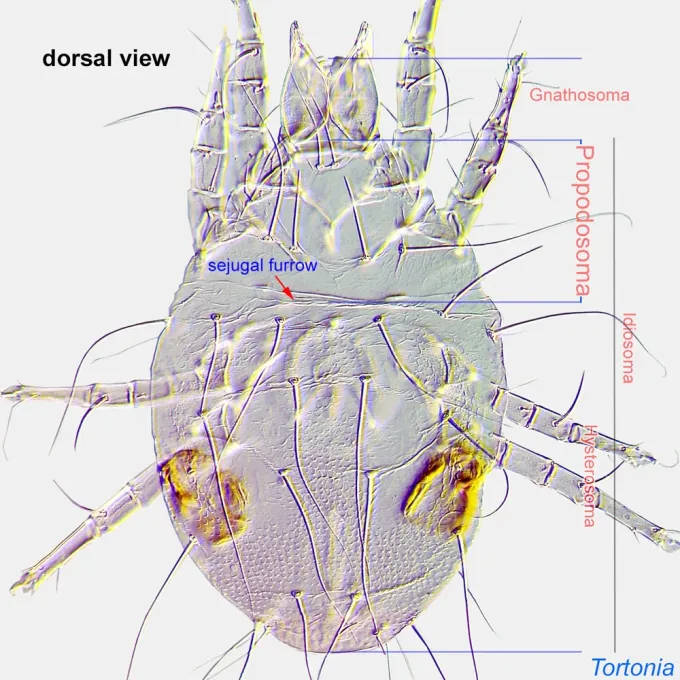
Description
How to identify
The Glycyphagus mite, often referred to as the sugar mite or stored product mite, belongs to the family Glycyphagidae. These are tiny, soft-bodied arthropods that thrive in environments rich in organic nutrients.
Under a microscope, these mites appear pale white or translucent. They are characterized by long, fine bristles (setae) on their bodies, which assist in their movement and environmental sensing within grain masses.
The life cycle of these mites is remarkably rapid. Depending on temperature and humidity, they can transition from egg to adult in less than two weeks, allowing populations to explode quickly.
A unique survival feature of this genus is the hypopus stage. This is a non-feeding, highly resistant nymphal stage that can withstand desiccation and various environmental stressors for extended periods.
They are frequently identified by their presence in high-humidity storage areas, often appearing as a fine, moving "dust" on the surface of grain or within crevices of storage facilities.
What it damages
These mites are significant pests in stored grains, oilseeds, and processed cereals. Their feeding activity primarily targets the embryo of the seed, effectively destroying the viability of the grain for future planting.
Besides direct consumption, the mites cause massive contamination. Their feces and cast-off skins introduce allergens and microorganisms, which can render the grain unsuitable for both human and animal consumption.
Infestations are often associated with mold growth. As the mites feed, they disrupt the integrity of the grain coat, facilitating the entry of fungi and leading to accelerated decay of the bulk product.
A major consequence of severe infestation is the phenomenon of heating. The metabolic heat generated by the mite colony raises the temperature of the grain, creating a cycle that further promotes mite reproduction.
In addition to grain, Glycyphagus mites are commonly found in dried fruits, cheese, and various stored goods, causing substantial economic losses through spoilage and degradation of quality standards.
Control measures
Preventive maintenance is the cornerstone of control. Keeping grain moisture content consistently below 13% is the most effective way to inhibit the development of these mites, as they require moisture to thrive.
Sanitation of storage facilities is critical. Removing dust and leftover debris from previous seasons denies the mites a food source and eliminates hidden pockets where they might survive between cycles.
Regular aeration of grain bins is essential. By controlling the temperature and moving air through the grain, managers can create an environment that is unfavorable for mite reproduction and prevents hot spots.
If an infestation is confirmed, chemical control via fumigation is often necessary. Using phosphine-based products in sealed environments ensures effective penetration into the bulk grain to kill all developmental stages.
Consistent monitoring using specialized traps and sampling techniques allows for early detection. Detecting an infestation before it reaches the entire volume of stored goods can save significantly on mitigation costs.
Taxonomy
- Latin name
- Glycyphagus
- Order
- Mites
- Family
- Glycyphagidae
- EPPO code
- GLYCSP
Discussion
No discussions yet — be the first.