
Goeldichironomus midge
Goeldichironomus carus
Description
How to identify
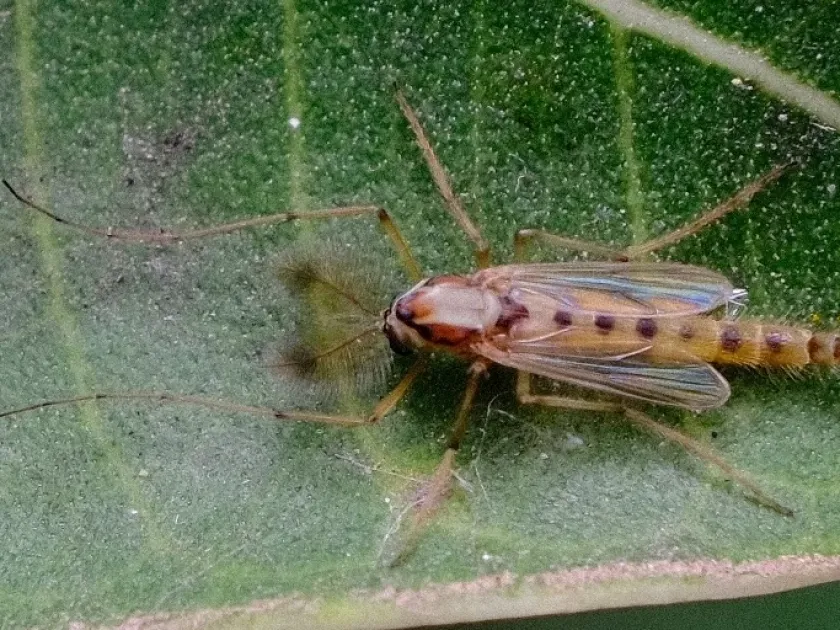
Goeldichironomus carus is a species of non-biting midge belonging to the family Chironomidae. Unlike mosquitoes, adult midges do not feed on blood and have a short lifespan dedicated primarily to reproduction.
The larvae, which are the stage that causes agricultural damage, are easily recognized by their vibrant red coloration. This color comes from hemoglobin, an adaptation that allows them to thrive in low-oxygen benthic environments.
The lifecycle consists of four stages: egg, four larval instars, pupa, and adult. The duration of these stages is highly temperature-dependent, often accelerating in warm climates and nutrient-rich waters.
These insects are highly adaptable and are frequently found in agricultural systems like rice paddies, as well as in urban drainage canals and artificial water bodies.
Identification often involves checking the sediment or soil interface for the characteristic silk-lined tubes that the larvae construct to live in and feed from.
What it damages
The primary agricultural impact of Goeldichironomus carus is observed in rice cultivation. Larvae feed on the roots and the base of young stems, leading to severe stand depletion.
In addition to rice, these midges can infest a variety of aquatic and semi-aquatic crops, especially those grown in hydroponic systems where the medium is constantly saturated.
By consuming roots, the larvae prevent the plants from absorbing essential nutrients and water, resulting in stunted growth, yellowing foliage, and eventual plant death.
These pests are particularly destructive during the early establishment phase of the crop, where even minor damage to the root system can cause significant yield losses.
Secondary infections often follow larval damage, as open wounds on the roots serve as entry points for waterborne fungi and bacterial pathogens, complicating the recovery of plants.
Signs of infestation
A major warning sign in the field is the sudden appearance of patchy or thinning plant populations, often accompanied by seedlings floating on the water surface.
Inspection of the root zone typically reveals the presence of small, red larvae protected by silken tubes constructed from debris and mud particles.
The presence of large clouds of adult midges emerging around the field at dusk serves as a clear signal for a high-density population that may lead to subsequent larval damage.
In hydroponic environments, one might notice unexpected deterioration of the root mats and the presence of small burrowing tunnels within the growing medium.
Root system analysis usually shows ragged edges or missing root tips, which are clear indications of invertebrate feeding activity in the rhizosphere.
Control measures
Water management is the most effective cultural control method. Periodic drainage of the paddy or growth medium can disrupt the larval lifecycle and cause mortality through desiccation.
Biological control agents, such as formulations of Bacillus thuringiensis israelensis, have been shown to be effective in reducing larval populations in water-logged environments.
Sanitation practices, including the removal of dense organic debris from irrigation channels, help eliminate the nutritional base required for larval development.
In greenhouse settings, fine mesh screening on ventilation points is recommended to prevent adult midges from entering the facility and laying eggs in the growth media.
Chemical intervention should be treated as a last resort, as the aquatic nature of the larvae makes them resistant to many standard pesticides while risking harm to the surrounding aquatic ecosystem.
Taxonomy
- Latin name
- Goeldichironomus carus
- Order
- Diptera (flies)
- Family
- Chironomidae
- EPPO code
- GOELCA
Discussion
No discussions yet — be the first.