
Glyphina
Glyphina
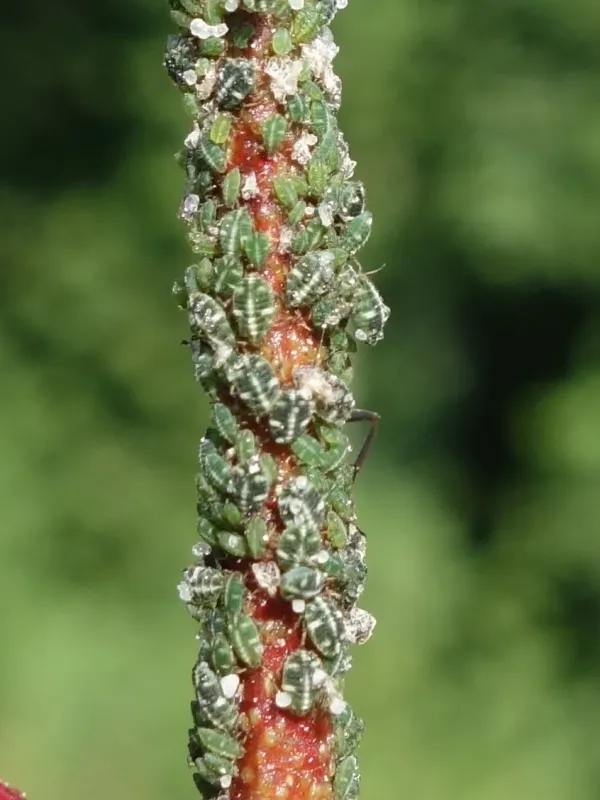
Description
How to identify
Glyphina is a genus of small insects belonging to the family Aphididae. These aphids are typically stout, often covered in a waxy secretion that gives them a grey or matte appearance.
Identification often requires careful inspection of the antennae and body processes under magnification. The life cycle involves both winged and wingless forms, which allows for both local infestation and tree-to-tree dispersal.
As members of the order Hemiptera (suborder Sternorrhyncha), they are specialized sap-suckers that rely on specific host trees for nutrition throughout the growing season.
Their life cycle typically includes an overwintering egg stage on the bark, followed by several nymphal stages that emerge during the spring season.
They are known for their cryptic behavior, as they often hide in crevices of the bark or at the base of needles, making early detection a significant challenge for foresters and gardeners.
What it damages
The primary hosts for Glyphina are conifer trees, most notably spruce (Picea species), where they thrive on the sap of young shoots and needles.
Feeding by these aphids weakens the host plant by depleting essential nutrients and causing systemic stress to the tree's vascular system.
A secondary consequence of their feeding is the production of honeydew, which creates a growth medium for sooty mold fungi, further reducing the tree's photosynthetic capacity.
Heavy infestations result in needle yellowing, premature needle drop, and stunted growth of the terminal shoots.
In cases of chronic infestation, weakened trees become highly susceptible to secondary pests, including wood-boring beetles, which can eventually lead to tree mortality.
Signs of infestation
The most visible sign of an infestation is the yellowing and browning of needles, often starting from the interior or lower parts of the canopy.
Close inspection of the needle bases reveals white, waxy debris or the insects themselves, which appear as greyish or dark spots.
A sooty, black fungal layer on the branches is a strong indicator of aphid presence, as the fungus grows on the honeydew secreted by the pests.
Increased ant activity on the trunks and branches of spruce trees often points to a thriving aphid colony, as ants tend these pests to harvest honeydew.
When disturbed, the colonies may show slight movement, but they often remain relatively stationary due to their feeding attachment to the host.
Control measures
Effective management begins with routine monitoring of vulnerable conifer stands, particularly during the spring bud-break and early summer.
Systemic insecticides are generally the most effective control measure, as they are absorbed by the plant and kill the aphids upon ingestion.
Maintaining tree health through proper irrigation and balanced fertilization helps the host tree better withstand aphid pressure.
Biological control, by encouraging natural predators such as lady beetles, lacewings, and parasitic wasps, plays a vital role in long-term suppression of populations.
- Application of systemic insecticides at the first sign of infestation.
- Sanitary pruning of heavily infested twigs to reduce the initial colony size.
- Encouraging natural predatory insect populations in the garden or nursery.
Taxonomy
- Latin name
- Glyphina
- Order
- Hemiptera (bugs, aphids, leafhoppers)
- Family
- Aphididae
- EPPO code
- GLYPSP
Discussion
No discussions yet — be the first.