
Cotton root aphid
Geopemphigus floccosus
Description
How to identify
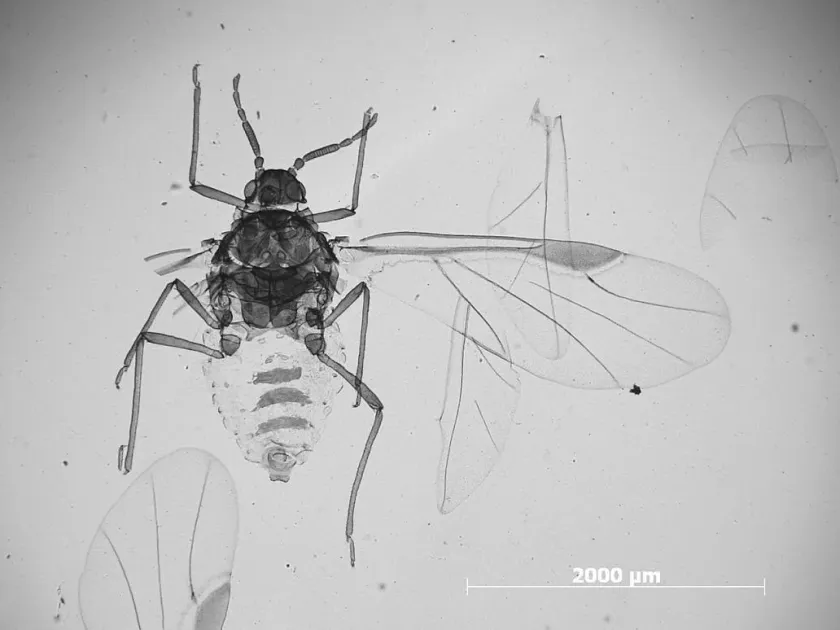
The cotton root aphid (Geopemphigus floccosus) is a member of the Pemphigidae family, specifically the Pemphiginae subfamily. This pest is characterized by its specialized underground life, inhabiting the root zones of plants.
Adults and nymphs of this species are often covered in white, waxy, fluff-like secretions. This protective layer acts as a barrier against soil moisture and protects the colonies from natural enemies.
The aphid life cycle involves alternating generations, including both wingless and winged morphs. Winged forms play a crucial role in the dispersal of the pest across vast agricultural areas during the growing season.
As a species with incomplete metamorphosis, the nymphs resemble the adults, differing mainly in size and sexual maturity. They live in underground galleries, feeding exclusively on the plant's root sap.
Agronomic identification is achieved by excavating the soil near the root crown. The presence of white, cottony masses clinging to the roots confirms the infestation of this specific aphid species.
What it damages
Cotton (Gossypium) is the primary host for this pest. By feeding on the root system, the aphid extracts essential sap, leading to a significant reduction in the plant's ability to uptake water and nutrients.
Beyond cotton, this aphid can also survive on the roots of various weeds. These weeds act as persistent reservoirs, allowing the pest to maintain its population density even when the main crop is absent.
The most severe damage occurs in young seedlings. Infestation at this stage often leads to stunted growth, reduced vigor, and in severe cases, the total death of the crop, resulting in significant yield loss.
Root damage caused by the aphid creates entry points for various soil-borne pathogens. This interaction often exacerbates plant health problems, leading to secondary infections like root rot or wilt disease.
Visually, infested fields show irregular patches of stunted plants. These areas often exhibit chlorosis, smaller leaves, and lower overall biomass compared to healthy sections of the plantation.
When it appears
The pest's activity cycle begins in the spring, triggered by rising soil temperatures. As the soil warms, the nymphs emerge and begin colonizing the roots of emerging cotton plants.
During the summer months, the population peaks as environmental conditions become optimal for reproduction. Humidity levels play a significant role in their activity, with moderate moisture facilitating rapid spread.
In autumn, as temperatures decrease, the aphid retreats to deeper soil layers. This behavior is a biological preparation for overwintering, typically in a nymphal or egg stage depending on the specific region.
Winged dispersal usually occurs mid-season when population pressure is high. These forms can be distributed by wind currents or through irrigation systems, potentially spreading the infestation across entire fields.
The irrigation system is a major factor in the seasonal dynamics. While water is essential for plant growth, improperly managed irrigation can facilitate the migration of aphids through the soil profiles.
Signs of infestation
One of the earliest warning signs is the midday wilting of plants. This indicates that the compromised root system is unable to sustain the transpiration demands of the plant under high solar radiation.
The presence of white, cotton-like secretions on the root system is a diagnostic sign. This material is often mistakenly identified as fungal mycelium by those unfamiliar with this aphid species.
Plants affected by the aphid show distinct chlorosis, where leaves turn yellow due to the inability to absorb essential micronutrients. This stress leads to reduced photosynthesis and overall metabolic decline.
Infested cotton plants often exhibit a delay in development, including reduced budding and early shedding of squares and bolls, which is a direct reflection of the stress caused by root feeding.
Root morphology often changes in infested plants, showing deformation, galls, or localized tissue necrosis where the aphid colonies have been actively feeding for extended periods.
Control measures
Effective management begins with rigorous crop rotation. By planting non-host crops, farmers can break the aphid's lifecycle and reduce the population pressure in the soil for future cotton seasons.
Deep plowing during the winter is a mechanical control measure that helps eliminate overwintering sites. Turning the soil exposes the aphids to adverse environmental conditions, significantly reducing their spring emergence.
Controlling weeds within and around the field is vital, as these plants serve as essential refuges for the aphids. Removing them disrupts the biological continuity of the pest population.
Chemical control is often centered on the use of systemic insecticides. These can be applied as seed treatments or through soil drenching, ensuring that the plant absorbs the chemical to combat the feeding aphids.
Integrated Pest Management (IPM) strategies emphasize monitoring and the preservation of natural predators, such as soil-dwelling predatory mites, which contribute to natural biological control of the aphid colonies.
Taxonomy
- Latin name
- Geopemphigus floccosus
- Order
- Hemiptera (bugs, aphids, leafhoppers)
- Family
- Aphididae
- EPPO code
- GEOEFL
Discussion
No discussions yet — be the first.