
Fullawaya braggii
Fullawaya braggii
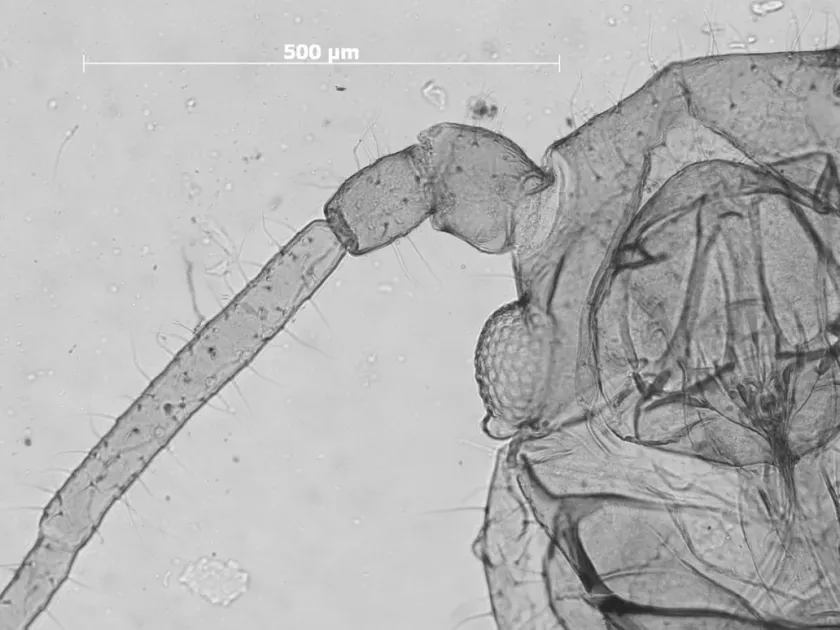
Description
How to identify
Fullawaya braggii is a species of aphid belonging to the family Aphididae. Like other members of this group, it possesses piercing-sucking mouthparts, which are perfectly adapted for extracting sap from host plants.
The adult insect typically has an oval-shaped body, with dimensions that vary depending on the life stage and environmental conditions. Their coloration ranges from pale green to brownish, providing excellent camouflage on leaves and stems.
The life cycle is closely linked to seasonal shifts, with eggs usually overwintering on the bark of host trees. As temperatures rise in spring, the population grows rapidly through asexual reproduction, leading to dense colonies.
Classified under the order Hemiptera, this species is known for its narrow host preference. Understanding its taxonomy helps agronomists tailor specific management programs for affected crops.
Effective identification involves inspecting the undersides of leaves and growing tips, where these aphids congregate in large numbers to feed during the most active periods of the growing season.
What it damages
The primary damage caused by Fullawaya braggii is the direct depletion of nutrients. Constant removal of plant sap weakens the host, leading to a significant decrease in vigor and vitality.
Damage symptoms typically include curled, deformed, or yellowing leaves and stunted shoot growth. Severe infestations can prevent young buds from developing properly and lead to fruit drop.
The insects produce a substance known as honeydew while feeding. This sticky secretion accumulates on the plant surface and acts as a substrate for sooty mold, which can block sunlight and hinder photosynthesis.
Furthermore, these aphids can serve as vectors for various plant viruses. Even small colonies can transmit pathogens that cause irreversible damage to the vascular system of the host plant.
In nurseries and young orchards, persistent attacks by this species can compromise the structural integrity of the trees, leading to economic losses and potential plant death if left untreated.
Signs of infestation
The most visible sign of an infestation is the curling and distortion of new growth. As the aphids feed, they extract moisture from the delicate tissues, causing the leaves to twist and wrinkle.
The presence of a sticky, shiny layer on leaves is a clear indicator of honeydew production. Ants are often seen patrolling these areas, as they actively tend to the aphids for their sugary secretions.
Sooty mold, appearing as a dark, black coating on leaves and branches, is a secondary symptom that develops on the honeydew. This indicates a high level of aphid activity over a prolonged period.
Close inspection usually reveals clustered groups of aphids on the soft tissue. You may also find shed exoskeletons left behind after molting, which confirms that the colony is actively growing.
Stunted growth or chlorosis in specific areas of the tree, while neighboring plants remain healthy, suggests that a colony of Fullawaya braggii has established itself in that location.
Control measures
Regular field scouting is the cornerstone of effective management. Detecting early colonies during spring allows for targeted interventions before the population reaches an economic threshold.
Cultural control methods, such as pruning heavily infested shoots and maintaining healthy orchard hygiene, significantly reduce the available habitat for the pests. Thinning the canopy improves airflow and light penetration.
When infestation levels are high, chemical intervention may be necessary. Systemic or contact insecticides should be applied, ensuring that rotation strategies are used to prevent the development of pesticide resistance.
Biological control, by encouraging beneficial insects like ladybugs, lacewings, and hoverflies, plays a vital role in maintaining aphid populations at non-damaging levels naturally.
Dormant season treatments, such as applying horticultural oils, can effectively target overwintering eggs, thereby drastically reducing the aphid population at the beginning of the following season.
Taxonomy
- Latin name
- Fullawaya braggii
- Order
- Hemiptera (bugs, aphids, leafhoppers)
- Family
- Aphididae
- EPPO code
- PLOABR
Discussion
No discussions yet — be the first.