
Franklinothrips
Franklinothrips
Description
How to identify
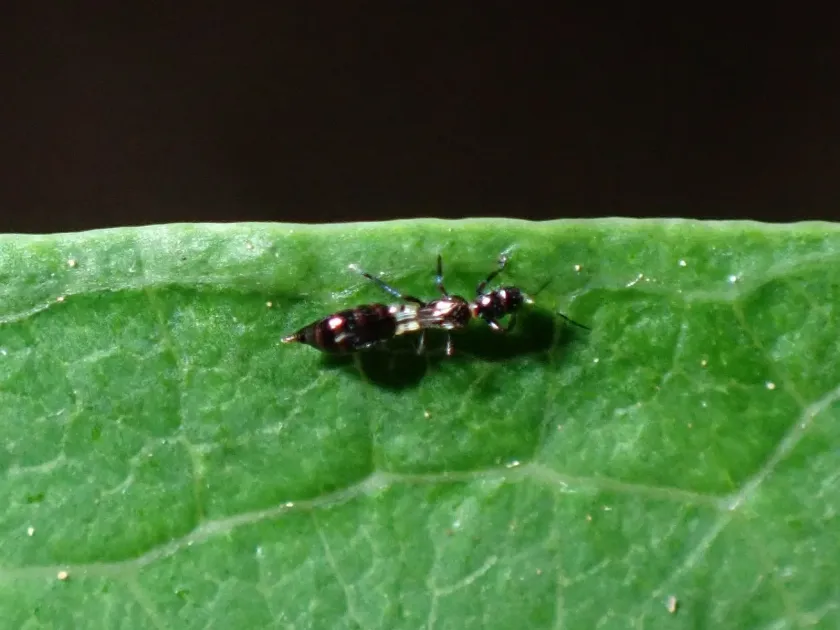
The genus Franklinothrips belongs to the order Thysanoptera and the family Aeolothripidae. These insects are distinguished by their unique morphology, often mimicking ants in both appearance and movement.
Adults typically feature elongated, dark-colored bodies with white bands, which serves as a defensive mechanism against potential predators in their environment.
Their life cycle includes egg, larval stages, prepupa, pupa, and adult. Development speed is highly dependent on ambient temperature and food availability.
They are characterized by predatory behavior in some species, though they are also known to damage plants through piercing-sucking feeding habits.
Microscopic examination of the mouthparts and wing structure is required to distinguish this genus from other common thrips found in greenhouse settings.
What it damages
Franklinothrips affects a variety of greenhouse crops, including ornamental plants, vegetables, and fruit-bearing cultivars.
Damage occurs when they puncture the epidermal layers of leaves and flowers to extract cellular fluids, leading to localized tissue death.
Feeding sites often manifest as necrotic spots or silver-colored streaks, which severely impact the aesthetic and commercial value of the affected plants.
Heavy infestations can result in stunted growth and total deformation of leaves, rendering the plant unable to perform efficient photosynthesis.
Transmission of plant viruses by thrips is a documented risk, further increasing the potential for crop loss in greenhouses.
When it appears
Under greenhouse conditions, Franklinothrips populations can persist and breed throughout the year, provided temperatures remain favorable.
Increased activity is usually observed during warm summer months, where the rapid metabolic rate allows for faster reproductive cycles.
In outdoor environments, they are most prevalent during the peak growing season when temperatures consistently exceed 20 degrees Celsius.
The absence of a cold winter period in modern greenhouses ensures that the life cycle continues uninterrupted, creating a high-pressure pest environment.
Strategic monitoring during seasonal transitions is crucial for preventing population explosions that often occur during spring planting.
Signs of infestation
Early symptoms include the appearance of tiny, light-colored spots on the foliage that eventually expand into larger blotches.
The presence of minute black specks of excrement on the leaf surface is a reliable indicator that the colony is actively feeding.
Buds often fail to develop properly, leading to deformed blossoms that show signs of spotting or necrotic edges.
- Chlorotic patches on leaves.
- Distorted and curled young foliage.
- Premature flower drop.
- Reduced vigor of the entire plant.
Monitoring the undersides of the leaves is critical, as that is where adults and larvae congregate during the initial stages of colonization.
Control measures
Integrated Pest Management (IPM) is the most effective approach for managing Franklinothrips in commercial agriculture.
Biological controls such as predatory mites and insects like Orius species are effective for long-term population suppression.
Blue sticky traps serve a dual purpose: they function as a monitoring tool for early detection and as a means of reducing adult population density.
Sanitation practices, including the removal of infested plant debris and weed hosts, significantly reduce the risk of re-infestation.
Chemical intervention should be reserved for outbreaks exceeding economic thresholds, with a focus on rotating active ingredients to prevent resistance development.
Taxonomy
- Latin name
- Franklinothrips
- Order
- Thrips
- Family
- Aeolothripidae
- EPPO code
- FRALSP
Discussion
No discussions yet — be the first.