
Root grain aphid
Forda trivialis
Description
How to identify
The root grain aphid (Forda trivialis) belongs to the family Pemphigidae. These insects are specialized pests that live exclusively underground, feeding on the roots of various cereal crops and wild grasses.
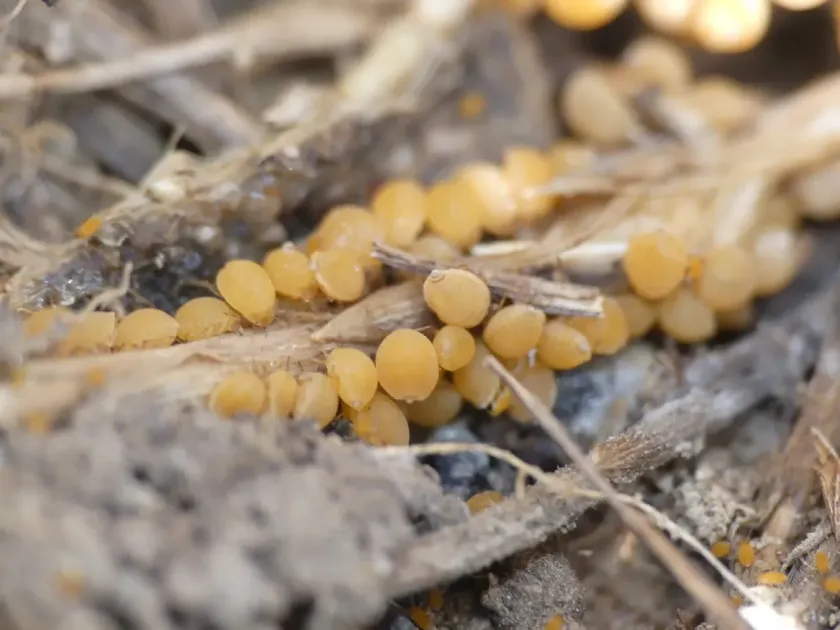
The adults are typically wingless, small, and have a pale yellow, greenish, or whitish body. They are often covered with a white waxy secretion that makes them appear as powdery clumps attached to the root system.
Their life cycle involves parthenogenesis, allowing for rapid population growth during the growing season. While wingless forms dominate, winged individuals may appear to facilitate the colonization of new areas.
Unlike foliar aphids, Forda trivialis are perfectly adapted to the soil environment. They possess specialized mouthparts designed to pierce root tissues and extract xylem and phloem sap efficiently.
Identification is challenging because they are hidden beneath the soil surface. Detecting them usually requires inspecting the roots of plants that show unexplained signs of stunted growth or chlorosis.
What it damages
This aphid species targets a variety of monocots, primarily wheat, barley, and oats. By feeding on the secondary roots and root crown, they disrupt the plant's ability to absorb water and essential nutrients.
Infested plants exhibit characteristic symptoms of stunted growth, leaf yellowing, and general lack of vigor. In severe cases, the entire plant may wilt and die during early developmental stages.
The physical damage to the root system is often accompanied by secondary impacts, such as reduced tillering and lower grain yields, as the plant directs energy to repair root damage rather than growth.
Plants weakened by Forda trivialis are significantly more susceptible to root rots and other soil-borne pathogens, which take advantage of the disrupted protective tissues.
The economic threshold is often low, as even moderate infestations during the spring growth flush can lead to significant yield gaps across the affected field.
When it appears
Activity typically begins in early spring as soil temperatures rise. The overwintering population, consisting of eggs or nymphs, becomes active and starts colonizing the root systems of available cereal hosts.
The peak of their activity occurs from late spring to early summer. During this timeframe, the aphid produces several generations, leading to the formation of dense, visible colonies on the roots.
During the hot summer months, the population may migrate deeper into the soil profile or survive on the roots of resilient perennial grasses in field margins, depending on soil moisture levels.
As autumn approaches, the aphid transitions into its wintering state. They may produce eggs that remain in the soil or in the root zones of weeds, ensuring the survival of the species until the next season.
Climate variables play a crucial role: a cool, dry spring is generally favorable for aphid proliferation as it slows down root system development, making the plants more vulnerable to sustained feeding.
Signs of infestation
One of the first signs of an infestation is the appearance of stunted, yellowish patches within the crop. These areas are often irregular and do not follow any clear soil fertility or moisture pattern.
Plants in the affected areas can be pulled out of the soil with remarkably little resistance because their root systems are partially decayed or poorly developed due to aphid damage.
A thick white or greyish waxy substance found on the roots upon digging them up is a definitive sign of Forda trivialis colonization.
The presence of ants is a strong indicator of root aphid activity. Many ant species engage in a mutualistic relationship with these aphids, protecting them and even moving them to healthier roots.
General lack of response to nitrogen fertilization in stunted patches is another symptom, suggesting that the problem is root-based rather than related to soil nutrient deficiency.
Control measures
Effective control starts with good cultural practices, such as deep plowing in the autumn, which destroys the overwintering sites of the pest and reduces the initial population in the spring.
Strict weed management is essential. Eliminating grassy weeds in and around fields removes the alternative hosts that keep the aphid population alive between crop seasons.
Crop rotation remains the most effective strategy to break the life cycle of the aphid. Replacing cereals with non-host crops like legumes or oilseeds significantly reduces aphid pressure.
The use of systemic insecticidal seed treatments is highly recommended in areas with a history of root aphid problems, as it provides early-season protection to the developing root system.
Monitoring fields closely during the early stages of plant development allows for the identification of hotspots, enabling localized management interventions before the infestation spreads across the entire field.
Taxonomy
- Latin name
- Forda trivialis
- Order
- Hemiptera (bugs, aphids, leafhoppers)
- Family
- Aphididae
- EPPO code
- FORDTR
Discussion
No discussions yet — be the first.