
Cereal root aphid
Forda formicaria
Description
How to identify
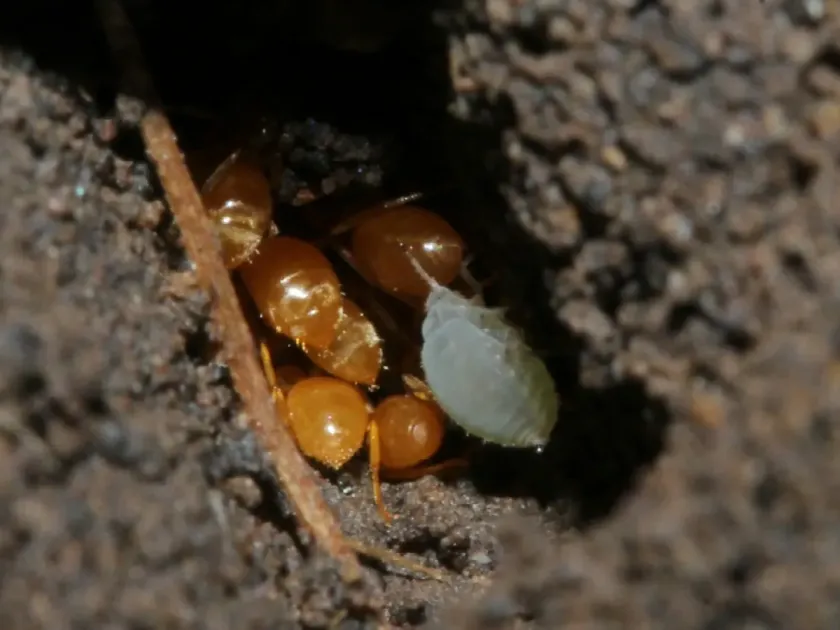
The cereal root aphid (Forda formicaria) is a member of the Aphididae family, known for its obligate subterranean lifestyle. It thrives in close association with ant colonies, which provide protection and transport.
The adults are small, oval-shaped insects typically measuring 2–3 mm in length. Their coloration ranges from pale yellow to whitish-green, often covered with a fine waxy powder to protect them from moisture in the soil environment.
Taxonomically, this species belongs to the order Hemiptera. They have evolved specialized mouthparts for piercing and sucking fluids from the roots of their host plants while remaining hidden underground.
Their life cycle involves asexual reproduction (parthenogenesis) for most of the season. This rapid reproductive strategy allows them to build dense colonies on the root systems of various grass species.
The relationship with ants is essential; the ants protect the aphids from natural enemies and often move them to fresher parts of the root system to ensure a constant supply of food for the colony.
What it damages
The primary hosts for Forda formicaria are cereal crops such as wheat, barley, and oats, alongside various wild grass species that serve as alternative hosts throughout the year.
By feeding on the roots, the aphids remove essential sap and nutrients, which significantly weakens the plant's physiological structure and limits its ability to absorb water and minerals.
Young cereal crops are at the highest risk, especially during the seedling and tillering stages. The damage manifests as stunted growth and a general decline in the plant's health.
In cases of heavy infestation, the root system becomes heavily colonized, leading to severe yellowing of the foliage, reduced tiller numbers, and potentially premature wilting during dry conditions.
The overall impact on agriculture is a marked reduction in biomass and grain yield, as the compromised root system cannot support the energy demands of grain filling and maturation.
When it appears
The activity of the cereal root aphid begins in early spring, synchronized with the warming of the soil and the emergence of ant activity, allowing the aphids to resume feeding.
During the summer, the population continues to expand as long as soil moisture is sufficient. However, periods of extreme heat and drought may force the colonies to move deeper into the soil.
The most intense feeding occurs during the rapid development phases of the crop, creating a significant stress period for the plant precisely when it needs optimal nutrient uptake.
As autumn approaches and temperatures drop, the aphid colonies retreat into deeper soil layers or ant nests to overwinter, ensuring the survival of the population until the following spring.
Environmental factors, particularly soil temperature and humidity, play a critical role in the seasonal distribution and population density of this subterranean pest.
Signs of infestation
Signs of infestation are often not visible until the damage to the root system is significant. Look for plants that appear chlorotic, have stunted development, or show uneven growth across the field.
When pulling an affected plant with a root ball, you may notice clusters of pale, sedentary aphids attached to the roots, often accompanied by ants showing aggressive behavior.
Patches of sparse or wilting plants in a field that otherwise looks healthy can indicate the presence of root aphid colonies beneath the soil surface.
The roots themselves may appear brittle, underdeveloped, or show symptoms of necrosis where the aphids have been feeding, reducing the overall anchoring ability of the plant.
Field observation should focus on areas near ant mounds, as these are primary hotspots for aphid colonization and subsequent plant health decline.
Control measures
Effective control requires a multi-faceted approach, starting with deep tillage in the autumn, which destroys ant nests and exposes the aphids to lethal cold temperatures.
Crop rotation is vital; avoiding monoculture of cereals helps break the cycle of the aphid by depriving it of its preferred hosts in the following season.
Maintaining clean fields by removing wild grasses and weeds is necessary, as these plants provide a reservoir for the aphids to persist and multiply during fallow periods.
Seed treatment with systemic insecticides is the most effective proactive measure, providing young plants with a period of protection during their most vulnerable developmental stages.
- Deep plowing to disrupt soil-dwelling colonies.
- Strategic crop rotation to manage pest populations.
- Application of seed-applied insecticides for early-stage protection.
Taxonomy
- Latin name
- Forda formicaria
- Order
- Hemiptera (bugs, aphids, leafhoppers)
- Family
- Aphididae
- EPPO code
- FORDFO
Discussion
No discussions yet — be the first.