
Fieberiella
Fieberiella
Description
How to identify
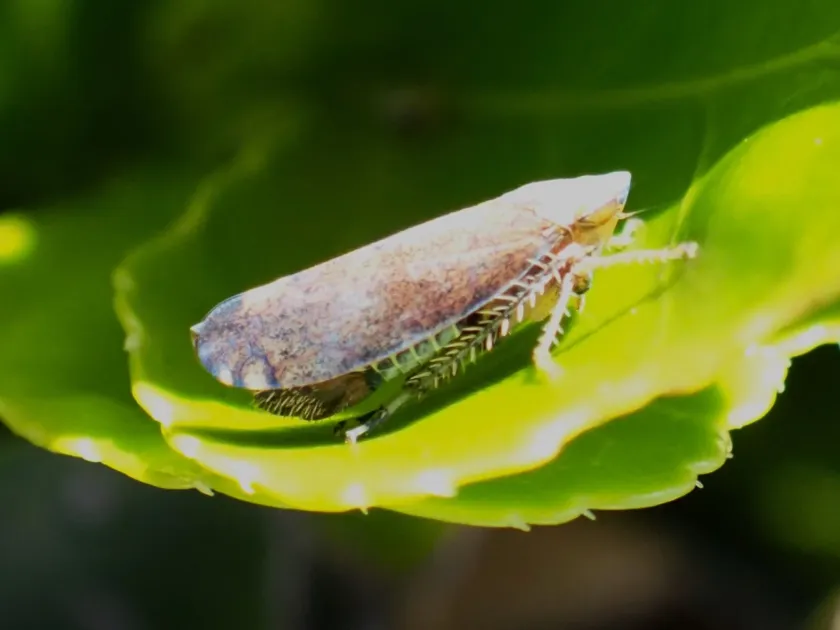
Fieberiella (Fieberiella florii) is a genus of leafhoppers belonging to the Cicadellidae family. These insects are relatively small, typically measuring 5 to 6 millimeters in length. Their body shape is elongated, and their coloration usually ranges from light brown to yellowish, often marked with dark speckles that provide camouflage against tree bark and leaf surfaces.
The head of the Fieberiella is distinctively wedge-shaped, an adaptation that allows it to feed efficiently on plant sap. Nymphs closely resemble the adults in appearance but are smaller and lack fully developed wings. They are extremely agile and often reside on the undersides of leaves, making them difficult to spot without close inspection.
These leafhoppers are highly capable of jumping, which is their primary defense mechanism against predators. A sudden movement or disturbance will cause the insect to jump away, effectively relocating to neighboring branches or plants. This high level of mobility contributes to their rapid spread across orchards and gardens.
The life cycle typically involves one generation per year in temperate climates. They overwinter in the egg stage, with females depositing their eggs beneath the epidermis of young plant shoots. In the spring, nymphs emerge and begin their life cycle, passing through several instars before reaching adulthood and starting the reproductive phase.
Because they are small and lead a somewhat cryptic lifestyle within the canopy, detection can be challenging. Agronomists often rely on monitoring tools, such as yellow sticky traps, to identify the presence of these pests before they reach damaging population levels, which is crucial for effective disease management.
What it damages
Fieberiella is known to be a polyphagous pest, meaning it feeds on a variety of agricultural and ornamental plants. It is particularly notorious in orchards, affecting pome fruits like apples and pears. Additionally, it can infest shrubs of the Rosaceae family and various broad-leaved trees, where it drains nutrients and disrupts physiological processes.
The direct damage is caused by the extraction of cellular sap from the plant tissues. As the insects feed on young shoots and leaves, they damage the vascular system, leading to stunted growth, leaf deformation, and a reduction in overall fruit quality. In severe cases, the vitality of the plant is significantly impaired, leading to diminished yields.
The most severe impact of Fieberiella is its role as a vector for phytoplasmas. These microscopic pathogens are responsible for debilitating diseases, such as apple proliferation, which can devastate entire orchards. The insect transmits the pathogen while feeding, making it a critical threat to agricultural production even when the population density is low.
Plants infected by the diseases carried by Fieberiella exhibit various symptoms, including "witches' broom" growth, yellowing of leaves, and the production of undersized or malformed fruit. Once a plant is infected with a phytoplasma disease, it usually cannot be cured, and its productivity declines until the plant eventually dies.
In commercial agriculture, the presence of this leafhopper necessitates strict quarantine and pest management protocols. Because the spread of infection is closely linked to the insect's activity, the economic threshold for intervention is low, requiring immediate action to prevent the loss of long-term investments in orchard trees.
Control measures
Effective management of Fieberiella requires a multi-faceted approach, incorporating both chemical and biological control strategies. Systemic insecticides are the most common chemical solution, as they effectively reach the leafhoppers through the plant sap they ingest. Timely applications during the nymph development stage are essential for maximum impact.
Integrated Pest Management (IPM) programs emphasize the use of yellow sticky traps to monitor the migration and population density of the insects. By determining the peak activity times, growers can apply treatments only when necessary, which reduces the overall use of chemicals and preserves the beneficial insects within the ecosystem.
Cultural control practices are fundamental in minimizing the impact of the pest. Maintaining clean orchards by controlling weed growth around tree trunks reduces the alternative host sites where the insects can thrive. Furthermore, pruning and removing infested branches helps reduce the overwintering reservoir of eggs, thereby limiting the population in the following season.
Biological control, involving the protection and encouragement of natural enemies such as spiders and parasitic wasps, plays a vital role in suppressing leafhopper populations. Reducing the use of broad-spectrum insecticides allows these natural predators to thrive, contributing to a more balanced and sustainable orchard environment.
In cases where phytoplasma infection is confirmed, infected trees must be removed entirely and destroyed to prevent further transmission. Constant vigilance and strict adherence to hygiene standards are required to ensure that Fieberiella does not compromise the health and longevity of the plantings, ultimately securing the long-term success of the orchard.
Taxonomy
- Latin name
- Fieberiella
- Order
- Hemiptera (bugs, aphids, leafhoppers)
- Family
- Cicadellidae
- EPPO code
- FIEBSP
Discussion
No discussions yet — be the first.