
Ferussacia
Ferussacia follicula
Description
How to identify
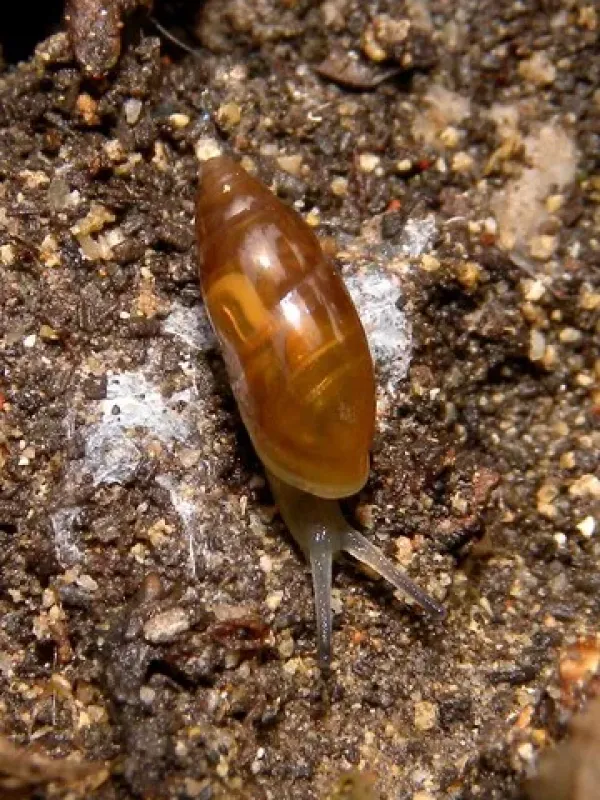
Ferussacia is a small land-dwelling gastropod mollusk belonging to the family Ferussaciidae. The shell of an adult individual is elongated and oval-shaped, reaching 5–7 mm in length, and is characterized by a shiny, nearly transparent surface with a yellowish-horn color.
Biologically, this species belongs to the order of pulmonate snails. Unlike common garden slugs, this pest possesses a fully developed shell that protects its soft tissues from desiccation, allowing it to inhabit the upper layers of the soil.
The mollusk's body follows the typical structure of its family: a short foot and a head with two pairs of tentacles. The eyes are located on the upper, longer pair of tentacles, which the creature actively uses to navigate and search for food during nighttime.
Reproduction occurs sexually, and like most land pulmonate mollusks, they are hermaphrodites. Optimal conditions for their development include high humidity in both air and soil, as well as the presence of significant plant debris.
Their primary habitat is the humus-rich layer of the soil, where they find refuge from direct sunlight. They are frequently found in greenhouses and nurseries, where a stable microclimate favors their rapid multiplication.
What it damages
This species of mollusk poses a threat to a wide range of agricultural crops, including vegetables, berries, and ornamental plants. Seedlings are particularly vulnerable, as the mollusks consume the delicate leaf tissues.
Transplants and young plants in greenhouses are especially prone to damage from Ferussacia. The feeding occurs primarily at night, while during the day, the pests conceal themselves under soil clods or within garden waste.
Beyond direct defoliation, the pest can damage the root system and underground portions of the stems. This leads to weakened plants, stunted growth, and in cases of severe infestation, the complete loss of the crop.
The pest is often found on crops belonging to the Solanaceae and Brassicaceae families. The damaged tissues often serve as entry points for fungal and bacterial pathogens, leading to secondary rotting.
In greenhouse environments, Ferussacia can thrive throughout the year, making it a persistent danger for professional growers. Constant monitoring of plant health is essential to detect the presence of these mollusks early.
Signs of infestation
The first sign of infestation is the appearance of characteristic, irregular holes on the leaves of seedlings. The edges of these holes are often smooth, as the mollusk scrapes off plant tissues using its specialized organ, the radula.
Traces of silvery, dried mucus on the surface of leaves and stems are common indicators of land mollusk activity. This sign helps distinguish their damage from that caused by insects.
During the day, inspecting the soil around the base of the plant may reveal the shells of the mollusks themselves. They tend to congregate in high-humidity areas, under cover materials, or within gaps between soil clods.
Stunted development and sudden wilting of seedlings, without visible signs of fungal root rot, may indicate hidden feeding by Ferussacia on the underground stems.
The presence of excrement in the form of small, dark granules on the substrate surface or on leaves further confirms the active presence of these mollusks in the area.
Control measures
The primary control method involves cultural practices: regular soil cultivation, weeding, and the removal of plant debris. This deprives the pests of shelter and exposes them to desiccation, which is fatal for them.
Implementing barriers using mulching materials such as wood ash, lime, or crushed eggshells around plants creates unfavorable conditions for the movement of these mollusks.
Biological control includes encouraging natural predators such as hedgehogs, toads, predatory beetles, and birds. Providing a hospitable environment for these animals helps keep the pest population at manageable levels.
In cases of widespread infestation, the use of iron phosphate-based molluscicides is recommended. These treatments are generally considered safe for pets and beneficial insects when applied correctly according to instructions.
Systematic manual collection during evening hours, aided by light traps or baits such as water-soaked wooden boards, serves as an effective supplement to an integrated pest management system.
Taxonomy
- Latin name
- Ferussacia follicula
- Order
- Molluscs
- Family
- Ferussaciidae
- EPPO code
- FERUFO
Discussion
No discussions yet — be the first.