
Cecilioides acicula
Cecilioides acicula
Description
How to identify
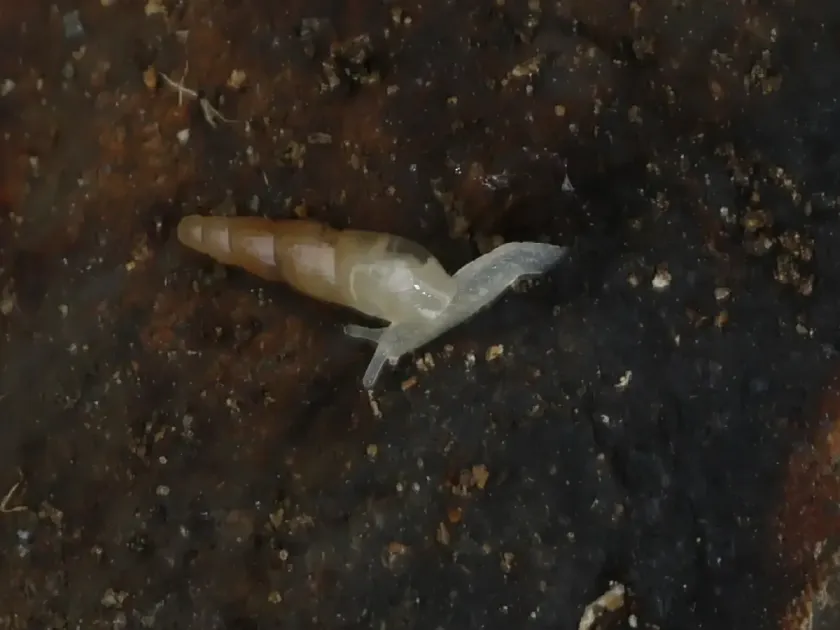
Cecilioides acicula is a minute subterranean land snail belonging to the Ferussaciidae family. It is easily recognized by its distinct needle-like or spindle-shaped shell, which is translucent, pale, and typically measures between 4 and 5 millimeters in length.
This species spends its entire life cycle underground, rarely surfacing. Its body lacks pigmentation due to its dark habitat, allowing it to navigate through soil pores, cracks, and subterranean voids with minimal effort.
Classified under the order Stylommatophora, this snail is perfectly adapted for life within the soil profile. Its fragile shell and elongated shape are evolutionary traits designed for efficient movement in loose or moist soil substrates.
Reproduction occurs within the soil where eggs are laid in small clusters. The population density depends heavily on soil moisture levels, soil texture, and the availability of organic matter or live root tissues for consumption.
Due to its cryptic nature and tiny size, this snail often goes undetected until significant crop damage has occurred, making it a challenging pest for both field crops and greenhouse horticulture.
What it damages
The snail primarily feeds on the root systems of various agricultural crops, including carrots, beets, potatoes, and other vegetable plants. It uses its radula to create small tunnels and feeding scars on the surface of roots.
Mechanical damage caused by feeding weakens the plant, reducing its ability to absorb water and nutrients. This leads to stunted growth, yellowing foliage, and in severe cases, the death of young seedlings.
Feeding sites serve as entry points for various soil-borne pathogens, including bacteria and fungi, leading to severe root rot. This significantly reduces the marketability and storage shelf-life of the affected root crops.
In greenhouse environments, the impact is magnified due to the absence of natural predators and consistently optimal moisture conditions, allowing the snail population to flourish and potentially cause widespread damage.
- Significant reduction in root crop yield and market value.
- Increased incidence of secondary root rots and fungal infections.
- Reduced vigor and delayed development of vegetable crops.
Signs of infestation
The most common sign of infestation is unexplained wilting of plants despite adequate soil moisture. This often indicates damage to the root system that prevents efficient water uptake.
Upon harvest, inspection of root crops reveals characteristic small, round holes or shallow excavations on the root surface. These blemishes are often surrounded by discolored tissue due to secondary infection.
During soil examination or cultivation, empty or live shells of the snails may be found, appearing as small, shiny, needle-like objects stuck to the roots or dispersed in the immediate soil vicinity.
Snails are frequently found in moist, calcium-rich soil areas, which are essential for their shell formation. Their presence is often correlated with areas of the garden that maintain high moisture levels.
Advanced signs may include stunted, uneven crop emergence in the field, as young plants struggle to establish roots in soil zones heavily infested with these mollusks.
Control measures
Cultural control practices, such as frequent and deep tillage, are effective as they physically disturb the snail's underground habitat and expose them to desiccation and predators on the surface.
Application of molluscicides, specifically those labeled for soil use (such as iron phosphate or metaldehyde-based baits), can help manage high populations. Application timing should coincide with active periods of the pest.
Crop rotation is recommended to break the cycle of infestation. Rotating out of susceptible root crops can significantly lower the local population of the pest over several growing seasons.
Managing soil moisture levels is crucial. Avoiding excessive irrigation and improving soil drainage can create a less hospitable environment for the snails, limiting their reproductive success and movement.
Biological control using entomopathogenic nematodes or natural predators may offer a sustainable management alternative, as these organisms can navigate soil pores to hunt and suppress the snail population effectively.
Taxonomy
- Latin name
- Cecilioides acicula
- Order
- Molluscs
- Family
- Ferussaciidae
- EPPO code
- CECLAC
Discussion
No discussions yet — be the first.