
Pine aphid Eulachnus tuberculostemmatus
Eulachnus tuberculostemmatus
Description
How to identify
The pine aphid Eulachnus tuberculostemmatus is a specialized species belonging to the family Aphididae, known for feeding exclusively on pine tree species.
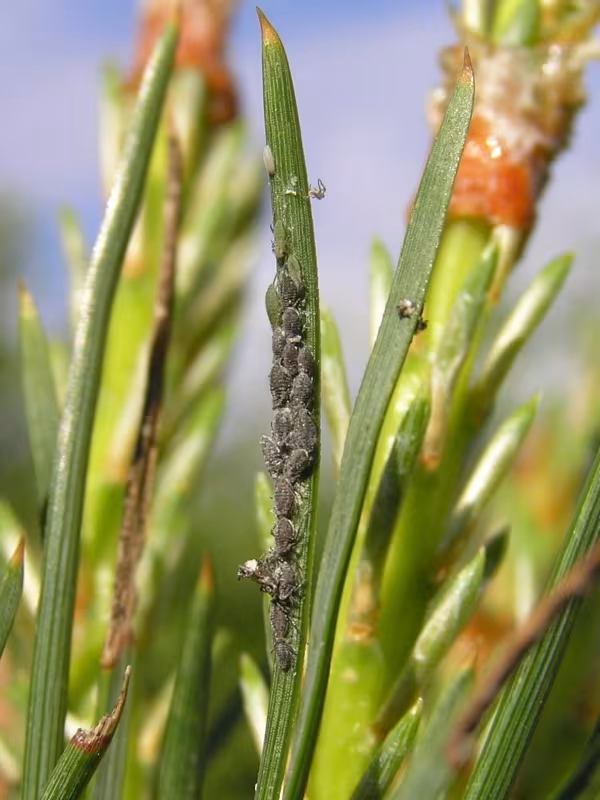
These aphids are relatively small, often elongated in shape, and characterized by fine hairs covering their body, which helps them remain attached to needles.
Their coloration ranges from light green to brownish, providing excellent camouflage against the pine foliage, making them difficult to spot during routine inspections.
The life cycle involves parthenogenetic reproduction, which allows colonies to proliferate rapidly when environmental conditions are optimal for growth.
Overwintering occurs primarily in the egg stage, with eggs laid near the base of the needles, ensuring the survival of the species through harsh winter conditions.
What it damages
The primary hosts for this pest are various pine species (Pinus), particularly affecting younger trees in plantations, nurseries, and ornamental urban landscapes.
By feeding on the sap of pine needles, the aphids disrupt the physiological processes of the tree, leading to a loss of essential nutrients.
Heavy infestations can lead to significant needle yellowing and premature needle drop, which detracts from the tree's health and aesthetic value.
The honeydew secreted by the aphids serves as a medium for the growth of sooty mold, which covers the needles and further inhibits photosynthesis.
Repeated or severe infestations weaken the tree, increasing its susceptibility to secondary attacks by wood-boring insects and various environmental stressors.
When it appears
Activity typically commences in early spring as soon as temperatures rise consistently above 5 to 10 degrees Celsius, triggering the hatching of overwintered eggs.
The peak population density usually occurs in late spring and early summer, matching the period of rapid needle elongation in young pine trees.
While activity levels may decrease during the heat of mid-summer, the population can remain persistent if the tree remains under physiological stress.
As autumn approaches, the cycle shifts towards the production of overwintering generations and egg laying to ensure the survival of the species.
Environmental factors such as rainfall and humidity play a critical role in determining the severity of aphid outbreaks in any given year.
Signs of infestation
The most reliable sign of an infestation is the presence of small, slender aphids lined up neatly along the underside of the needles.
The presence of a sticky, shiny residue on the foliage is a key indicator of honeydew production, which is a byproduct of aphid feeding.
Black, powdery soot-like patches on the needles indicate the development of sooty mold, which grows on top of the aphid honeydew.
Observable yellowing of needles starting from the tips and progressing towards the base often signals that the infestation has been present for some time.
Increased ant activity around the branches is often a strong indicator, as ants are known to tend to aphids to harvest the sugary honeydew they produce.
Control measures
Systemic insecticides are the most effective means of controlling Eulachnus tuberculostemmatus, as they are absorbed by the plant and kill aphids upon feeding.
For contact insecticides to be effective, thorough application to the undersides of the needles is necessary to ensure the chemicals reach the aphid colonies.
- Routine monitoring of nursery stock during the spring and early summer.
- Encouraging biological control agents such as ladybugs and lacewing larvae.
- Maintaining tree vigor through proper irrigation and nutrient management.
- Removing severely infested branches in small-scale plantings to reduce pressure.
- Using horticultural soaps or oils to physically disrupt the pest in early stages.
Integrated pest management strategies focusing on early detection and targeted treatments help minimize damage while preserving beneficial insect populations in the area.
Taxonomy
- Latin name
- Eulachnus tuberculostemmatus
- Order
- Hemiptera (bugs, aphids, leafhoppers)
- Family
- Aphididae
- EPPO code
- EULATU
Discussion
No discussions yet — be the first.