
Pine needle aphid
Eulachnus agilis
Description
How to identify
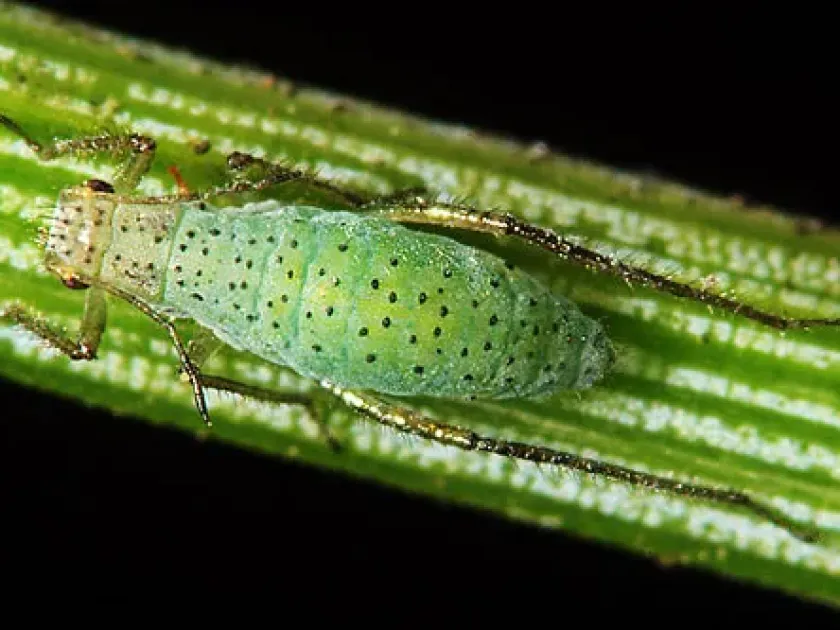
The pine needle aphid belongs to the order Hemiptera and the family Aphididae. It is a small insect characterized by an elongated body, typically colored in shades of yellow, green, or brown, which provides excellent camouflage among pine needles.
Adults can be either winged or wingless, allowing the species to disperse efficiently across pine plantations. The species Eulachnus agilis is known for its high mobility, quickly scurrying along needles when disturbed by external factors.
These insects possess highly developed sensory organs that allow them to locate the most nutritious areas on young shoots and needles. Nymphs resemble adults in appearance but are smaller and lack fully developed wings.
Reproduction is primarily parthenogenetic, enabling a single female to establish large colonies in a short period. The pest overwinters mainly in the egg stage, with eggs typically laid on needles from the previous year.
Identifying this pest can be difficult due to its cryptic nature and camouflaging coloration. Often, the presence of the aphid is detected only through indirect signs, such as the activity of ants or the appearance of honeydew.
What it damages
The primary hosts for this aphid are various species of pine, including Scots pine, Eastern white pine, and other introduced conifers. The pest feeds by extracting cellular sap directly from the needles.
Young trees in nurseries, forests, and ornamental gardens suffer the most significant damage. Affected trees may lose their aesthetic appeal, which is particularly critical for landscape maintenance and nursery production.
Feeding causes significant disruption to the photosynthesis process. This leads to premature yellowing, drying, and shedding of needles, which severely weakens the tree's overall vigor and resistance to environmental stress.
Damaged needles become susceptible to secondary infections, including fungal pathogens. The honeydew secreted by aphids serves as a substrate for sooty mold, which further impairs the tree's health by blocking sunlight.
Prolonged infestation results in reduced annual shoot growth. In severe cases, particularly among young seedlings, the infestation can lead to total tree death if left unmanaged over several growing seasons.
When it appears
Activity begins in early spring as temperatures rise, triggering the hatching of nymphs from overwintered eggs. These nymphs immediately start feeding on the emerging and existing needles.
The peak of reproduction and population density typically occurs during late spring and early summer, when environmental conditions are optimal for the rapid development of aphid colonies.
Population surges are often correlated with drought periods, as water-stressed trees become more vulnerable to aphid feeding. While extreme summer heat may temporarily slow activity, populations often rebound as temperatures moderate.
Autumn marks the transition to the sexual generation, which is responsible for laying overwintering eggs. This stage ensures the survival of the population until the following spring.
Continuous monitoring is essential throughout the growing season, starting from bud burst. Early detection allows for timely interventions, preventing the population from reaching destructive levels.
Signs of infestation
The most noticeable sign of infestation is the yellowing or browning of needles. Affected needles may appear shriveled and often fall off prematurely when branches are gently shaken.
The presence of ants on the trunk and branches is a strong indicator of aphid activity. Ants aggressively protect these colonies to feed on the honeydew produced by the aphids.
A sticky residue known as honeydew on the needles is a critical diagnostic sign. Over time, this substance becomes covered with a black, powdery coating known as sooty mold.
Careful inspection of the underside of needles often reveals colonies of small insects. They tend to line up along the central vein of the needle, making them difficult to spot at a quick glance.
Deformation and curling of young shoots are also potential indicators of high infestation levels. These symptoms highlight that the aphids are focusing their feeding on the most actively growing parts of the tree.
Control measures
Mechanical control involves pruning and disposing of heavily infested branches in the early stages of an outbreak. Proper disposal is essential to prevent the spread of the pest to healthy parts of the tree or neighboring plants.
Biological control methods focus on encouraging natural predators such as lady beetles, lacewings, and predatory bugs. Maintaining a balanced ecosystem in the garden helps naturally suppress aphid populations.
Chemical control is applied when infestation levels exceed the economic threshold. Systemic insecticides are highly effective as they are absorbed by the plant and ingested by the aphids during feeding.
Always follow label rates and ensure applications are made during calm weather. Thorough coverage of the canopy is necessary to ensure the insecticide comes into direct contact with the aphid colonies.
Good cultural practices, such as adequate irrigation and balanced fertilization, build tree resilience. A healthy, vigorous tree is much better equipped to withstand aphid attacks and recover from damage.
Taxonomy
- Latin name
- Eulachnus agilis
- Order
- Hemiptera (bugs, aphids, leafhoppers)
- Family
- Aphididae
- EPPO code
- EULAAG
Discussion
No discussions yet — be the first.