
Birch aphid
Euceraphis punctipennis
Description
How to identify
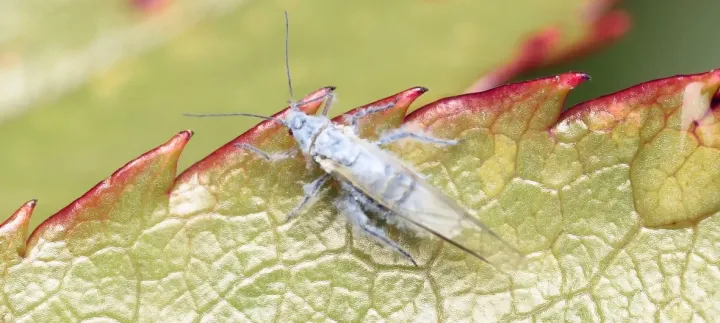
The birch aphid (Euceraphis punctipennis) belongs to the order Hemiptera and the family Drepanosiphidae. These aphids are relatively large, reaching 3-4 mm in length, and vary in color from pale green to yellowish-brown.
They are known for their distinct mobility; unlike many other aphids that remain stationary while feeding, these insects constantly move across the leaf surface. This behavior makes them harder to spot during casual observation.
Adults often develop wings, facilitating their dispersal across the entire canopy of the birch tree. They possess long antennae, which is a structural characteristic distinguishing them from other aphid species.
Their life cycle involves incomplete metamorphosis. Because they do not form dense colonies, individuals are usually spread sparsely across the foliage, making detection more difficult until populations become high.
The species is specialized for living on birch trees, and its physiological traits are perfectly adapted to the seasonal dynamics of its host plant.
What it damages
The primary host for Euceraphis punctipennis is the birch tree (Betula). They feed by sucking sap from the leaves, which causes physiological stress to the tree throughout the growing season.
As the aphids move around, the damage is spread evenly across the canopy rather than being concentrated in one spot. This leads to generalized leaf yellowing and can cause premature leaf drop.
Like many aphids, they excrete honeydew, a sugary substance that coats the leaves. This honeydew serves as a substrate for sooty mold fungi, which appear as black patches on the leaf surface.
The sooty mold blocks sunlight, significantly reducing the efficiency of photosynthesis. This weakens the tree's overall vigor and makes it more susceptible to secondary pests or pathogens.
In cases of severe infestation, the cumulative effect of sap loss and reduced photosynthesis can result in stunted shoot growth and a diminished appearance of the birch tree.
When it appears
The birch aphid overwinters in the egg stage. Eggs are laid by females in the autumn, typically found in bark crevices or near buds on young birch twigs, where they remain until spring.
As the buds break in spring, the eggs hatch into nymphs, which immediately begin feeding on the young leaves. This marks the beginning of the seasonal cycle of several generations.
Throughout the summer, population numbers can increase rapidly, particularly in warm and dry weather conditions, which favor the development of multiple generations of the aphid.
By autumn, sexual individuals emerge to mate, after which the females lay their overwintering eggs on the tree. This completes the annual life cycle of the species.
The aphid's activity is synchronized with the phenology of the birch tree, ensuring that the pest is active whenever the tree is in its most vulnerable leafing stages.
Signs of infestation
A primary indicator of infestation is the presence of sticky honeydew on the leaves and sometimes on the ground underneath the tree. This substance is often attractive to ants.
Upon closer inspection of the underside of leaves, one can spot the mobile aphids. If the branch is disturbed, they exhibit a characteristic avoidance reaction by moving quickly to another part of the leaf.
Chlorotic spots, premature yellowing, and leaf curling are common signs that the tree is under heavy pressure from these sucking insects, particularly during the mid-summer period.
The growth of sooty mold, appearing as a dark, dusty coating on the leaves and twigs, is a clear sign that the aphid population has been active for an extended period.
Increased activity of ants patrolling the bark and branches is a strong behavioral signal that the tree is hosting a colony of aphids being tended by the ants.
Control measures
Management starts with maintaining tree vigor through proper watering and soil management, as healthy trees are better able to withstand moderate aphid attacks.
In residential or park settings, small populations can often be managed by washing the foliage with a high-pressure water spray, which physically removes the mobile insects.
For more severe infestations, systemic insecticides are the most effective solution, as they are absorbed by the plant and provide protection that lasts through several aphid generations.
- Use of insecticides containing acetamiprid or imidacloprid for systemic control.
- Application during early morning or late evening to minimize impact on pollinators.
- Thinning the canopy to improve airflow and reduce the humidity levels that favor fungal growth.
Always verify local regulations regarding chemical use in urban environments and monitor the trees consistently to catch outbreaks before significant damage occurs.
Taxonomy
- Latin name
- Euceraphis punctipennis
- Order
- Hemiptera (bugs, aphids, leafhoppers)
- Family
- Aphididae
- EPPO code
- EUCEPU
Discussion
No discussions yet — be the first.