
Lime aphid
Eucallipterus tiliae
Description
How to identify
The lime aphid (Eucallipterus tiliae) is a host-specific insect belonging to the family Aphididae. It is predominantly found on linden (lime) trees, which serve as its exclusive food source.
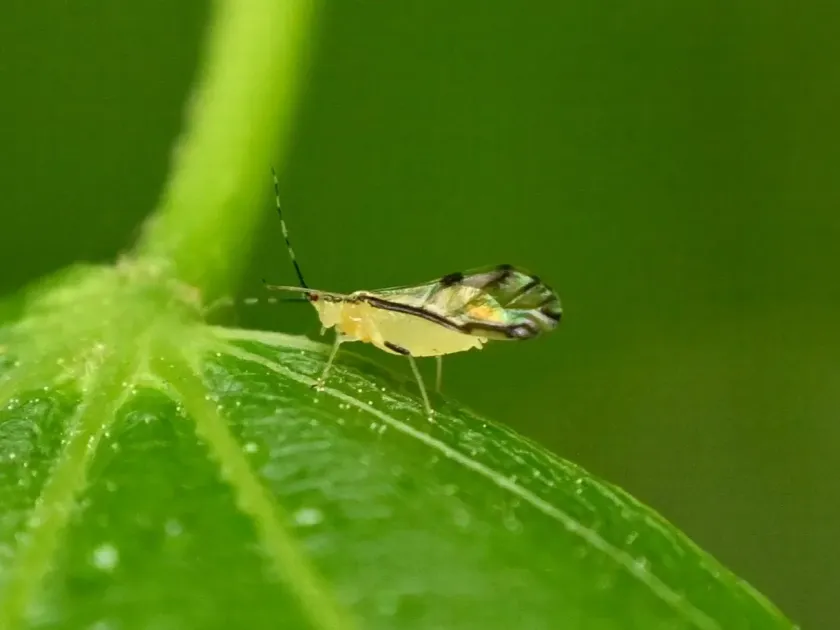
Adults are easily recognizable by their yellowish-green bodies and distinctive dark markings on their wings and abdomen. They typically measure between 2 and 3 mm in length.
These aphids aggregate in colonies, usually occupying the underside of the leaves. Both winged and wingless forms exist within the population to facilitate reproduction and dispersal.
The life cycle involves multiple generations throughout the summer, allowing the population to expand rapidly when environmental conditions are favorable.
The species overwinters in the egg stage. Eggs are laid in the bark crevices of the host tree, providing a protected environment during the cold winter months.
What it damages
The lime aphid targets various linden species, most notably the small-leaved lime and common lime. It is a common problem in urban landscapes and street plantings.
By feeding on the sap of young leaves and shoots, the aphids weaken the tree, which can be particularly detrimental to the vitality and growth of young linden saplings.
The loss of nutrients causes the foliage to lose its natural green pigment, leading to premature yellowing, wilting, and leaf drop, which ruins the tree's ornamental value.
The aphid feeding process also facilitates the development of secondary infections, as the sticky secretions provide a medium for fungal growth on the leaves.
Chronic infestations over several years can lead to significant canopy thinning, potentially leaving the tree more susceptible to other pests and diseases.
When it appears
Nymphs emerge from overwintering eggs in early spring, precisely as the buds begin to open, aligning their life cycle with the tree's most nutritious growth phase.
Peak populations are usually observed during the summer months, specifically June and July, when warmer temperatures accelerate the reproduction rate of the colonies.
Throughout the season, winged individuals migrate across the canopy and to adjacent trees, which can lead to a widespread infestation within a park or city block.
As autumn approaches and temperatures drop, sexual forms develop to mate and deposit eggs on the tree's bark, ensuring the species survives the winter.
Weather plays a significant role in population regulation; heavy rainfall can physically dislodge aphids from leaves, temporarily reducing their numbers.
Signs of infestation
The most prominent sign of an infestation is the production of honeydew, a sticky, sugar-rich substance that coats the leaves and branches of the tree.
The accumulation of honeydew often encourages the growth of sooty mold, a black fungus that covers the leaf surface, effectively blocking sunlight and impeding photosynthesis.
Leaves affected by the aphids often curl, twist, or show signs of stunted growth. They may also exhibit yellow spots due to the depletion of plant fluids.
- Sticky honeydew residue on the leaves and pavement beneath.
- Black sooty mold covering the leaf surface.
- Deformation and curling of young, tender leaves.
- Active ant colonies patrolling the branches to feed on honeydew.
- Visible clusters of small yellow-green insects under the leaves.
A severely infested tree often appears sickly or thin, with reduced foliage density compared to healthy specimens nearby.
Control measures
Proactive monitoring is essential; inspecting the undersides of leaves in early spring can help detect the presence of aphids before a mass outbreak occurs.
Systemic insecticides are the most effective management tool in urban environments, as they are absorbed by the tree and target the aphids during feeding.
Promoting natural biodiversity is a sustainable approach; encouraging predatory insects like ladybirds, lacewings, and hoverflies can help keep aphid populations in check.
Proper horticultural care, including adequate watering and soil nutrient management, ensures that trees are robust and better able to withstand aphid feeding pressure.
In cases where chemical control is necessary, treatments should be applied strategically, preferably before the population reaches an uncontrollable threshold.
Taxonomy
- Latin name
- Eucallipterus tiliae
- Order
- Hemiptera (bugs, aphids, leafhoppers)
- Family
- Aphididae
- EPPO code
- EUCATI
Discussion
No discussions yet — be the first.