
Virginia creeper leafhopper
Erythroneura ziczac
Description
How to identify
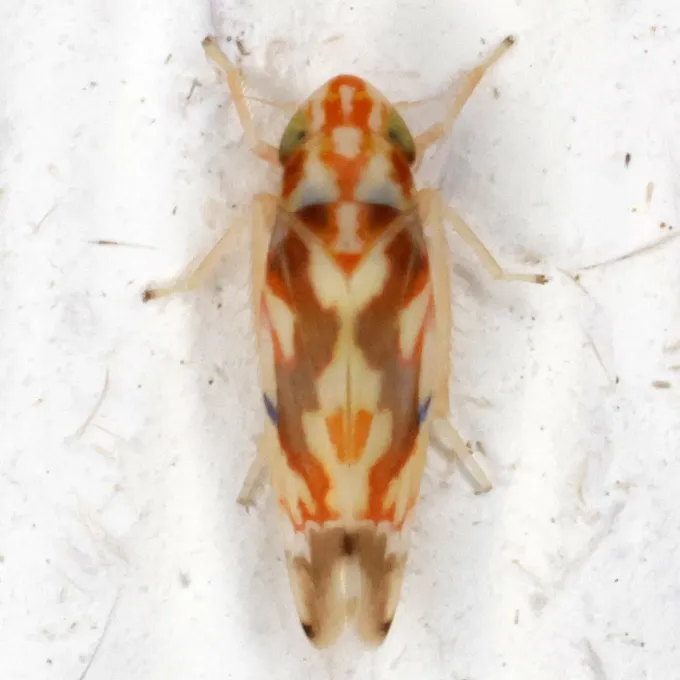
The Virginia creeper leafhopper (Erythroneura ziczac) is a small insect belonging to the Cicadellidae family (order Hemiptera). Adults typically measure around 3 mm in length and are distinguished by a zigzag pattern of red or brown markings on a pale background across their wings.
The body is elongated, allowing the insect to jump quickly when disturbed. The life cycle consists of the egg, nymph, and adult stages. Nymphs resemble miniature versions of adults but lack functional wings and are generally paler in color.
While the exact color may shift based on seasonal factors, the zigzag pattern is the primary diagnostic feature for field identification. These insects tend to congregate on the undersides of leaves, making them easy to overlook during casual inspections.
Activity is most noticeable on sunny days when the insects display erratic jumping behavior. Because of their ability to spread rapidly across a vineyard, consistent monitoring is required throughout the growing season.
For accurate scouting, agronomists often use yellow sticky cards to capture flying adults. Another practical method involves examining leaves for cast-off nymph skins (exuviae), which remain on the foliage after the insect molts.
What it damages
Although named for the Virginia creeper, this pest is a significant threat to grapes (Vitis vinifera) and various other woody perennials. Both nymphs and adults feed by piercing the plant tissue and extracting cell sap.
The feeding process involves puncturing the leaf epidermis and sucking out the contents of the mesophyll cells. This damage disrupts the photosynthetic process, leading to a decline in the overall vigor of the grapevine.
Initial feeding sites appear as small light-colored or yellowish stippling. Over time, these spots coalesce into large necrotic patches. Under high populations, leaves may turn brown and drop prematurely, which negatively impacts the ripening of the vine shoots.
A reduction in photosynthesis directly results in lower crop yields and reduced sugar accumulation in the grapes. Furthermore, stressed vines become more susceptible to secondary fungal infections, further complicating vineyard health.
Long-term infestation can significantly decrease the winter hardiness of the vines. Plants that are weakened by persistent leafhopper feeding are more prone to winter injury, requiring additional recovery efforts in the following spring.
When it appears
Adults overwinter in plant debris, leaf litter, under the bark of the grapevine, or in the soil surrounding the base of the plant. As temperatures rise in spring, they emerge to feed on newly developing buds and young leaves.
Peak activity coincides with the most active growth phases of the vine, from bud break through to flowering and fruit set. Depending on the climate, the insect can complete several generations throughout the growing season.
The highest population density is typically observed during hot, dry summer months. These conditions provide an ideal environment for rapid reproduction, making mid-summer a critical period for scouting and potential control actions.
As daylight hours decrease and temperatures drop in the autumn, adults seek out overwintering sites. Thoroughly cleaning up fallen leaves and managing ground cover are essential cultural practices to break the life cycle.
Understanding the population dynamics is crucial for timing insecticide applications. Control efforts must be synchronized with the appearance of the most vulnerable nymphal stages to ensure maximum efficacy.
Signs of infestation
The first indicator of an infestation is the appearance of tiny white dots on the upper leaf surface, which represent areas where chlorophyll has been removed. Turning the leaf over often reveals the nymphs feeding near the leaf veins.
Feeding activities often produce honeydew, which can attract sooty mold fungi. The presence of a black, powdery residue on the leaves is a common secondary symptom of an active leafhopper infestation.
As the infestation progresses, leaves may develop a mottled, marbled appearance that can be mistaken for nutrient deficiencies or viral diseases. However, the presence of nymphs is a definitive sign of leafhopper activity.
In severe cases, leaf margins may curl and dry out, giving the entire vine a scorched appearance. Mass leaf drop exposes the grape clusters to direct sunlight, which can lead to sunburn damage on the developing berries.
The "shaking method" is a quick diagnostic tool: by gently shaking the vine, you can observe the sudden flight of numerous insects. If this occurs, it indicates a high population level that likely requires intervention.
Control measures
Cultural control is the first line of defense; this includes the prompt removal and disposal of leaf litter and weeds in autumn to eliminate overwintering habitat. This drastically reduces the initial population in the following spring.
Chemical control involves the use of registered systemic or contact insecticides. Applications are most effective when timed to target the newly hatched nymphs, as they are less resilient to chemical exposure than fully grown adults.
Maintaining vineyard sanitation, including weed control and canopy management, helps create a less favorable environment for the pests. Improving airflow within the canopy also helps limit the rapid proliferation of leafhopper populations.
Biological control agents, such as predatory bugs, spiders, and parasitic wasps, play a vital role in managing leafhopper populations naturally. Reducing the use of broad-spectrum pesticides preserves these beneficial predators.
It is essential to rotate insecticides with different modes of action to prevent the development of pesticide resistance. All chemical applications must strictly follow safety regulations and pre-harvest intervals to ensure safety and regulatory compliance.
Taxonomy
- Latin name
- Erythroneura ziczac
- Order
- Hemiptera (bugs, aphids, leafhoppers)
- Family
- Cicadellidae
- EPPO code
- ERYTZI
Discussion
No discussions yet — be the first.