
Grape leafhopper
Erythroneura leveri
Description
How to identify
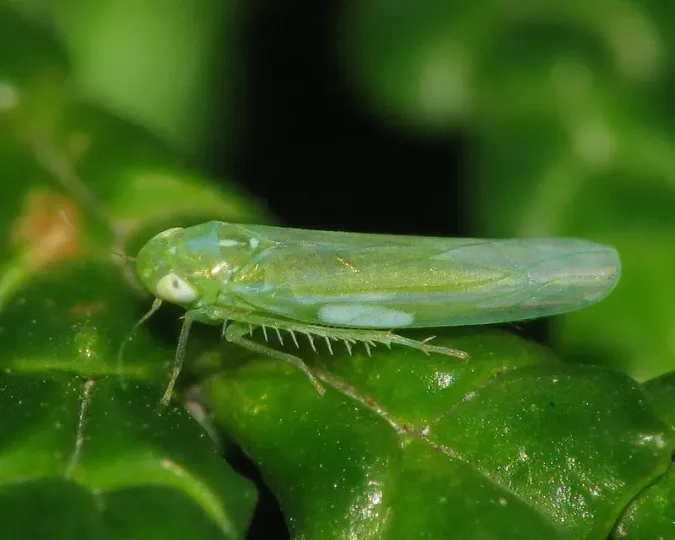
The grape leafhopper (Erythroneura leveri) is a small insect belonging to the Cicadellidae family. Measuring approximately 3 mm in length, these pests possess a streamlined body that varies in color from pale yellow to light green, often featuring brownish spots on their wings.
These insects are highly agile, capable of jumping and flying short distances when disturbed. They are typically found on the underside of grape leaves, where they remain relatively stationary while feeding, making them difficult to spot at first glance.
The nymphs go through several developmental stages before becoming adults. They resemble miniature versions of the adults but lack functional wings. Throughout their growth, they remain concentrated along the leaf veins, sucking plant sap to fuel their development.
Eggs are laid inside the plant tissue, specifically within the epidermis along the veins of the leaves. This behavior provides the eggs with significant protection from environmental factors and predators, ensuring a high survival rate for the next generation.
Adult leafhoppers overwinter in protected areas, including leaf litter, cracks in the vine's bark, or nearby weeds. As temperatures rise in the spring, they emerge from these hiding spots to start their reproductive cycle.
What it damages
The grape leafhopper causes damage primarily by feeding on the cell contents of the leaves. Using their piercing-sucking mouthparts, they drain the sap, leading to a significant loss of nutrients for the grapevine.
This feeding activity disrupts the leaf's photosynthetic process, which is critical for sugar accumulation in grapes. As a result, vines that are heavily infested often produce lower-quality fruit with reduced sugar content and poor color development.
Beyond physical damage, these pests are known vectors for various plant diseases. By moving between leaves and vines, they can transmit harmful pathogens that weaken the plant's overall health and physiological resilience.
In cases of severe infestation, the cumulative impact of thousands of feeding insects leads to premature defoliation. This stresses the vine, making it susceptible to secondary infections and reducing its winter hardiness.
Vines that suffer from significant leafhopper damage often show signs of stunted growth and poor wood maturation. This can lead to reduced yields in the following season and an overall decline in the vineyard's productivity.
When it appears
Leafhopper activity begins in early spring, synchronized with the onset of bud break and the emergence of new shoots. As the temperature rises, overwintered adults move onto the young foliage to begin feeding and laying eggs.
The insect typically completes two to three generations per season, depending on the climate and geographical region. Population numbers often peak mid-summer, coinciding with the hottest and driest parts of the growing season.
During the peak summer months, leafhopper activity is at its highest, with all life stages (eggs, nymphs, and adults) present on the vines. This is the period when damage to the foliage becomes most apparent and widespread.
As autumn approaches and temperatures begin to drop, the adult leafhoppers seek out shelter. They migrate from the vine canopy to the soil surface, under debris, or into crevices, where they will spend the dormant winter months.
Monitoring seasonal patterns is vital for effective management. Dry and warm winters often lead to higher survival rates of the overwintering population, requiring closer monitoring and proactive measures in the subsequent spring.
Signs of infestation
The most common sign of a grape leafhopper infestation is the appearance of mottled yellow or white stippling on the upper surface of the leaves. This is caused by the insects feeding on the chlorophyl-rich cells below.
Upon closer inspection, one can find discarded nymphal skins, known as exuviae, on the underside of the leaves. These white, translucent skins are a clear indicator of successful development and a reproducing population.
- Mottled white or yellowish spots on leaves (stippling).
- Presence of cast-off nymphal skins on the leaf underside.
- Visible movement of insects when the vine is lightly shaken.
- Premature browning and drying of leaf margins.
- Early leaf drop in late summer or early autumn.
In advanced stages of damage, the leaves may turn brown and appear scorched. This "hopper burn" is a sign that the leaf tissue has been severely damaged, and its ability to function as a source of energy for the plant is compromised.
Field scouting should be done consistently to observe these symptoms. Since the insects are small and flighty, shaking a shoot over a piece of paper or a white board is an effective way to estimate the population density in a particular block.
Control measures
Cultural practices are essential for managing leafhopper populations. This includes maintaining clean vineyard rows, removing weeds that serve as alternative hosts, and ensuring good canopy management to promote airflow and light penetration.
Chemical control should be applied when thresholds are reached. It is important to target the underside of the leaves, where the nymphs congregate, using insecticides that are registered for use on grapes in your region.
Biological control plays a significant role in managing these pests. Encouraging natural predators, such as spiders, lacewings, and parasitic wasps, can help reduce the need for chemical interventions in sustainable viticulture.
When applying pesticides, rotate classes of chemicals to prevent the development of resistance. Leafhoppers are known to adapt quickly to frequently used active ingredients, making rotation a key strategy for long-term control.
Always adhere to the pre-harvest interval (PHI) when using chemical treatments. Proper documentation of spray dates and product usage is necessary for both quality control and compliance with agricultural safety regulations.
Taxonomy
- Latin name
- Erythroneura leveri
- Order
- Hemiptera (bugs, aphids, leafhoppers)
- Family
- Cicadellidae
- EPPO code
- ERYTLE
Discussion
No discussions yet — be the first.