
Grape leafhopper
Erythroneura dolosa
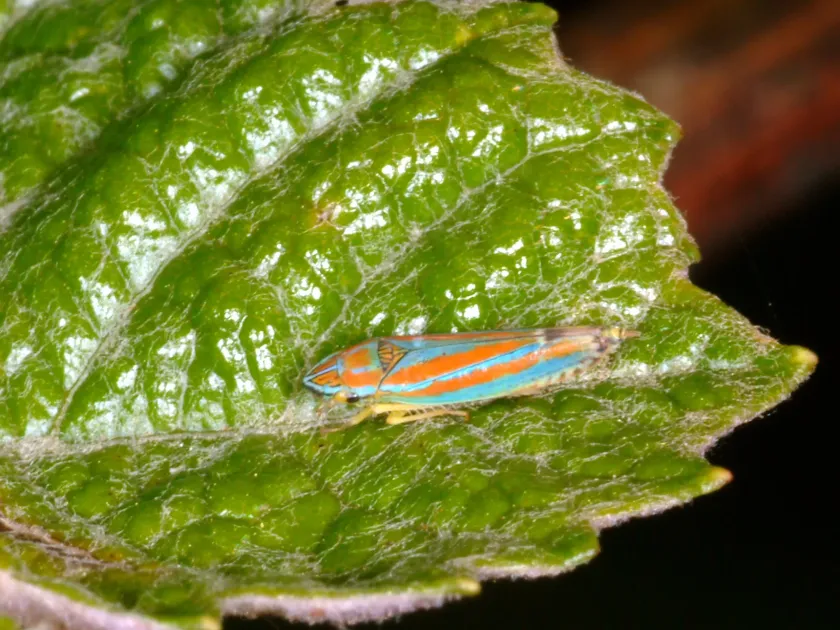
Description
How to identify
The grape leafhopper (Erythroneura dolosa) is a small insect belonging to the Cicadellidae family. Adults typically measure about 3 mm in length and exhibit a pale yellowish or whitish coloration, which camouflages them effectively against the foliage of the grapevine.
The life cycle of this pest consists of several stages: egg, five nymphal instars, and the adult stage. The nymphs resemble miniature, wingless versions of the adults and remain primarily on the underside of the leaves throughout their development.
The reproduction rate of Erythroneura dolosa is high, allowing for multiple generations within a single growing season. The speed of development is heavily influenced by ambient temperature; warmer conditions significantly accelerate the life cycle, leading to rapid population growth.
Overwintering occurs primarily in the adult stage. These insects seek refuge in protected micro-habitats such as fallen leaves, crevices in vine bark, or weeds surrounding the vineyard, emerging once spring temperatures rise consistently.
Leafhoppers are extremely active insects. When disturbed, adults move with quick jumps or short flights to adjacent leaves or vines. This agility facilitates their rapid colonization of entire vineyard blocks within a short timeframe.
What it damages
Grape leafhoppers are specialized feeders that thrive on Vitis vinifera. By utilizing their piercing-sucking mouthparts, they extract sap directly from the leaf cells, causing localized damage that disrupts the plant's physiological functions.
The primary impact of leafhopper feeding is the destruction of chlorophyll-rich cells. This interferes with the vine's ability to perform photosynthesis efficiently, leading to a general decline in the plant's metabolic output and overall vitality.
Severe infestations cause leaves to yellow and, in advanced stages, turn brown and fall off prematurely. This defoliation reduces the canopy density, which limits the energy production needed for berry development and winter hardening of the vine canes.
A reduction in photosynthesis directly impacts the sugar accumulation in the grapes. Consequently, affected vineyards often produce lower quality yields with reduced sugar content and poor color development, affecting the potential for high-quality wine production.
Chronic infestation weakens the plant's defense mechanisms, making it more susceptible to environmental stressors, including drought and cold injury. Long-term productivity loss is a common consequence of failing to manage these populations effectively.
Signs of infestation
The initial symptom of a leafhopper presence is the appearance of small, light-colored stippling or dots on the upper surface of the leaves. Each dot represents a single feeding site where the leafhopper has pierced the epidermis and removed cellular content.
As the infestation grows, these tiny stipples coalesce into larger, bleached, or mottled patches. This gives the foliage a washed-out, "bronzed" appearance. In high-density populations, leaves may begin to curl at the edges and exhibit necrotic margins.
Exuviae (cast skins left behind after molting) are a clear diagnostic indicator found on the underside of the leaves. These translucent white flakes remain stuck to the leaf surface and are easily visible under close inspection.
If you shake a vine shoot during the day, the mass departure of adult leafhoppers will create a visible cloud around the canopy. This reaction is a classic behavioral sign of a significant infestation level requiring intervention.
Sticky honeydew secretions are another consequence of heavy feeding. These secretions can accumulate on the foliage, acting as a substrate for the development of sooty mold, which further interferes with the leaf's ability to photosynthesize.
Control measures
Successful management begins with cultural practices. Removing weeds from under the vines and clearing leaf litter during late autumn or early spring reduces the availability of overwintering sites, effectively lowering the initial spring population.
Biological control relies on the conservation of natural enemies such as spiders, lacewings, and parasitic wasps. Encouraging biodiversity in and around the vineyard can naturally keep leafhopper populations below economic injury levels.
Chemical control should be implemented based on monitoring data rather than a fixed schedule. Systemic insecticides are generally the most effective as they reach the leafhopper inside the leaf tissue, though they should be applied judiciously to avoid destroying beneficial species.
- Monitor populations using yellow sticky traps to time treatments correctly.
- Ensure application occurs before large numbers of nymphs reach the adult stage.
- Follow integrated pest management (IPM) guidelines to delay resistance development.
Periodic scouting throughout the season allows growers to identify hotspots. Targeted spot-treatments can prevent a localized outbreak from spreading across the entire vineyard, maximizing protection while minimizing environmental impact.
Taxonomy
- Latin name
- Erythroneura dolosa
- Order
- Hemiptera (bugs, aphids, leafhoppers)
- Family
- Cicadellidae
- EPPO code
- ERYTDO
Discussion
No discussions yet — be the first.