
Elm-currant aphid
Eriosoma ulmi
Description
How to identify
The Elm-currant aphid (Eriosoma ulmi) is a species of aphid in the family Aphididae, known for its complex life cycle involving two distinct host plants.
This pest is characterized by its white, waxy, wool-like secretions, which often hide the aphids from casual observation on the foliage.
Adults are small and may exist in both winged and wingless forms, allowing the species to migrate between its primary and secondary hosts throughout the year.
The species primarily depends on the elm tree for winter survival and early spring development, making the proximity of elms a significant risk factor.
Agronomists identify this species by examining the characteristic galls on elm leaves and the subsequent colonization on the undersides of currant leaves.
What it damages
On elm trees, the aphids cause leaves to roll up along the margins, creating dense, pale green or reddish galls that protect the developing colonies.
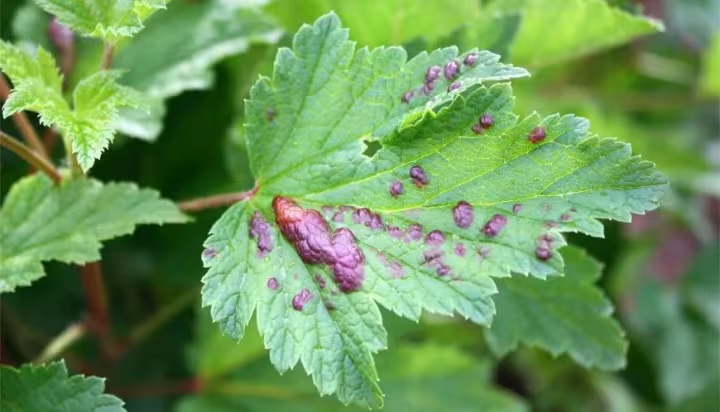
On currants, the aphids infest the undersides of leaves, feeding on sap and causing the foliage to curl, yellow, and eventually drop prematurely.
The feeding process results in reduced photosynthetic capacity, which directly affects the overall vigor and growth rate of the currant bushes.
Large quantities of honeydew secreted by the aphids promote the growth of sooty mold, further damaging the plant by blocking sunlight from the leaf surface.
In high-pressure seasons, the cumulative damage leads to decreased fruit production and can weaken the plants, making them susceptible to other diseases.
When it appears
The life cycle begins in early spring when overwintering eggs on elm bark hatch into founder aphids that inhabit the emerging elm leaves.
By late spring and early summer, winged generations develop and migrate from the elm trees to their secondary hosts, specifically currant bushes.
During mid-summer, several generations of aphids propagate rapidly on the currant foliage, leading to visible damage and colony expansion.
As autumn approaches, winged sexual forms are produced, which migrate back to the elm trees to mate and lay eggs for the winter season.
This seasonal migration pattern is critical for understanding the timing of pest management strategies in commercial and home orchards.
Signs of infestation
The most prominent sign on elm trees is the edge-rolling of leaves, which appears as a thick, gall-like structure rather than a natural curl.
On currant bushes, the primary indicator is leaf curling accompanied by sticky, sugar-rich honeydew that attracts ants and promotes black sooty mold.
Looking at the underside of a curled currant leaf will reveal clusters of aphids covered in white, filamentous waxy secretions.
Stunted shoot growth and chlorotic (yellowish) patches on the leaves are common symptoms observed as the infestation progresses.
- Leaf margin rolling on elm trees.
- White waxy tufts on the undersides of currant leaves.
- Sticky honeydew residue on branches and foliage.
- Premature defoliation of currant bushes.
Control measures
The primary control strategy involves the removal of any unwanted elm seedlings in the vicinity of currant plantations to disrupt the life cycle.
Systemic insecticides are the most effective chemical intervention, provided they are applied early in the season before leaf curling becomes severe.
Promoting a healthy environment for natural predators like ladybirds and lacewings can help suppress aphid populations naturally.
Dormant oil applications on elm trunks in late winter can effectively kill overwintering eggs, reducing the initial spring population.
Regular monitoring and manual removal of infested shoots during the early stages of the season prevent the buildup of large, destructive colonies.
Taxonomy
- Latin name
- Eriosoma ulmi
- Order
- Hemiptera (bugs, aphids, leafhoppers)
- Family
- Aphididae
- EPPO code
- SCHZUL
Discussion
No discussions yet — be the first.