
Elm gall aphid
Eriosoma patchiae
Description
How to identify
The elm gall aphid (Eriosoma patchiae) is a member of the aphid family, known for creating distinct deformations on the foliage of elm trees (Ulmus spp.).
Adult aphids and nymphs are often protected by a white, waxy secretion that appears like wool or powder on the underside of infested leaves.
This species has a complex life cycle involving a primary host, the elm, and secondary herbaceous hosts, which the aphids migrate to during the summer months.
The overwintering stage consists of eggs laid in the crevices of the bark or around the buds, ensuring survival during the cold season.
As true bugs (Hemiptera), they feed using specialized piercing-sucking mouthparts, which trigger the host plant's physiological response to form galls.
What it damages
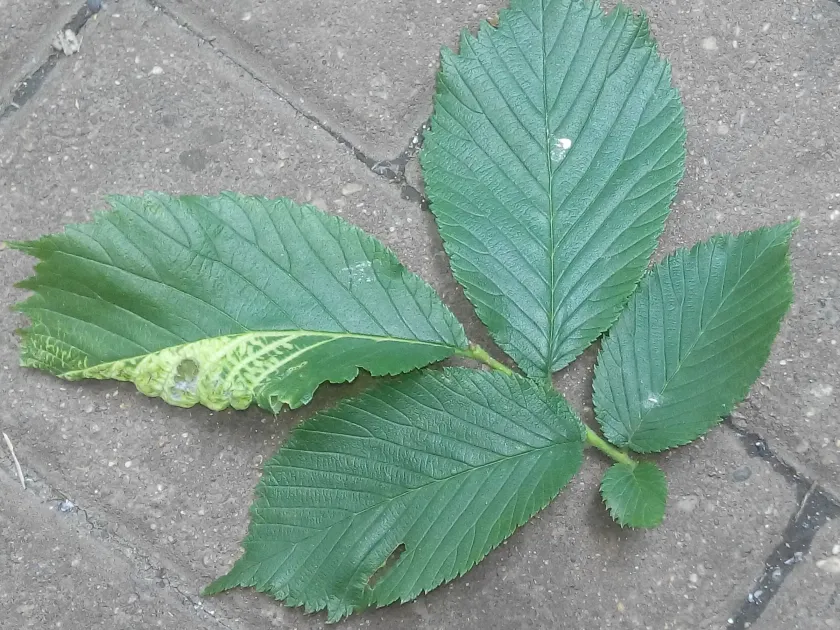
The primary damage manifests as galls — tumor-like growths on the leaves that provide a sheltered environment for the aphid colonies to grow.
By consuming plant sap, the aphids disrupt the normal functioning of the leaf, reducing the tree's ability to perform photosynthesis effectively.
Infested trees often experience chlorosis, premature leaf drop, and stunted growth of shoots if the infestation levels remain high for several years.
The weakened state of the tree makes it susceptible to opportunistic fungal infections and secondary pest attacks that thrive on stressed tissues.
Aesthetic value is significantly diminished, which is particularly concerning for elm trees planted in urban landscapes and parks for ornamental purposes.
When it appears
The activity begins in early spring, synchronized with the bud burst of the elm trees, as the stem mothers emerge to start the new generation.
The gall formation period lasts through late spring and early summer, corresponding with the peak growth rate of the aphid population.
During the mid-summer migration, the aphids move to their secondary hosts, leaving the empty galls on the elm trees as evidence of their presence.
As autumn approaches, winged forms return to the elm trees to reproduce and lay the eggs that will remain dormant throughout the winter.
Environmental factors, specifically warm and humid springs, can lead to explosive population growth, necessitating early detection and intervention.
Signs of infestation
Deformed leaves that roll inward or form thickened, pocket-like structures are the most obvious signs of a gall aphid infestation.
The presence of white, cottony wax on the undersides of leaves or along the veins is a definitive indicator of an active aphid colony.
Sticky honeydew secretions often coat the foliage below the infestation, which frequently leads to the growth of black sooty mold on the leaf surfaces.
Discoloration of the leaves, ranging from yellowing to reddish-purple tints, is a common reaction to the aphids' feeding process within the gall.
The lack of vigorous new shoot growth and general thinning of the canopy are late-stage symptoms of prolonged aphid damage.
Control measures
Systemic insecticides are the most effective way to reach aphids protected inside the galls, as the chemical is absorbed by the tree's sap.
Early season dormant oil sprays can be used to coat the bark and suffocate the overwintering eggs before the foliage starts to emerge.
In smaller landscapes, pruning off the infested leaves and destroying them can help prevent further spread if identified early enough.
Promoting natural biological control agents like ladybugs and lacewings is recommended for integrated pest management in garden settings.
- Inspect elm trees regularly during the leaf development stage.
- Apply systemic pesticides as soon as the first galls are spotted.
- Remove leaf litter in autumn to reduce the pest reservoir.
- Maintain tree vitality through proper watering and soil fertilization.
Taxonomy
- Latin name
- Eriosoma patchiae
- Order
- Hemiptera (bugs, aphids, leafhoppers)
- Family
- Aphididae
- EPPO code
- SCHZPA
Discussion
No discussions yet — be the first.