
Hawthorn root aphid
Eriosoma crataegi
Description
How to identify
The hawthorn root aphid (Eriosoma crataegi) is a sap-sucking insect belonging to the family Aphididae. It is a specialized pest that spends most of its life cycle underground, feeding on the roots of host plants, which makes it a challenging pest to monitor.
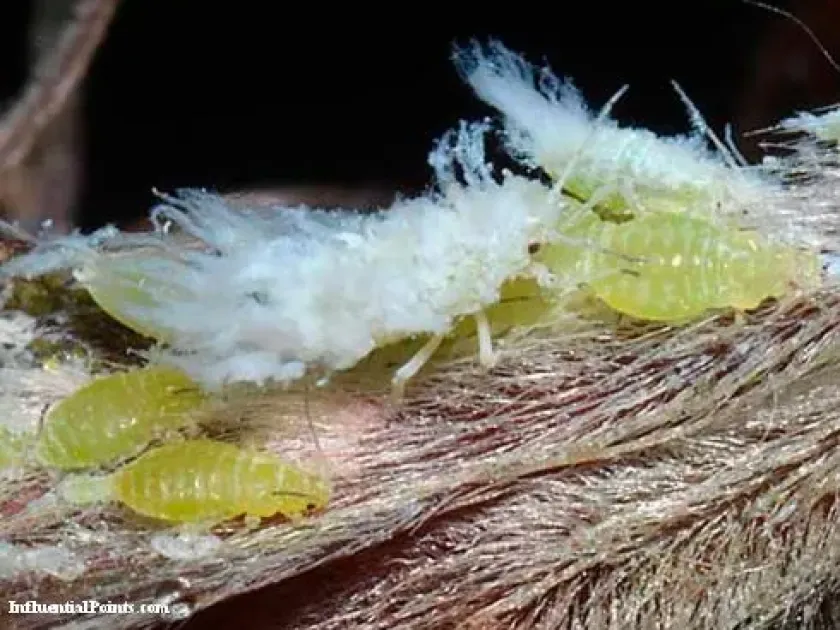
Adult aphids are often covered in white, waxy secretions that protect them from soil moisture. These white clumps are the most noticeable sign of their presence, often creating a woolly appearance around the root system of infested trees.
Their life cycle involves parthenogenetic reproduction, which allows colonies to expand rapidly under favorable conditions. They are closely related to other woolly aphid species, sharing similar morphological traits that make them specialized root feeders.
These insects are highly adapted to the root zone environment. They survive by extracting plant sap from the vascular tissue of roots, which effectively redirects the plant's resources to the aphid colony.
The dispersal of the species often relies on both short-range movement through the soil and interaction with ants, which are known to transport and protect these aphids to maintain their supply of honeydew.
What it damages
As the name suggests, the hawthorn (Crataegus) is the primary host for this aphid. Infestations typically start on the roots, where the aphids form dense colonies that can significantly weaken the tree's overall vigor.
In addition to hawthorn, the species can infest apple trees and other members of the Rosaceae family. This makes them a significant concern for commercial orchards where cross-infestation can lead to widespread damage.
Root damage manifests as reduced nutrient and water uptake. Because the injury occurs below ground, the symptoms appear gradually, starting with stunted growth, chlorotic leaves, and a general decline in the tree's health.
Young trees in nurseries are particularly at risk. Extensive feeding by Eriosoma crataegi can kill young saplings within a short period, as their root systems lack the resilience to withstand the persistent sap extraction.
Secondary infections are a common consequence of this aphid's feeding. The wounds left on the roots provide entry points for soil-borne pathogens, leading to root rot and other fungal diseases that exacerbate the tree's decline.
Signs of infestation
A primary indicator is the visible decline of the tree canopy. Leaves may turn yellow or drop prematurely, and the tree fails to show robust seasonal growth despite adequate water and fertilization efforts.
Upon inspecting the root zone, the white, cottony wax deposits are the most reliable diagnostic sign. These deposits are usually found near the root collar or on larger lateral roots near the soil surface.
Feeding often causes the formation of galls or abnormal swellings on the roots. These malformations are the plant’s physiological response to the aphid's saliva, which effectively disrupts the normal root structure.
The presence of high ant activity around the base of the tree is a strong indicator of an underground aphid colony. Ants cultivate these aphids, protecting them from predators in exchange for the sugary honeydew they produce.
Soil compaction or a subtle change in the soil texture near the base can sometimes be observed. In cases of severe infestation, the tree may become unstable due to the loss of fine root hairs and significant root damage.
Control measures
Integrated pest management (IPM) is essential for control. Removing wild hawthorn hosts near commercial orchards helps minimize the risk of initial colonization and migration of the aphids into the crop.
Chemical control usually involves the application of systemic insecticides to the soil or as a root drench. These chemicals are absorbed by the roots and travel through the tree's vascular system, killing aphids that feed on the sap.
Managing ant populations is a key component of effective control. By using ant baits or sticky barriers on tree trunks, the symbiotic relationship between ants and aphids is broken, leading to a decline in aphid success.
Cultural practices, such as maintaining healthy soil conditions and ensuring trees are not under drought stress, can improve the tree's natural defense mechanisms against pest colonization.
- Systemic insecticide application to the root zone.
- Removal of wild host plants like hawthorn nearby.
- Ant population management around the orchard.
- Regular inspection of saplings in nurseries.
- Improving overall tree health to enhance resistance.
Taxonomy
- Latin name
- Eriosoma crataegi
- Order
- Hemiptera (bugs, aphids, leafhoppers)
- Family
- Aphididae
- EPPO code
- ERISCR
Discussion
No discussions yet — be the first.