
Southern white-breasted hedgehog
Erinaceus concolor
Description
How to identify
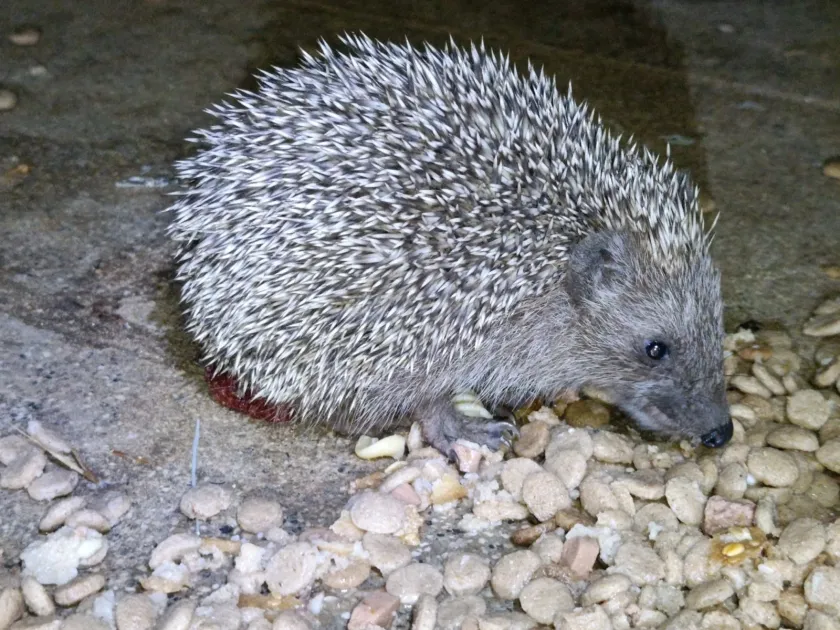
The Southern white-breasted hedgehog (Erinaceus concolor) belongs to the order Eulipotyphla, family Erinaceidae. It is morphologically very similar to the common hedgehog but features a distinct white patch on its belly and specific dental characteristics.
It is a nocturnal mammal with highly developed senses of smell and hearing. An adult typically measures 20 to 30 cm in length, with body weight fluctuating significantly depending on the season and fat reserves accumulated for hibernation.
The animal starts its activity at dusk and remains active until dawn. It covers long distances searching for food, utilizing abandoned burrows, dense shrubbery, or debris piles as daytime refuges.
For agronomists, it is crucial to understand that the hedgehog is a territorial animal. While its diet primarily consists of insects, its behavior can become problematic for gardeners during periods of food scarcity or high availability of succulent fruits.
Reproduction occurs once a year. A female produces a litter of 3 to 8 pups, which become independent by autumn, significantly increasing the pest population density on the site at the end of the growing season.
What it damages
The main agricultural damage caused by the Southern white-breasted hedgehog involves mechanical injury to berry and vegetable crops. Although not a specialized plant pest, hedgehogs often ruin harvests while searching for moisture.
Low-growing crops such as strawberries are most susceptible. By moving across garden beds, the hedgehog crushes plants, and by eating berries, it ruins the produce's marketability and shelf life.
Damage is also inflicted on vegetable crops like tomatoes or melons, especially if the fruits touch the soil. Trampling garden beds destroys the root systems of young seedlings, leading to stunted growth and overall plant decline.
Importantly, hedgehogs can indirectly facilitate the spread of infections by carrying weed seeds, helminth eggs, and fungal spores on their spines between different parts of the field.
Additional damage includes the destruction of mulch layers and thin plastic coverings. Intense digging in the soil while searching for larvae disrupts the root zone structure of vegetable crops.
When it appears
The activity phase begins after the hedgehog wakes from hibernation, usually in April or early May, when stable warm temperatures are established.
The peak of damage occurs during the summer months of June and July, when the majority of berry crops ripen and young hedgehogs begin to actively forage for additional nutrition.
In August and September, hedgehogs increase their feeding rate in preparation for winter, making them frequent visitors to gardens as they consume fallen fruits and vegetables.
Activity drops sharply in October as the animals begin constructing winter nests in sheltered locations within or near the garden area.
During winter, the hedgehog enters a state of deep hibernation, completely ceasing activity until the following spring, thus causing no damage during the colder months.
Signs of infestation
The primary sign of the pest's presence is mechanical damage to berries, manifesting as irregular, jagged tooth marks, which differ from those left by birds or slugs.
Characteristic paths—flattened grass or soil leading from the edges of the site to areas with high fruit concentration—often become visible after morning dew or rain.
Specific signs of activity include excrement: dense, dark cylindrical droppings 3–5 cm long, often containing chitinous insect fragments or undigested seeds.
At night, the presence of a hedgehog is revealed by noisy rustling in dry leaves or under bushes, as well as the characteristic snuffling sound the animal makes while foraging.
The presence of loose "nests"—piles of leaves and twigs hidden from sunlight—directly indicates that the hedgehog has chosen the area for daytime rest.
Control measures
The most effective protection method is the installation of a sturdy mesh fence, which must be buried at least 10–15 centimeters into the ground to prevent tunneling.
Maintaining site hygiene is recommended: timely collection of fallen fruit and the removal of plant debris deprive the pest of its food source and nesting sites.
Using repellents with strong odors may temporarily deter hedgehogs from valuable crop beds, though this method requires frequent reapplication due to rapid evaporation.
Ultrasonic repellers show moderate efficiency, as animals may eventually acclimate to background noise if the frequency does not fluctuate.
- Installing wire mesh fencing around the garden perimeter.
- Timely harvesting of berries and removal of fallen fruit.
- Clearing brush piles and weeds from the edges of the field.
- Utilizing motion-sensor lights during night hours.
Taxonomy
- Latin name
- Erinaceus concolor
- Family
- Erinaceidae
- EPPO code
- ERNACO
Discussion
No discussions yet — be the first.