
Embaphion muricatum
Embaphion muricatum
Description
How to identify
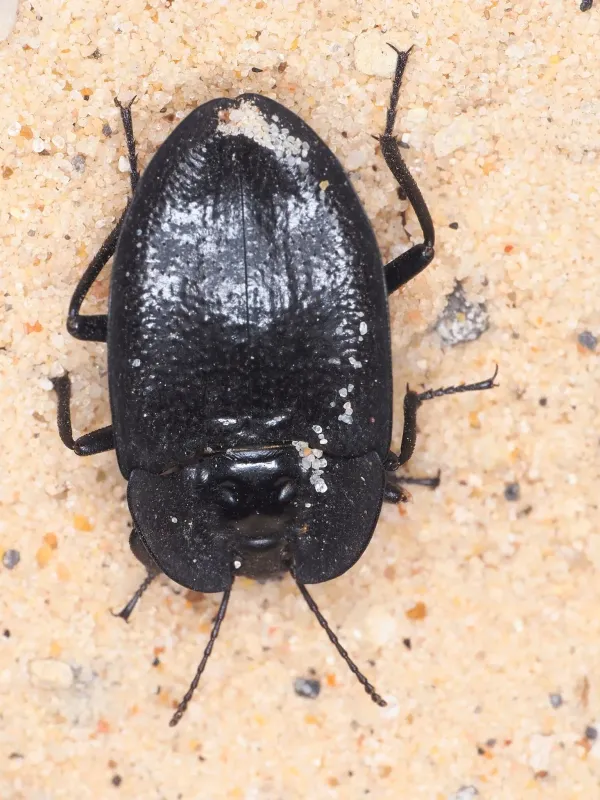
Embaphion muricatum, commonly known as a type of darkling beetle, belongs to the family Tenebrionidae. These beetles are characterized by their rough, tuberculated elytra that give them a distinct appearance.
The adult beetles are typically dark-colored and have a flattened body shape, which allows them to hide easily in soil crevices and under debris. They are nocturnal and avoid direct sunlight.
The larvae, often referred to as false wireworms, are cylindrical with hardened, shiny bodies. They possess well-developed legs and are highly active in the top layers of the soil profile.
Being members of the order Coleoptera, these insects are highly adapted to arid environments. Their physiology allows them to conserve water effectively, making them successful in dryland agricultural regions.
Taxonomically, they are recognized for their robust nature. Unlike many soft-bodied pests, their exoskeleton provides significant protection against environmental stressors and some contact insecticides.
What it damages
This beetle is a polyphagous pest, meaning it feeds on a wide range of agricultural crops, including cereals, vegetables, and technical crops. They are particularly troublesome in semi-arid farming zones.
The primary damage is caused by larvae feeding on the roots and underground stems of young plants. This feeding pattern often results in the sudden wilting and eventual death of the seedlings.
Adult beetles contribute to the overall damage by feeding on foliage and stems. While less destructive than the larvae, their feeding can retard the development of young crops.
Severe infestations often lead to significant stand reduction in fields. This loss of plant density necessitates replanting and increases costs for the agricultural producer.
Beyond direct feeding, the damage caused by Embaphion muricatum creates entry points for secondary soil-borne pathogens, such as fungal root rots, which further degrade crop health.
When it appears
The activity cycle of this pest is heavily influenced by soil temperature. Emergence of overwintered adults typically occurs in early spring when the soil starts to warm up.
The most critical window for crop damage is during the germination and seedling establishment phases. During this time, the larvae are actively foraging in the root zones of the young plants.
Hot and dry weather patterns during the summer months generally favor the population growth of these beetles, as they thrive in conditions that might be detrimental to other insect species.
Several generations or waves of activity can occur within a single growing season. As temperatures begin to drop in autumn, the beetles prepare to move deeper into the soil for winter dormancy.
Field monitoring should be prioritized as soon as soil temperatures reach levels that trigger beetle activity, especially in fields with a history of darkling beetle issues.
Signs of infestation
The first indicator of an infestation is often the presence of dead or wilting seedlings that appear shortly after emergence, despite adequate soil moisture levels.
A closer inspection of the soil around the base of damaged plants usually reveals larval feeding tunnels or the presence of the larvae themselves within the root zone.
At night, using a flashlight in infested fields can reveal adult beetles moving across the soil surface or feeding on the lower portions of the plant stems.
The presence of shed larval skins or discarded exoskeletons in the soil near the roots is a clear sign that a larval population has established itself in that specific area.
Significant gaps or thin spots in the crop row, despite using high-quality seeds, warrant a soil check to determine if soil-dwelling pests like false wireworms are the cause.
Control measures
Crop rotation is the most effective cultural practice to manage populations of this beetle. Rotating host crops with non-host crops disrupts the pest's life cycle and food supply.
Deep tillage during the autumn or spring can disrupt the habitat of the larvae, exposing them to environmental elements and natural predators such as birds and beneficial insects.
Seed treatments using systemic insecticides are highly recommended as a preventive measure in regions with a known history of Embaphion muricatum infestations.
Maintaining a clean field, free of heavy crop residue or weeds, can reduce the attractiveness of the area to adult beetles looking for daytime shelter and egg-laying sites.
- Use of trap crops to concentrate and remove populations.
- Application of soil insecticides during planting if thresholds are exceeded.
- Monitoring with pitfall traps to estimate beetle density.
- Promoting healthy plant growth through balanced fertilization.
Taxonomy
- Latin name
- Embaphion muricatum
- Order
- Coleoptera (beetles)
- Family
- Tenebrionidae
- EPPO code
- EMBAMU
Discussion
No discussions yet — be the first.