
Darkling beetle Eleodes omissa
Eleodes omissa
Description
How to identify
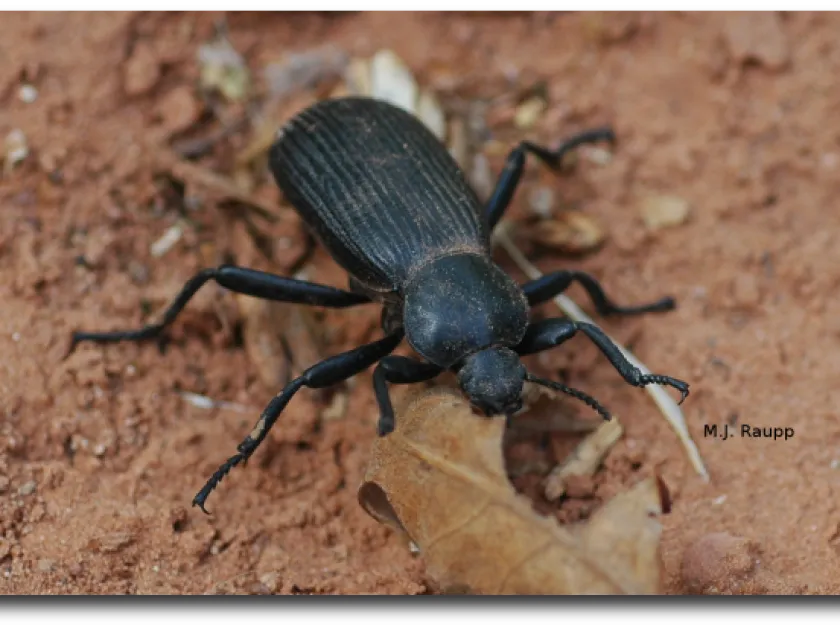
The darkling beetle Eleodes omissa belongs to the family Tenebrionidae, the order Coleoptera. This species is known for its distinct black, often matte appearance typical of the Eleodes genus.
Adult beetles possess a unique defensive mechanism; when threatened, they elevate their abdomen in a characteristic display, which serves as a key identifying feature in the field.
The larvae, commonly referred to as false wireworms, have a cylindrical and hardened body, usually yellow-brown in color, which lacks the high-gloss shine seen in common wireworms.
These insects are largely nocturnal, preferring to hide in the soil, under debris, or rocks during the daytime, which makes regular field scouting for them particularly difficult.
Body size and coloration in adults may vary slightly depending on the specific environmental conditions and the availability of food sources in their habitat.
What it damages
The primary damage is caused by the larvae, which inhabit the top layer of soil and feed on the root systems and subterranean parts of emerging seedlings.
Crops prone to Eleodes omissa infestation include various small grains such as wheat, barley, and oats, as well as several direct-seeded vegetable varieties.
Larval feeding results in root destruction and stem damage, often causing young plants to wilt, turn yellow, and eventually perish, leading to thin and uneven crop stands.
In arid conditions, the pest's damage becomes more severe as larvae actively seek moisture within plant tissues, significantly increasing the mortality rate of young crops.
Adult beetles may also cause damage by feeding on seeds or young sprouts, although their impact on overall crop health is generally considered secondary to larval activity.
When it appears
Adult activity of Eleodes omissa typically occurs during the spring and summer months, when they emerge from overwintering sites for mating and oviposition in the soil.
Larval development is a lengthy process that can span several seasons, making them a persistent threat to agricultural fields where environmental conditions favor their survival.
Peak damage often occurs in early spring when young plants are highly susceptible, and larvae emerge from their winter dormancy to resume intensive feeding.
The life cycle is highly adaptable to various weather conditions, including periods of extreme drought, which allows the species to persist in diverse agricultural environments.
Mass emergence of adult beetles often coincides with the onset of consistently warm nights, which are essential for their migratory and reproductive activities.
Signs of infestation
The first indicator of an infestation is the appearance of stunted or wilted patches within a field, often accompanied by leaf chlorosis in affected young plants.
Inspecting the soil around the base of affected plants often reveals the presence of false wireworms, which can be found feeding on the root structures.
Distinctive feeding marks on the underground stems serve as a diagnostic sign of Eleodes omissa activity, separating it from damage caused by other soil-dwelling larvae.
Slight soil disturbance in affected areas frequently brings larvae to the surface, especially after significant rainfall, allowing for a quick population assessment.
Monitoring adult populations with light traps or pitfall traps at night provides valuable data for predicting future risks and timing necessary management interventions.
Control measures
The foundation of effective management is a robust crop rotation strategy, which prevents the buildup of larval populations in fields with a history of infestation.
Deep autumn tillage is a highly effective mechanical control method that exposes larvae to natural predators and unfavorable temperature fluctuations, reducing their numbers.
Seed treatment with systemic insecticides prior to planting provides critical early-season protection, effectively safeguarding germinating seeds and young seedlings from larval attack.
- Consistent weed control to eliminate alternative food sources for developing larvae.
- Inter-row cultivation during the pupation period to physically disrupt the development cycle.
- Implementation of field monitoring to determine the economic threshold for insecticide application.
Chemical control involving soil-applied insecticides is recommended only when monitoring confirms that population levels exceed the established economic thresholds for the specific crop.
Taxonomy
- Latin name
- Eleodes omissa
- Order
- Coleoptera (beetles)
- Family
- Tenebrionidae
- EPPO code
- ELEOOB
Discussion
No discussions yet — be the first.