
Eleodes hispilabris
Eleodes hispilabris
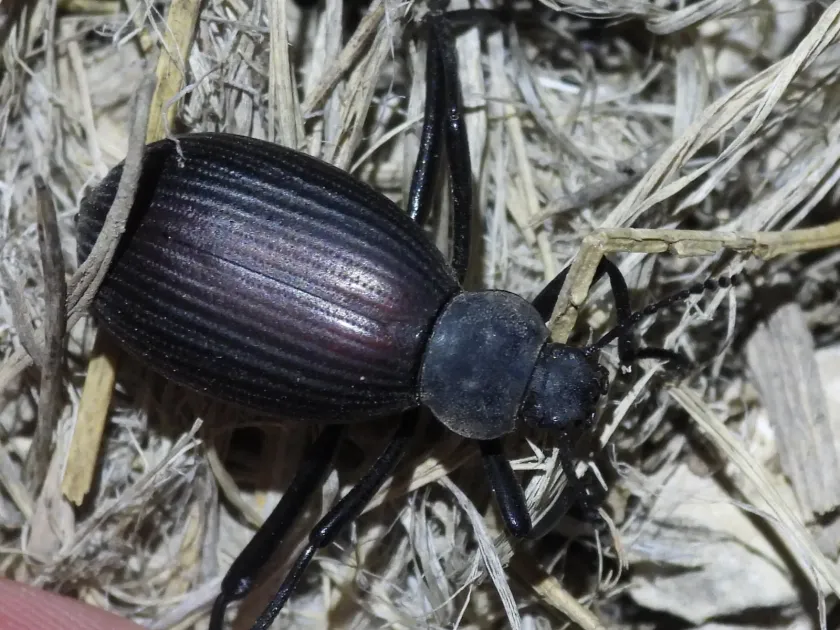
Description
How to identify
Eleodes hispilabris belongs to the family Tenebrionidae, commonly known as darkling beetles, within the order Coleoptera. Adult beetles are large, black, and typically possess a matte or slightly dull appearance.
A notable characteristic of this genus is their defensive behavior: when threatened, the beetle raises its abdomen in the air, creating a distinctive posture and secreting a pungent chemical for protection.
The larvae, known as false wireworms, have a cylindrical, elongated body with a hardened, yellowish-brown cuticle, making them look similar to click beetle larvae.
Their development follows complete metamorphosis, including egg, larva, pupa, and adult stages. These beetles are highly adapted to arid and semi-arid environments.
This species is predominantly found in arid regions, showing strong resilience to dry conditions, which allows them to thrive in various agricultural settings across steppes.
What it damages
The primary damage is caused by the larvae, which live in the soil and feed on underground plant parts. They frequently destroy seeds, seedlings, and the roots of young plants.
They affect various cereal crops, including wheat, barley, and oats. In arid regions, they may also inflict significant damage on vegetable crops and certain industrial plants.
Feeding on root systems results in stunted growth, yellowing, and the eventual death of young plants, leading to a significant reduction in overall crop stand density.
Adult beetles may feed on above-ground plant tissues; however, their impact is generally less severe compared to the soil-dwelling larvae, which can wipe out crops at early development stages.
The pest poses the highest threat during extended dry spring periods, as slow-developing plants are particularly vulnerable to the larvae's feeding activity in the upper soil layers.
When it appears
The activity of Eleodes hispilabris adults begins in the spring when soil temperatures reach the threshold required for emergence from winter dormancy.
Mass oviposition usually occurs from late spring to early summer, with females laying eggs directly into the soil near potential host plants.
Larvae remain active throughout the warm season, progressing through several instars. Their development and feeding rate are highly dependent on soil moisture and food availability.
The species overwinters as both larvae and adults, burrowing deep into the soil to escape freezing temperatures and unfavorable winter conditions.
Given favorable climatic conditions, the life cycle of one generation can span significant time, allowing a persistent population to establish itself in a field for multiple years.
Signs of infestation
Early signs of infestation include patchy crop growth and thinning stands, where bare spots appear due to the destruction of young seedlings.
When inspecting yellowing or wilting plants, producers often find gnawed roots or destroyed stems, which are clear indicators of false wireworm presence.
The presence of larvae can be easily confirmed by digging into the soil around affected plants, where the distinct shiny and hardened larvae are clearly visible.
Damage to seeds immediately after planting often results in complete emergence failure or the appearance of very weak, non-viable seedlings.
An observation of adult beetles gathering on the soil surface during the early morning or evening hours serves as an indicator of high pest density in the field.
Control measures
Effective management begins with sound agronomic practices, such as deep fall plowing, which disturbs the soil habitat and exposes larvae to predators and desiccation.
Implementing a proper crop rotation cycle helps disrupt the life cycle of the darkling beetle by preventing the buildup of host plants in the same area over successive years.
Seed treatment with systemic insecticides is a critical strategy to protect seedlings from soil-dwelling pests during the most vulnerable germination and establishment phases.
The use of bait stations or poisoned baits can be a useful monitoring tool or a supplementary control method for localized outbreaks.
Applying soil-incorporated granular insecticides during planting is an efficient way to reduce the larval population within the root zone and protect developing crops.
Taxonomy
- Latin name
- Eleodes hispilabris
- Order
- Coleoptera (beetles)
- Family
- Tenebrionidae
- EPPO code
- ELEOHI
Discussion
No discussions yet — be the first.