
Eleodes beetle
Eleodes
Description
How to identify
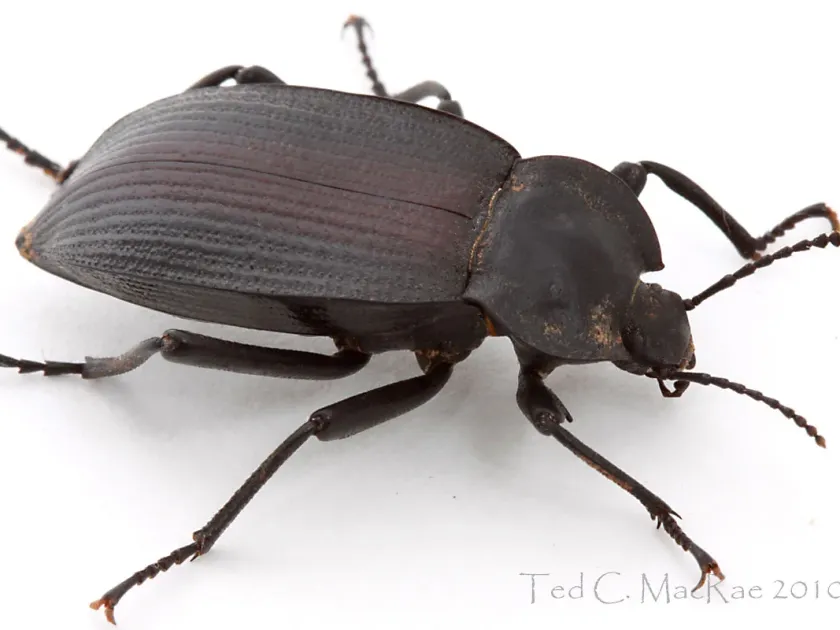
The Eleodes genus belongs to the Tenebrionidae family, commonly known as darkling beetles. Adult beetles are characterized by their robust, black bodies, often being wingless. They are famous for their defensive behavior: when threatened, they elevate their abdomen in a stance that makes them look like they are standing on their heads.
The larval stage is known as the false wireworm. These larvae have a cylindrical, hard, and shiny body, usually yellow-brown in color. They possess a thick chitinous exoskeleton that provides significant protection, making them quite hardy in various soil conditions.
Their life cycle consists of complete metamorphosis. Adult beetles can live for several years, which is unusual for many other crop pests. This longevity allows them to maintain stable populations even under variable environmental conditions.
These beetles are primarily adapted to arid and semi-arid environments. They thrive in regions where soil moisture can be limited, and the larvae are capable of migrating deep into the soil profile to avoid extreme temperatures and desiccation.
Proper identification is crucial for management. While they resemble click beetle larvae (true wireworms), Eleodes larvae are generally larger and have distinct anatomical features on the head and the terminal abdominal segment.
What it damages
Eleodes larvae are significant pests of cereals, including wheat, barley, and corn, as well as several vegetable crops. The damage occurs primarily when the larvae feed on planted seeds and the emerging roots of seedlings.
The destruction of the seed embryo or the root system leads to poor stand establishment. In cases of high infestation, entire fields may show thinned plant density, necessitating re-seeding and resulting in major economic losses.
Adult beetles may also consume tender foliage and stem tissues of young plants. While this type of damage is generally less severe than the subterranean damage caused by larvae, it can still contribute to plant stress in early development stages.
Infestations are most severe in fields with reduced tillage or where crop residues are left on the surface, as these provide a habitat for the beetles and food sources for the developing larvae.
Furthermore, the physical wounds caused by larvae provide entry points for soil-borne pathogens. This often leads to increased incidences of root rot and other fungal diseases, which can debilitate the plant even if the initial insect damage was not fatal.
Signs of infestation
Field symptoms include patchy germination and wilting of young seedlings. When digging up the affected plants, one will typically find damaged root systems or hollowed-out seeds that clearly indicate the activity of subterranean chewing insects.
Adult beetles can be observed during the evening or night hours, as they are mostly nocturnal. They often hide under stones, debris, or inside soil cracks during the hot daytime hours to escape the heat.
Soil sampling is the most reliable method for detecting the presence of larvae. Taking core samples at a depth of 5–15 cm during the spring or fall can provide a quantitative estimate of the larval density in the field.
The presence of predatory insects and ground-feeding birds congregating in specific areas of the field can sometimes signal high larval activity, as these animals take advantage of the pest population.
Yellowing of young plants without clear nutrient deficiencies or moisture stress is a strong diagnostic indicator that the root system has been compromised by soil-dwelling pests like false wireworms.
Control measures
Effective management focuses on integrated pest management (IPM) practices. Seed treatment with systemic insecticides is the primary line of defense, providing protection during the critical period of germination and emergence.
Crop rotation is an essential strategy. Rotating host crops with non-host crops effectively starves the larval population, preventing them from completing their life cycle and reducing the pressure for the following season.
Tillage practices play a vital role. Regular and timely cultivation helps disrupt the habitat of the larvae and brings them to the surface, where they become vulnerable to desiccation and natural predators like birds.
Sanitation of the field by removing crop residues can also decrease the attractiveness of the area to adult beetles, as they prefer environments that offer both shelter and organic matter.
- Implementation of crop rotation cycles.
- Use of insecticidal seed dressings.
- Mechanical soil cultivation to disturb larval habitats.
- Monitoring pest populations using pitfall traps.
- Weed management to eliminate alternative food sources.
Taxonomy
- Latin name
- Eleodes
- Order
- Coleoptera (beetles)
- Family
- Tenebrionidae
- EPPO code
- ELEOSP
Discussion
No discussions yet — be the first.