
Green spruce aphid
Elatobium abietinum
Description
How to identify
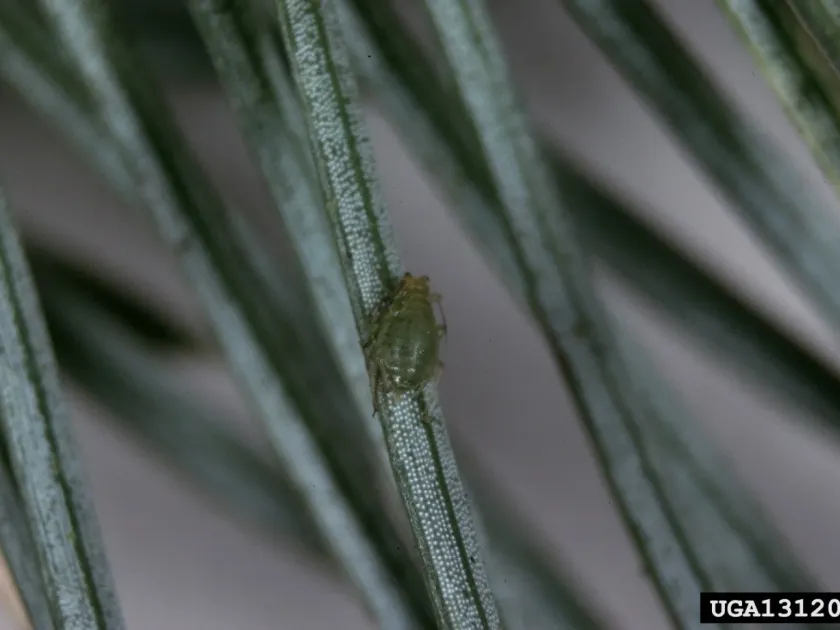
The Green spruce aphid (Elatobium abietinum) is a small sap-sucking insect from the order Hemiptera and the family Aphididae. Measuring approximately 1–2 mm in length, it is distinguished by its vibrant green color, which acts as camouflage against the needles of host trees.
These aphids possess delicate bodies and long antennae. They appear in both winged and wingless forms, with the winged adults emerging primarily when overcrowding forces them to migrate to neighboring branches or trees, typically in late spring or early summer.
What it damages
The primary hosts for this pest include a wide variety of spruce species, such as Picea abies, Picea sitchensis, and Picea pungens. It primarily targets older needles, which provide the bulk of the tree's photosynthetic capacity, leading to significant physiological stress.
The feeding process involves the aphid injecting saliva into the needle tissues. This saliva contains toxins that break down plant cells, leading to chlorosis, necrosis, and eventual premature needle drop, which can thin the canopy of the spruce significantly.
When it appears
This species is well-known for its preference for mild winters and cool spring temperatures. Population growth usually peaks between March and June. Cold, harsh winters are typically lethal to the aphid, limiting its spread in colder regions.
During the peak of summer, when temperatures rise, the aphid population tends to crash due to heat sensitivity and the activity of natural predators. As autumn temperatures moderate, the surviving population may begin to produce eggs that survive the winter months.
Signs of infestation
Symptoms of infestation often appear as yellow mottling or banding on older needles. This discoloration eventually spreads to the entire needle, which turns brown and sheds, leaving the branches bare from the inside out.
Sticky honeydew secretions are a common indicator of a large aphid colony. This substance often promotes the growth of sooty mold, which can cover the foliage in a black, powdery coating, further hindering the tree's ability to process sunlight.
Control measures
Integrated pest management is recommended to combat the Green spruce aphid. Early spring monitoring is crucial, as identifying the initial buildup of colonies allows for targeted treatment before significant needle loss occurs.
- Apply systemic insecticides during early spring to reach the insects feeding deep in the canopy.
- Encourage natural predators such as ladybirds and lacewings to colonize the area.
- Wash the foliage with a pressurized water spray to physically dislodge the aphid colonies.
- Ensure trees are well-watered to withstand the damage caused by sap extraction.
Taxonomy
- Latin name
- Elatobium abietinum
- Order
- Hemiptera (bugs, aphids, leafhoppers)
- Family
- Aphididae
- EPPO code
- LIOAAB
Discussion
No discussions yet — be the first.