
Tulip bulb aphid
Dysaphis tulipae
Description
How to identify
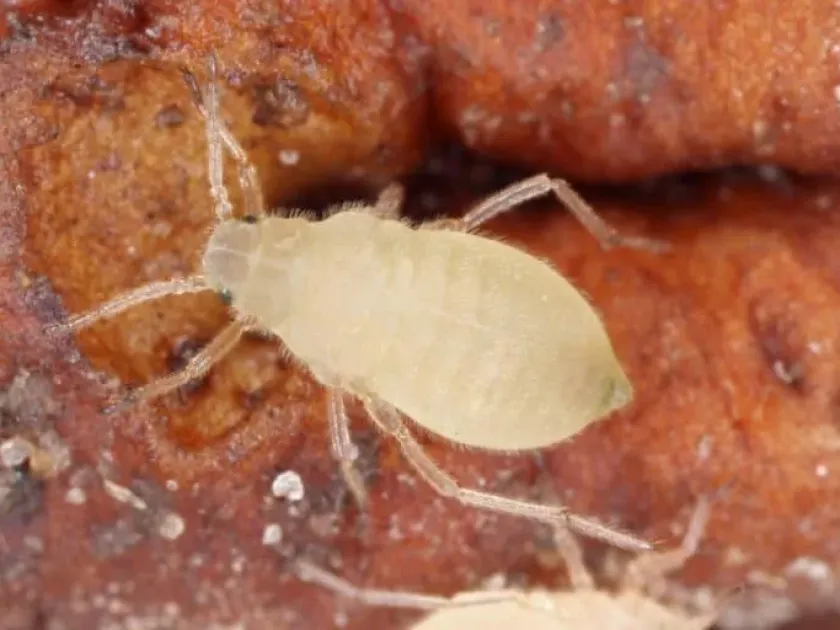
The tulip bulb aphid (Dysaphis tulipae) is a small insect belonging to the family Aphididae. Adult specimens typically measure 2–2.5 mm in length and display a greyish-yellow to brown coloration, often covered in a delicate, powdery wax layer.
This species is characterized by its cryptic lifestyle. Unlike leaf-dwelling aphids, this pest thrives in hidden locations, specifically under the outer scales of bulbs during storage or at the base of stems during the active growing season.
The aphid's lifecycle is closely tied to artificial environments like warehouses or greenhouses. Under favorable temperature conditions, they reproduce by viviparity without forming winged stages, allowing colonies to proliferate rapidly.
During heavy infestations, the aphids form dense clusters that look like a white or grey dusty coating. Detecting them requires peeling back the dry outer scales of the bulbs during inspection.
Accurate identification is often delayed due to the pest's hidden behavior. Horticulturists must conduct routine spot checks of the planting material to identify the presence of these insects before they cause significant damage.
What it damages
The tulip bulb aphid primarily attacks bulbous flowering plants. While tulips are the main host, the aphid also infests irises, gladioli, lilies, and various Amaryllidaceae species.
The aphid feeds on plant sap by piercing the bulb tissue with its mouthparts. This feeding process depletes the plant's nutrient reserves, which are essential for robust flowering and healthy bulb propagation.
Feeding sites serve as entry points for secondary pathogens, including fungi and bacteria, which frequently lead to the development of rot in stored bulbs, resulting in total loss of the stock.
Plants grown from infested bulbs often exhibit stunted, chlorotic growth. The stems may appear deformed, and flower buds frequently wither and fail to open, rendering the plant aesthetically worthless.
Furthermore, Dysaphis tulipae is a known vector for viral diseases. It can transmit the tulip breaking virus, which causes color-breaking in flower petals and permanently ruins the quality of the tulip cultivar.
When it appears
The peak period of damage occurs during the winter storage phase. In storage facilities where temperatures exceed +10...+15°C, the aphid continues to reproduce actively, leading to severe colony growth.
During the spring, the pest transitions to emerging sprouts. By residing at the base of the stems just beneath the soil surface, the aphids remain protected from many topical insecticide applications.
While summer heat can temporarily reduce activity, the life cycle remains near-continuous in humid, climate-controlled greenhouses, allowing the aphid to persist throughout the entire year.
Spread between plants usually occurs through the physical contact of infested bulbs in crates or by planting infected material in close proximity to healthy ones in the field.
Autumn is a critical management phase. As bulbs are lifted and prepared for storage, aphids are often inadvertently transported into storage facilities, necessitating strict quarantine and treatment measures.
Signs of infestation
The first sign of infestation during bulb inspection is the presence of sticky honeydew on the surface of the scales, which often leads to the development of black sooty mold.
Consistent damage leads to the dehydration and shriveling of bulbs during storage. Carefully lifting the outer scales usually reveals the greyish-yellow clusters of aphids huddled around the basal plate.
During the growing season, visual symptoms include leaf curling, yellow spotting, or typical deformation of the flower stems. Affected plants generally look weak and lack vigor.
In cases of severe infestation, colonies of the aphid may be observed at the base of the stem at the soil level, often camouflaged by soil particles and aphid secretions.
If bulbs fail to emerge in the spring or show signs of delayed development, excavating a few samples will typically reveal the presence of Dysaphis tulipae hiding under the bulb skins.
Control measures
Effective control of the tulip bulb aphid relies on a comprehensive strategy, prioritizing the selection of healthy planting material and rigorous storage hygiene.
- Treatment of bulbs with systemic insecticides before placing them into storage.
- Maintaining storage temperatures below +8°C to significantly slow the metabolic and reproductive rates of the aphids.
- Utilizing yellow sticky traps in greenhouse settings to monitor for the presence of winged migrants.
- Application of systemic insecticides during the growing season to eliminate aphids at the base of the plants.
Sanitation remains vital: disinfecting storage crates and facilities regularly helps minimize the risk of cross-contamination and ensures the long-term health of the bulb collection.
Taxonomy
- Latin name
- Dysaphis tulipae
- Order
- Hemiptera (bugs, aphids, leafhoppers)
- Family
- Aphididae
- EPPO code
- DYSATU
Discussion
No discussions yet — be the first.