
Rosy apple aphid
Dysaphis radicola
Description
How to identify
The rosy apple aphid (Dysaphis radicola) belongs to the order Hemiptera and the family Aphididae. Adult wingless individuals have an oval body up to 2 mm long, colored in grayish-green or yellowish-brown tones.
The nymphs of this pest resemble the adults in appearance but are smaller and lack developed reproductive organs. As they mature, the coloration of the nymphs can shift, becoming more intense.
Winged forms of the aphid appear in late spring and summer. Their primary function is to disperse the species to neighboring trees, contributing to the rapid spread of the population throughout the orchard.
This species is highly prolific. The pest overwinters as eggs in the crevices of the bark on the trunk and skeletal branches of the apple tree, making them difficult to reach with mechanical cleaning methods.
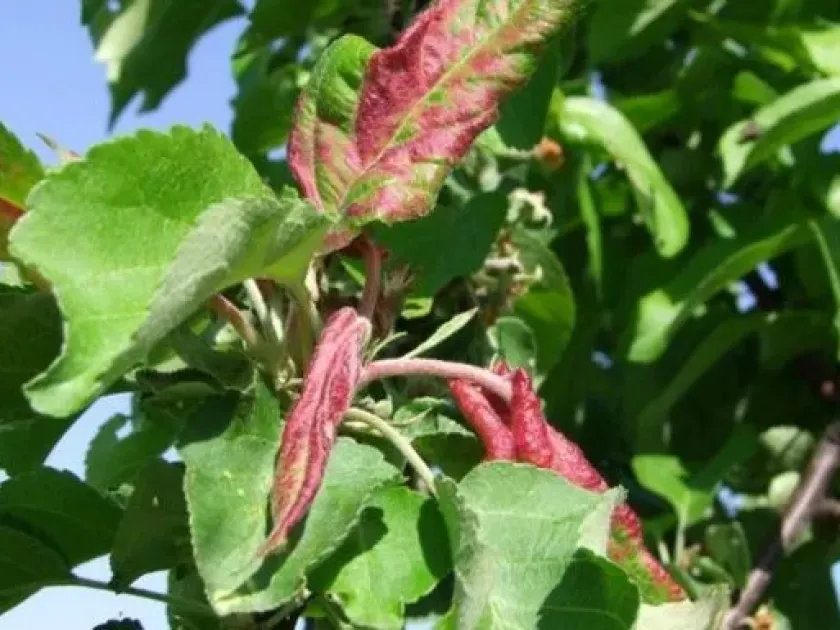
For accurate identification, a magnifying glass should be used, as colonies are often hidden inside curled leaves, creating characteristic red or deep burgundy galls.
What it damages
The primary host plant for this pest is the domestic apple tree. In rare cases, the aphid may migrate to other pome fruit crops if they are growing in close proximity to an infested area.
The insect feeds by sucking sap from young leaves and shoots. In response to the enzymes in the aphid's saliva, the leaf tissues undergo pathological growth, acquiring a characteristic red-brown coloration.
Damaged leaves deform, curl, and eventually dry out. This disrupts the process of photosynthesis, which has a significant negative impact on the overall health and vigor of the tree.
During severe infestations, the aphid moves to young fruits, causing twisting, uneven development, and a substantial loss of market quality. Affected fruits often drop prematurely.
In addition to direct damage, the aphid acts as a vector for viral diseases in fruit trees. Weakening the plant's immune system after an aphid attack makes it vulnerable to secondary infections.
When it appears
The development of the pest begins in early spring when average daily temperatures reach the levels necessary for the nymphs to hatch from the overwintered eggs.
The peak activity of the colonies occurs during the budding period and the active growth of young shoots in May and June. It is during this time that visible damage forms.
Throughout the summer season, the pest produces several generations. The speed of reproduction is directly dependent on the temperature regime: in hot weather, the life cycle of one generation shortens.
By mid-summer, the aphid population often reaches its maximum, after which some winged individuals migrate to other areas to reduce competition for food resources.
In the autumn, egg-laying occurs as females prepare for winter. During this period, the pest becomes less active, settling into protected places on the tree trunks for winter diapause.
Signs of infestation
The first and most noticeable sign of infestation is the appearance of red, swollen spots on the apple leaves, which eventually turn into curled, deformed structures known as galls.
Inside these curled leaves, upon closer inspection, one can find colonies of insects. The color of the colonies may vary, but they often appear as a grayish coating on the underside of the leaf.
The presence of a sticky residue, known as honeydew, on the surface of leaves and fruits is a characteristic indicator of aphid activity.
Sooty mold often grows on the honeydew, covering the damaged areas with a black coating. This seriously stresses the tree and ruins the appearance of the fruit.
Stunted growth of young shoots, their twisting, and premature yellowing of the leaf blade are indirect but reliable signals of trouble in the orchard.
Control measures
Prevention begins with early spring spraying of trees with mineral oil-based products before buds burst to destroy overwintering eggs.
During the growing season, upon detection of the first hotspots, it is necessary to apply systemic or contact-intestinal insecticides, ensuring thorough coverage of the leaf undersides.
It is important to attract natural enemies of aphids to the orchard, such as ladybugs, lacewings, and hoverflies. Planting nectar-producing flowers and limiting the use of harsh pesticides is recommended.
Agrotechnical methods include regular pruning of root suckers and water sprouts, as these are the primary sites for aphid colonization. Controlling ant populations, which actively protect and spread aphids, is also essential.
The use of biological preparations based on entomopathogenic fungi or bacteria allows for a reduction in the chemical load on the orchard while providing effective control over the pest population.
Taxonomy
- Latin name
- Dysaphis radicola
- Order
- Hemiptera (bugs, aphids, leafhoppers)
- Family
- Aphididae
- EPPO code
- DYSARA
Discussion
No discussions yet — be the first.