
Pear bedstraw aphid
Dysaphis pyri
Description
How to identify
The pear bedstraw aphid (Dysaphis pyri) belongs to the order Hemiptera and the family Aphididae. These are small insects, usually 2–2.5 mm long, with colors ranging from pale green to reddish-brown, often covered with a powdery wax coating.
They overwinter as eggs, which are deposited by females in the crevices of the bark on the trunk and primary branches of pear trees.
In spring, the first generation of wingless stem mothers emerges, beginning the colonization of young leaves and shoots, leading to rapid population growth through parthenogenesis.
Throughout the growing season, winged forms (alatae) appear, facilitating the spread of the pest to other parts of the orchard or nearby pear trees.
Their life cycle is closely linked to the pear tree as the primary host, with specific adaptations that allow them to flourish in the mild temperatures of late spring and early summer.
What it damages
The aphid primarily attacks pear trees, with a preference for young, succulent leaves, tender shoots, and developing fruitlets.
By feeding on the sap, the insects inject toxic saliva into the plant tissues, which disrupts normal development and leads to significant physiological stress for the tree.
Severe infestations cause massive leaf deformation, impaired photosynthesis, and premature leaf drop, which weakens the tree's overall vigor.
Fruit set can be severely damaged, resulting in deformed, poor-quality pears or total loss of yield in heavily infested areas of the canopy.
Chronic infestation reduces the tree’s winter hardiness and makes it more susceptible to secondary issues like fungal diseases and bark damage.
Signs of infestation
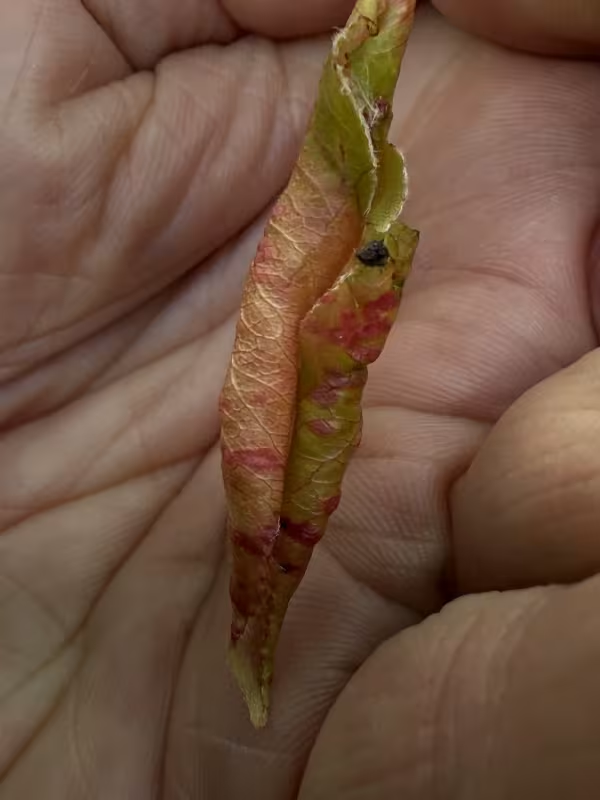
The most distinctive symptom is the formation of leaf galls — curled, blistered, and swollen sections of the leaf that turn bright red, yellow, or orange.
On the undersides of the leaves, one can observe dense colonies of aphids, often accompanied by sticky honeydew, which may eventually develop black sooty mold.
Young shoots become twisted, stunted, and lose their vibrant green color as the aphids concentrate their feeding pressure on the tips.
The presence of ant activity on the tree is a strong indicator of an aphid colony, as ants are attracted to the sugary honeydew excreted by the pests.
- Bright red or yellow blistering on leaves.
- Tight curling of leaves into dark bundles.
- Sticky residue on leaves and stems.
- Stunted shoot growth and premature yellowing.
Control measures
Effective control starts with good orchard hygiene, including the removal of water sprouts and root suckers, which serve as prime feeding sites for initial colonies.
Encouraging beneficial predators such as ladybirds, lacewings, and hoverflies is an essential component of an Integrated Pest Management (IPM) strategy.
Dormant or early-season oil-based sprays can be highly effective in reducing the overwintering egg population before they hatch in the spring.
During the growing season, systemic insecticides are the most reliable method for controlling the pest, as they penetrate the leaf tissue to reach aphids hidden inside the galls.
Always rotate insecticide modes of action to prevent the development of resistance and ensure long-term efficacy in managing the aphid population.
Taxonomy
- Latin name
- Dysaphis pyri
- Order
- Hemiptera (bugs, aphids, leafhoppers)
- Family
- Aphididae
- EPPO code
- DYSAPY
Discussion
No discussions yet — be the first.