
Rosy apple aphid
Dysaphis plantaginea
Description
How to identify
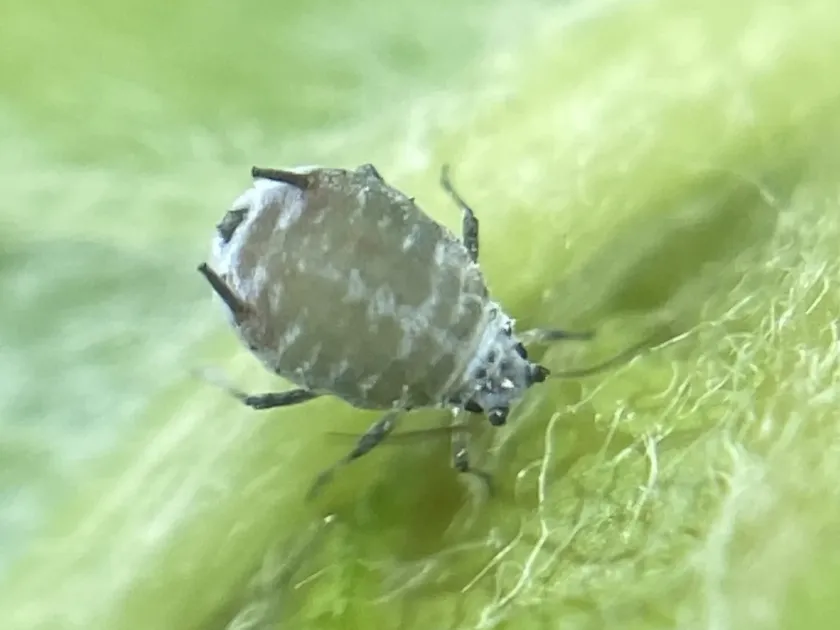
The rosy apple aphid (Dysaphis plantaginea) belongs to the Hemiptera order and the Aphididae family. Adult aphids are distinguished by their pinkish, purple, or slate-grey coloration.
The body is oval-shaped, measuring approximately 2 mm in length. This species is highly prolific, producing multiple generations throughout the growing season.
The pest overwinters in the egg stage, with eggs deposited by females into bark crevices and near dormant buds on apple branches.
In spring, as buds begin to burst, the eggs hatch into stem mothers, which start feeding on the tender emerging plant tissues.
They prefer sheltered, shady areas of the canopy, where they cluster in dense colonies, making early detection essential for effective management.
What it damages
This aphid exclusively targets apple trees. It can cause severe economic damage to both young orchards and mature commercial fruit production.
By piercing and sucking sap from leaves, shoots, and young fruits, the aphid robs the tree of vital nutrients needed for healthy fruit development.
Feeding leads to severe fruit deformation; affected apples often remain small, lumpy, and lose their marketability for fresh consumption.
Infested foliage exhibits significant curling, turns a reddish hue, and may eventually wither or drop prematurely due to the stress.
Repeated attacks can lead to stunted shoot growth, permanent branch distortion, and a decline in the tree's overall vigor and resistance.
When it appears
The cycle begins in early spring when warmer temperatures trigger the hatching of the overwintering eggs on the apple branches.
Peak activity occurs during late spring and early summer, coinciding with the rapid growth of new foliage and young fruitlets.
By mid-summer, a portion of the population migrates to alternate hosts, such as plantain, before returning to apple trees in autumn.
Autumn migration is crucial for mating and the subsequent deposition of winter eggs, which ensures the survival of the species until the next year.
Warm and humid weather conditions are particularly favorable for rapid population explosions within the orchard during the late spring months.
Signs of infestation
The most characteristic symptom of a rosy apple aphid infestation is the severe curling and bunching of leaves surrounding the aphid colonies.
The aphids secrete a sticky substance known as honeydew, which covers the leaves and fruit, often leading to the growth of black sooty mold.
This sooty mold layer blocks sunlight, further hindering photosynthesis and creating an unappealing appearance for the orchard and fruit.
A heavy presence of ants, which farm the aphids for their honeydew, is a strong indicator of an active colony hidden within the curled leaves.
- Tightly curled leaves at the tips of new shoots
- Sticky honeydew residue on foliage and fruit
- Visible black sooty mold growth on branches
- Heavy ant activity in the canopy
- Deformed, small, and discolored fruit
Control measures
Cultural control involves systematic pruning to remove suckers and water sprouts, which are the preferred initial colonization sites for the aphids.
Installing sticky bands around tree trunks can effectively impede ant traffic, allowing natural predators to access and reduce aphid populations.
Encouraging biological control agents, such as lady beetles, lacewings, and hoverflies, is a sustainable way to keep populations below threshold levels.
Chemical control should be implemented using systemic insecticides, timed strictly before or after the blossoming period to protect pollinators.
Integrated Pest Management strategies require alternating active ingredients to prevent the development of pesticide resistance in aphid populations.
Taxonomy
- Latin name
- Dysaphis plantaginea
- Order
- Hemiptera (bugs, aphids, leafhoppers)
- Family
- Aphididae
- EPPO code
- DYSAPL
Discussion
No discussions yet — be the first.