
Apple plantain aphid
Dysaphis brancoi
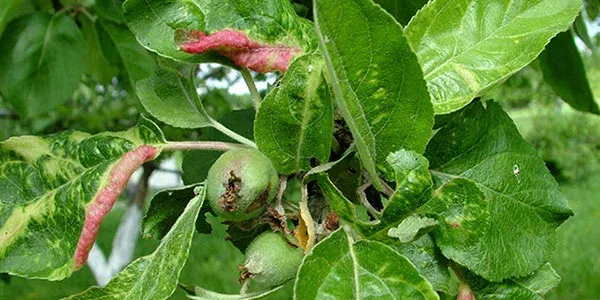
Description
How to identify
The apple plantain aphid (Dysaphis brancoi) belongs to the order Hemiptera and the family Aphididae. It is a small insect that exhibits a complex life cycle involving a host alternation between fruit trees and herbaceous plants.
The insects have piercing-sucking mouthparts designed to feed on the phloem sap of young apple leaves and shoots. Their color ranges from pale yellow to grayish-green, helping them camouflage against the foliage.
These aphids reproduce both sexually and asexually. The population can produce multiple generations within a single season, leading to massive colony build-ups under optimal environmental conditions.
Winter is spent in the egg stage, attached to bark crevices and buds of apple trees. As spring arrives, nymphs hatch and begin to colonize emerging leaves and floral buds.
The aphid's morphology allows it to stay protected within the folds of curled leaves, making physical control difficult during the peak of the infestation.
What it damages
The primary host for this species is the domestic apple tree. Infestations are particularly damaging to young trees and nursery stock, significantly hindering their vigor and growth potential.
During the summer, part of the aphid population migrates to alternative hosts, specifically plants in the plantain family (Plantago spp.). This host alternation allows them to survive and multiply outside of the apple tree canopy.
Damage is caused by the aphid's feeding, which leads to leaf curling, stunted shoot growth, and a reduction in the plant's overall photosynthetic capacity.
The injection of toxic saliva during feeding causes the leaves to curl along the midrib, creating a protective microenvironment for the aphids while also damaging the tissue structurally.
Severe infestations can lead to premature leaf drop and negatively impact the tree's ability to store energy for the following season, resulting in yield loss.
When it appears
The season of activity begins in early spring when eggs hatch. The nymphs quickly move to the opening buds, marking the start of the primary infestation period.
Peak populations on apple trees typically occur in late spring and early summer. As temperatures rise and the season progresses, winged forms appear and migrate to secondary hosts like plantain.
Summer months are characterized by a decrease in aphid numbers on apple trees as the population shifts to the herbaceous hosts.
In autumn, winged sexual forms return to the apple trees to mate and lay overwintering eggs. This ensures the species persists through the winter months.
Weather patterns such as mild, damp springs are most favorable for aphid proliferation, while extremely hot or dry summers may accelerate their migration to secondary hosts.
Signs of infestation
The most diagnostic sign of an infestation is the longitudinal curling of leaves. The curled leaves often turn yellow or reddish and appear deformed compared to healthy foliage.
Leaves become covered in sticky honeydew, a sugary excretion produced by the aphids as they feed. This substance often attracts ants, which may actively protect the aphid colonies from predators.
Sooty mold, a black fungus, frequently grows on the honeydew-covered surfaces, further inhibiting the tree's ability to perform photosynthesis and leaving unsightly black stains.
Deformation of young shoots and stunted growth are common symptoms, as the plant's energy is diverted to repair tissue damaged by the aphid's feeding.
- Leaf curling along the central vein.
- Sticky honeydew secretions on foliage.
- Presence of black sooty mold.
- Stunted or twisted new shoot growth.
- Increased ant activity on the tree canopy.
Control measures
Managing the apple plantain aphid requires a multi-faceted approach, starting with the removal of weeds like plantain from the orchard floor to eliminate summer hosts.
Encouraging biological control is essential; maintaining habitats for natural predators like ladybugs, hoverflies, and lacewings can keep aphid populations below economic damage thresholds.
Chemical intervention should be considered if monitoring shows threshold levels are exceeded. Systemic insecticides are most effective when applied early, before leaves become tightly curled.
It is crucial to use targeted applications to ensure coverage of the undersides of leaves, where the aphids are shielded from external contact.
Rotating different classes of insecticides is recommended to prevent the development of pesticide resistance in the aphid population.
Taxonomy
- Latin name
- Dysaphis brancoi
- Order
- Hemiptera (bugs, aphids, leafhoppers)
- Family
- Aphididae
- EPPO code
- YEZABR
Discussion
No discussions yet — be the first.