
Celery aphid
Dysaphis apiifolia
Description
How to identify
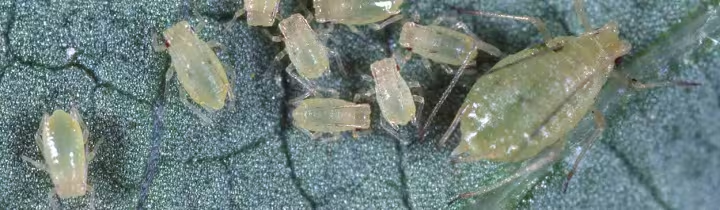
The celery aphid (Dysaphis apiifolia) is a small sap-sucking insect of the family Aphididae. It is characterized by its small, pear-shaped body, typically measuring 2–2.5 mm, ranging in color from yellowish-green to gray.
The species exhibits a complex life cycle involving a migration between primary and secondary hosts. It overwinters as eggs on woody plants like hawthorn before migrating to herbaceous hosts in the spring.
Aphids reproduce via parthenogenesis during the summer months, allowing populations to expand rapidly without the need for sexual mating, which results in dense colonies on host plants.
The insects are equipped with specialized mouthparts called stylets, which penetrate the plant epidermis to reach the phloem, causing significant nutrient loss for the plant.
Developmental speed is highly temperature-dependent; in favorable summer conditions, a new generation can emerge in less than a week, leading to rapid colonization of garden patches.
What it damages
This pest primarily attacks members of the Apiaceae family, with celery (leaf, stalk, and root) being the most common target in horticultural settings.
Other affected crops include parsley, dill, carrots, parsnips, and fennel. The presence of these insects can render high-quality produce unmarketable due to leaf distortion.
By constantly sucking plant sap, the aphids drain energy from the plant, resulting in stunted growth, yellowing, and significantly lower yields of roots or leaves.
Heavy infestations lead to leaf rolling and deformation, which creates a protective environment for the aphids, making contact insecticides less effective.
Furthermore, the aphids act as vectors for several plant viruses, which can cause severe systemic diseases that are far more damaging than the feeding activity itself.
When it appears
The active season begins in late spring, following the hatching of fundatrices from overwintering eggs. Migration to vegetable crops usually occurs from late May to June.
Peak infestation levels are typically observed during the hottest months of summer, specifically July and August, when environmental conditions are optimal for population growth.
As daylight hours decrease and temperatures drop in the autumn, the aphids produce sexual forms that migrate back to their primary woody hosts to lay eggs for the winter.
Weather patterns heavily influence population dynamics; prolonged dry spells often favor rapid population surges by stressing host plants and suppressing natural enemies.
Conversely, periods of heavy rain can physically knock aphids off leaves, temporarily suppressing the colony density in outdoor garden environments.
Signs of infestation
The most visible symptom is the curling, crinkling, or cupping of young leaves, which is caused by the aphid's saliva inducing physiological changes in leaf tissue.
Plants may show signs of chlorosis (yellowing) or stunted overall growth. In severe cases, the entire plant architecture becomes deformed, particularly the central rosette.
The presence of sticky honeydew secreted by the aphids is a primary indicator. This substance often promotes the secondary growth of black sooty mold on leaf surfaces.
Frequent ant activity on the plants is a strong warning sign, as ants are often observed tending the aphid colonies to harvest the sugary honeydew.
White shed skins (exuviae) are often visible on the underside of leaves, acting as clear evidence of active molting and a thriving, growing population of aphids.
Control measures
Cultural management is the first line of defense; this includes removing wild Apiaceae weeds from the garden perimeter that serve as alternative hosts for the pest.
Maintaining healthy soil fertility and plant spacing can help plants withstand minor infestations without significant yield loss, as stressed plants are more attractive to aphids.
Biological control methods involving the introduction or protection of natural predators like lady beetles, lacewings, and parasitic wasps are highly recommended.
For chemical interventions, systemic insecticides are often effective, but they must be applied according to pre-harvest intervals to ensure food safety for edible greens.
- Regular monitoring of the underside of leaves for early signs of colonies.
- Using reflective mulches to deter the landing of winged aphids.
- Applying insecticidal soaps or neem oil for organic spot treatment.
- Promptly removing and disposing of highly infested plants to limit spread.
Taxonomy
- Latin name
- Dysaphis apiifolia
- Order
- Hemiptera (bugs, aphids, leafhoppers)
- Family
- Aphididae
- EPPO code
- YEZAIN
Discussion
No discussions yet — be the first.