
Drymaeus interpunctus
Drymaeus interpunctus
Description
How to identify
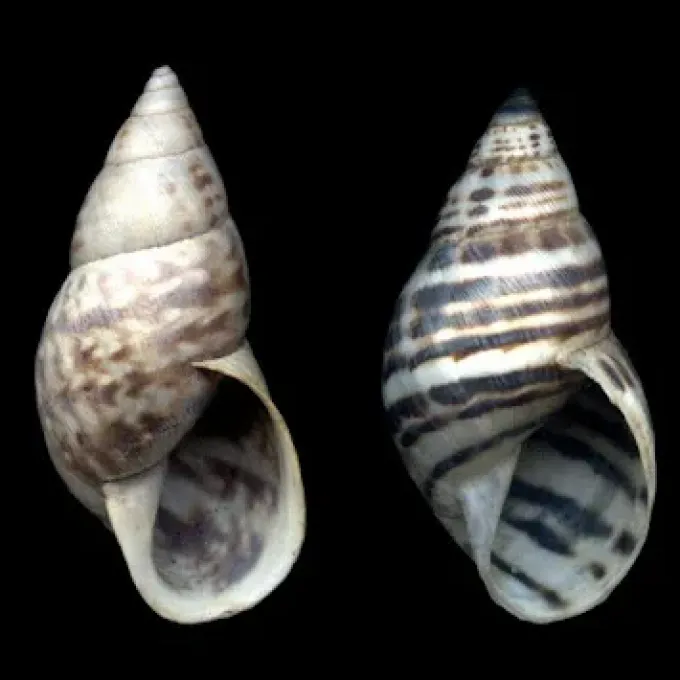
Drymaeus interpunctus belongs to the phylum Mollusca, class Gastropoda, and family Bulimulidae. This arboreal snail is characterized by a distinctive conical shell with spotted or banded patterns.
Adult specimens are of moderate size, well-adapted for climbing and moving across foliage. Their pale bodies often feature dark pigmentation, providing camouflage against the bark of trees and shrubs.
This species favors tropical and subtropical environments with high humidity levels. Their life cycle consists of the egg stage, juvenile phase, and the mature adult stage.
Reproduction involves laying eggs in substrates or hidden plant niches. Their developmental rate is highly sensitive to temperature and the availability of moisture.
Identifying this pest is challenging due to its nocturnal activity. During the day, they remain hidden in leaf axils or branch forks, requiring careful inspection of plants.
What it damages
The pest targets a wide range of tropical and ornamental plants, including young fruit tree saplings. They prefer succulent tissues such as young leaves, buds, and stems.
In nurseries, young snails can cause severe damage by consuming foliage, which stunts the growth of sensitive saplings. This makes them highly susceptible to secondary infections.
Damage symptoms include skeletonization of leaves, where snails consume the soft tissue, leaving only the vascular structure. Leaf edges often appear jagged and irregular.
Beyond physical consumption, these snails act as vectors for various plant pathogens. Their mucus trails create a moist, nutrient-rich environment for fungi and bacteria to colonize damaged areas.
Under intensive cultivation, such as in greenhouses, this pest can multiply rapidly, creating localized outbreaks that spread quickly across the entire plant population.
Signs of infestation
The primary indicator of a Drymaeus interpunctus infestation is the presence of silvery, dried mucus trails on leaves and bark, which are most visible in the morning.
Inspection often reveals irregular holes in leaf blades. Frequent attacks on terminal buds or shoots can cause significant deformation of new growth.
During the evening, using a flashlight often reveals the snails actively feeding on the plant, as they prefer to move and forage under cover of darkness.
Dark, granular excrement found on leaves or at the base of the plant is another clear sign of a significant infestation.
Plants suffering from high populations often show yellowing and premature leaf drop, resulting from the cumulative loss of photosynthetic surface area.
Control measures
Effective management begins with cultural practices such as regular weeding and removing plant debris, which eliminates daytime refuges for the snails.
Physical barriers, such as copper tape or abrasive mulch materials, can be placed around the base of the plant to prevent snails from climbing up the stem.
Chemical control involving molluscicides based on metaldehyde or iron phosphate can be applied. These should be placed in areas of frequent snail activity.
Always adhere to local guidelines regarding pesticide use to avoid damaging non-target species or compromising the quality of the harvested crops.
Encouraging natural predators such as birds, toads, or predaceous insects can help maintain snail populations at manageable levels without heavy reliance on chemicals.
Taxonomy
- Latin name
- Drymaeus interpunctus
- Order
- Molluscs
- Family
- Orthalicidae
- EPPO code
- DRYSIN
Discussion
No discussions yet — be the first.