
Oregon maple aphid
Drepanosiphum oregonensis
Description
How to identify
The Oregon maple aphid (Drepanosiphum oregonensis) belongs to the order Hemiptera and the family Aphididae. It is a highly specialized species that primarily targets maple trees.
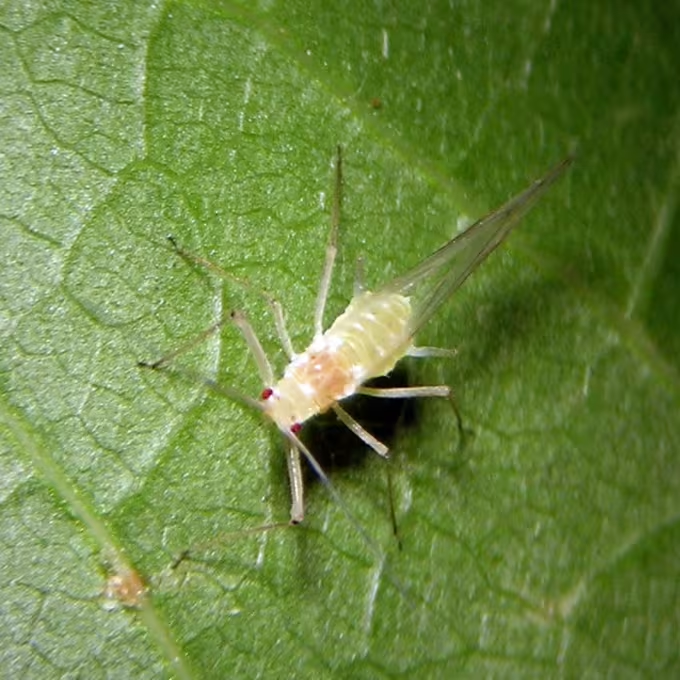
These aphids are characterized by an elongated body shape and a coloration that ranges from pale yellow to green, providing excellent camouflage against leaf tissue.
Adults possess long legs and prominent antennae, which make them more mobile than many other aphid species found in urban landscapes.
Unlike some colonial species, the Oregon maple aphid tends to be somewhat solitary or found in small, loose groups rather than dense clusters on branches.
The species survives the winter as eggs, which are deposited in bark crevices or near bud scales, ensuring their readiness for the next growing season.
What it damages
The primary hosts for this pest are various maple (Acer) species, with a particular affinity for the Norway maple and its ornamental cultivars.
Feeding occurs as the aphids pierce plant cells to extract sap, which directly depletes the energy reserves of the tree during its most active growth phase.
Heavy infestations can cause yellowing, curling, and premature senescence of leaves, severely detracting from the visual appeal of landscape plantings.
The accumulation of honeydew secreted by these insects provides a substrate for sooty mold, which can smother the foliage and interfere with photosynthesis.
Weakened trees often exhibit reduced growth rates and become more susceptible to secondary stressors, including drought and opportunistic pathogens.
When it appears
The cycle begins in early spring when overwintered eggs hatch, coinciding with the opening of tree buds and the emergence of new foliage.
Peak activity and population density typically occur during late spring and early summer when environmental conditions are ideal for rapid development.
As summer temperatures increase, aphid populations may fluctuate significantly, influenced by both heat stress and the activity of natural predators.
As autumn approaches, the insects produce overwintering eggs, signaling the end of the active feeding season for that generation.
Multiple generations can occur throughout the growing season, with the total number depending on regional climate variables and host availability.
Signs of infestation
One of the most obvious indicators is the presence of sticky honeydew on the upper surfaces of leaves located below the feeding sites.
A black, powdery growth on the foliage and branches, caused by sooty mold, is a clear sign that the aphid population is established.
The presence of ant trails on tree trunks is a common behavioral indicator, as ants actively farm the aphids to collect their sugary secretions.
Deformed, pale, or mottled leaves are common visual indicators of sap extraction, especially on young, succulent shoot growth.
When disturbed, these aphids are notable for their rapid movement, often scurrying away rather than staying stationary like other aphid types.
Control measures
Yellow sticky traps are highly effective for monitoring the arrival and migration of adult aphids, allowing for timely intervention.
Biological control is highly recommended; promoting habitats for lady beetles, lacewings, and hoverflies can help keep aphid populations below damaging thresholds.
For significant infestations, systemic insecticides can be applied to provide long-term protection, particularly for valued ornamental specimens.
- Apply dormant oil sprays in early spring to eliminate eggs.
- Prune out heavily infested twigs to reduce local population pressure.
- Maintain tree vigor through proper irrigation and soil care.
Integrated pest management (IPM) practices, such as routine monitoring and encouraging natural predators, remain the most sustainable strategy for maple health.
Taxonomy
- Latin name
- Drepanosiphum oregonensis
- Order
- Hemiptera (bugs, aphids, leafhoppers)
- Family
- Aphididae
- EPPO code
- DRESZI
Discussion
No discussions yet — be the first.