
Dixon's maple aphid
Drepanosiphum dixoni
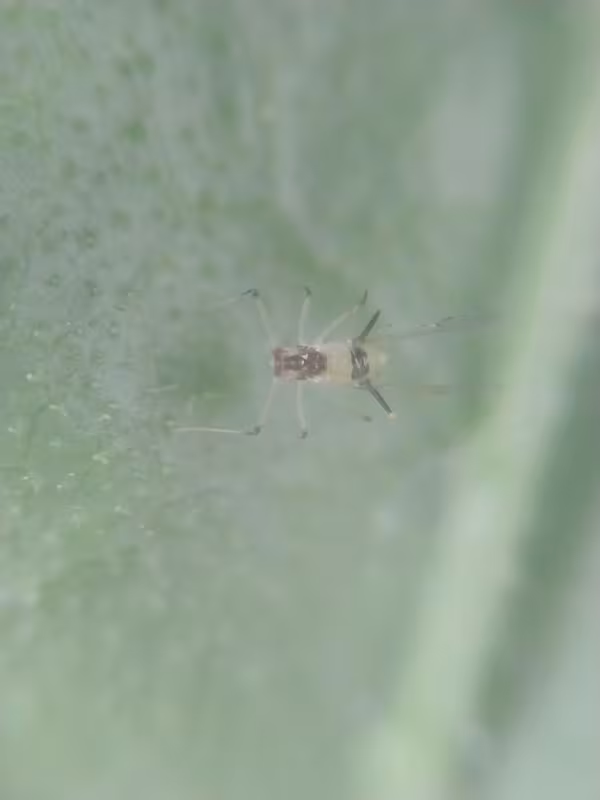
Description
How to identify
Dixon's maple aphid (Drepanosiphum dixoni) is a sap-sucking insect belonging to the family Aphididae. It specifically colonizes various species of maple trees, acting as a specialized pest.
The morphology of this aphid is well-adapted for life on the undersides of leaves and petioles. Adults often possess wings, facilitating rapid dispersal throughout tree canopies during the growing season.
Systematically, this aphid is part of the order Hemiptera. Its biology is closely linked to its host plant, making it a recurring nuisance in landscapes dominated by maple species.
Field identification requires careful observation of the leaf undersides, as these insects tend to hide along the veins. Microscopic examination is often needed to confirm the species due to its similarity to other Drepanosiphum aphids.
The life cycle involves both asexual reproduction during the summer and sexual reproduction in the autumn, ensuring the species survives cold winters through resilient eggs.
What it damages
The primary damage is caused by the aphids extracting phloem sap, which deprives the tree of nutrients and moisture, eventually leading to reduced growth rates and tree vigor.
Aphids excrete a sugary substance known as honeydew. This substance accumulates on foliage and provides an ideal substrate for sooty mold growth, which blocks photosynthesis.
Severe infestations result in premature leaf drop, discolored foliage, and stunted shoot development, significantly diminishing the aesthetic value of urban and park trees.
The stress caused by aphid feeding makes the trees more susceptible to secondary environmental stresses, such as drought or infections by other pathogens.
In nursery settings, Dixon's maple aphid can cause significant economic losses by damaging the health and marketability of young maple trees before they are transplanted.
When it appears
The life cycle begins in spring, with eggs hatching as soon as maple buds break. This synchrony ensures that the nymphs immediately have access to nutrient-rich plant tissues.
During the summer, populations reach their peak. The reproduction rate is largely driven by temperature, with warm, dry conditions accelerating the growth of new generations.
In autumn, sexual forms develop and mate. Females then deposit eggs on the bark of twigs and near buds, where they remain dormant until the following spring.
This overwintering strategy allows the species to persist in various climates, as the eggs are highly resistant to freezing temperatures.
Management monitoring should be most intensive during late spring and early summer, when population density can increase rapidly if left unchecked.
Signs of infestation
The most common sign of an aphid problem is the presence of honeydew, which makes leaves appear sticky and shiny, often attracting ants that protect the aphids from predators.
Sooty mold, appearing as a thick, dark, or black powdery coating on the surface of leaves, is a tell-tale sign that aphids have been present for an extended period.
Observing curled or deformed leaves is a key indicator. This curling is the tree's response to the feeding process and provides the aphids with a sheltered environment.
General wilting and loss of leaf color in individual branches can also indicate localized colonies that are draining the tree's resources.
Increased activity of ladybugs, lacewings, and parasitic wasps in the canopy can also serve as a biological indicator that a significant aphid population is present.
Control measures
Good cultural practices, such as providing adequate irrigation and ensuring proper tree spacing, help the maple tree resist damage from aphid populations.
Systemic insecticides are effective for large-scale infestations. These chemicals are absorbed by the tree and provide long-term protection by killing aphids as they feed.
Encouraging beneficial insects like lady beetles and lacewings is an environmentally friendly way to keep aphid populations below the economic threshold.
For smaller trees, high-pressure water sprays can physically dislodge aphids from leaves, significantly reducing their population without the need for chemicals.
- Apply horticultural oils to dormant trees to destroy overwintering eggs.
- Use sticky barriers on trunks to deter ants that farm the aphids.
- Monitor trees weekly during the spring to catch infestations early.
Taxonomy
- Latin name
- Drepanosiphum dixoni
- Order
- Hemiptera (bugs, aphids, leafhoppers)
- Family
- Aphididae
- EPPO code
- DRESDI
Discussion
No discussions yet — be the first.