
Maple aphid
Drepanosiphum acerinum
Description
How to identify
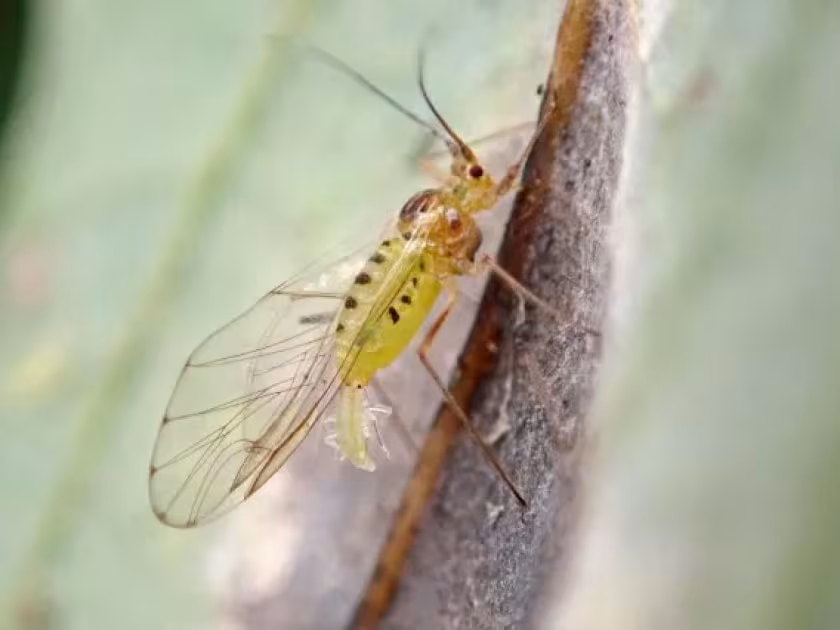
The maple aphid (Drepanosiphum acerinum) is a specialized insect species belonging to the family Aphididae. It is specifically adapted to feed on trees of the genus Acer.
The insect possesses an elongated body with a green or yellowish-brown hue, allowing it to blend effectively with the foliage of the host tree. They are typically found individually rather than in dense clusters.
A distinctive morphological characteristic of this species is the presence of prominent siphunculi on the abdomen. These structures are easily observable under closer inspection or with a magnifying glass.
The lifecycle is strictly tied to the phenology of the maple tree, ensuring that the emergence of nymphs coincides with the availability of succulent new growth.
Both winged and wingless forms exist within the population, facilitating efficient dispersal across the canopy during the spring and early summer months.
What it damages
This pest feeds primarily on various maple species, including the Norway maple. It uses its piercing-sucking mouthparts to extract sap from young leaves and petioles.
Infestation results in the weakening of the host tree, which is particularly detrimental to young nursery saplings or trees under environmental stress. It stunts growth and reduces aesthetic appeal.
The physical damage includes leaf curling and discoloration. Furthermore, the secretion of honeydew promotes the growth of sooty mold, which blocks sunlight and impairs photosynthesis.
Long-term infestation can leave trees more susceptible to secondary infections or environmental damage, potentially leading to premature leaf drop during the summer.
While the direct damage from individual aphids might seem minor, widespread occurrence across the canopy can significantly degrade the health of urban tree plantings.
When it appears
The cycle begins in early spring when nymphs hatch from overwintered eggs deposited in the bark crevices of maple twigs. They immediately begin feeding on emerging buds.
Population levels typically peak during the late spring and early summer, corresponding with the period of maximum vegetative growth for the maple trees.
As temperatures rise and foliage matures, the population activity may fluctuate, although the aphids continue to feed and reproduce throughout the early summer.
In autumn, sexual forms appear, which mate and lay the eggs that will remain dormant throughout the winter, providing a survival strategy against low temperatures.
Climate conditions, especially the timing of the spring thaw and rainfall patterns, play a crucial role in the survival rate of the initial generation of aphids.
Signs of infestation
The primary sign of infestation is the presence of deformed, curling, or yellowing leaves. Because these aphids live individually, they are often overlooked until damage becomes visible.
Sticky honeydew on the leaf surface is a reliable indicator of aphid presence. This residue often attracts ants and wasps, which feed on the sugary liquid.
The appearance of a dark, dusty layer on the leaves, known as sooty mold, indicates that the infestation has been present for a significant period of time.
- Yellowing patches along the leaf veins.
- Visible presence of nymphs on the undersides of leaves.
- Increased ant activity on branches.
- Early leaf drop or withered leaf tips.
A thorough inspection of the undersides of young leaves near the ends of branches is the most effective way to detect the early stages of a Drepanosiphum acerinum outbreak.
Control measures
Effective management requires an integrated approach that focuses on monitoring and the timely application of treatments when population thresholds are exceeded.
Dormant sprays applied in early spring, before bud break, can be highly effective in reducing the population of overwintering eggs hidden in the bark.
During the growing season, systemic insecticides are often the preferred method, as they are absorbed by the plant and provide long-lasting protection against sucking pests.
Encouraging natural predators such as lady beetles, lacewings, and hoverflies can help suppress aphid populations naturally without the need for intensive chemical use.
Proper horticultural care, including adequate irrigation and soil management, helps the tree maintain the vigor necessary to recover from light aphid infestations.
Taxonomy
- Latin name
- Drepanosiphum acerinum
- Order
- Hemiptera (bugs, aphids, leafhoppers)
- Family
- Aphididae
- EPPO code
- DRESAC
Discussion
No discussions yet — be the first.