
Maple aphid
Drepanosiphum
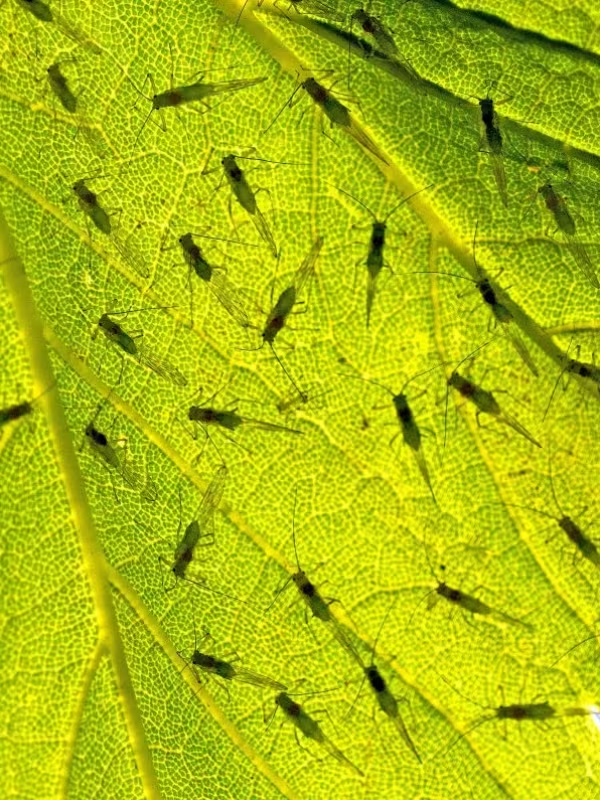
Description
How to identify
The maple aphid (Drepanosiphum) is a genus of insects within the family Aphididae, order Hemiptera. These aphids are specialized feeders that primarily inhabit maple trees (Acer).
They are characterized by their relatively large size and high mobility, especially the winged forms that spread throughout the tree canopy during the active season.
The morphological hallmark of the genus Drepanosiphum is their long, curved siphunculi (cornicles) on the dorsal side of the abdomen, which aids in species identification.
Their life cycle typically involves asexual reproduction (parthenogenesis) for most of the spring and summer, allowing for rapid population growth.
Overwintering occurs in the egg stage, with eggs deposited by sexual females in late autumn, usually in bark crevices near the buds of the host tree.
What it damages
The primary hosts for these aphids are various species of maples, where they congregate on the underside of leaves to extract phloem sap.
Feeding damage results in yellowing, premature leaf drop, and overall stunting of the tree's growth, particularly in young or stressed specimens.
The aphids secrete honeydew, a sugary waste product that coats the leaves and branches, creating a favorable substrate for the growth of sooty mold.
Heavy infestations reduce the photosynthetic efficiency of the canopy, weakening the tree and making it more susceptible to environmental stressors.
Persistent sap removal can lead to branch dieback and diminished vitality, which may facilitate secondary attacks by wood-boring insects or pathogens.
When it appears
The emergence of nymphs from overwintering eggs coincides with bud burst in early spring, ensuring the population starts feeding on the most nutrient-rich tissues.
Population density typically peaks in late spring and early summer when the weather conditions are optimal for rapid asexual reproduction.
During the peak of summer, high temperatures can sometimes lead to a decline in aphid numbers, although irrigated landscapes often sustain higher populations.
Autumn brings the transition to the sexual generation, where winged males and oviparous females are produced to mate and prepare for overwintering.
Environmental factors such as high humidity and moderate temperatures significantly extend the period of peak infestation activity for these aphids.
Signs of infestation
Visible signs include leaf curling and a sticky substance covering the foliage, which is the honeydew excreted by the aphids during their feeding.
Sooty mold growth is a frequent secondary sign, appearing as a dark, dusty layer on leaves and bark, which obscures photosynthesis and reduces aesthetics.
Increased ant activity on the tree is a strong indicator of an aphid colony, as ants are known to tend and protect aphids for their honeydew.
A closer inspection of the undersides of leaves will reveal the presence of the aphids themselves, along with white, shed skins (exuviae) left behind after molting.
- Sticky honeydew residues
- Curled and discolored leaves
- Presence of black sooty mold
- Large colonies on leaf undersides
- Frequent ant movement on stems
Control measures
Encouraging biological control agents, such as ladybugs, lacewings, and hoverfly larvae, is an effective and natural way to keep aphid populations in check.
Applying insecticidal soaps or horticultural oils can provide effective control by suffocating the soft-bodied aphids without leaving harmful residues.
For severe infestations, systemic insecticides can be applied to provide long-term protection by making the plant sap toxic to the feeding aphids.
Proper landscape management, such as maintaining healthy tree vigor through adequate watering and balanced fertilization, helps trees resist aphid damage.
Regular monitoring of maple canopies during spring allows for early detection of colonies, enabling targeted and minimal-intervention control strategies.
Taxonomy
- Latin name
- Drepanosiphum
- Order
- Hemiptera (bugs, aphids, leafhoppers)
- Family
- Aphididae
- EPPO code
- DRESSP
Discussion
No discussions yet — be the first.