
American maple aphid
Drepanaphis monelli
Description
How to identify
The American maple aphid (Drepanaphis monelli) is a member of the Aphididae family, known for its high specificity to maple trees. These tiny, sap-sucking insects are specialized pests that inhabit the underside of foliage.
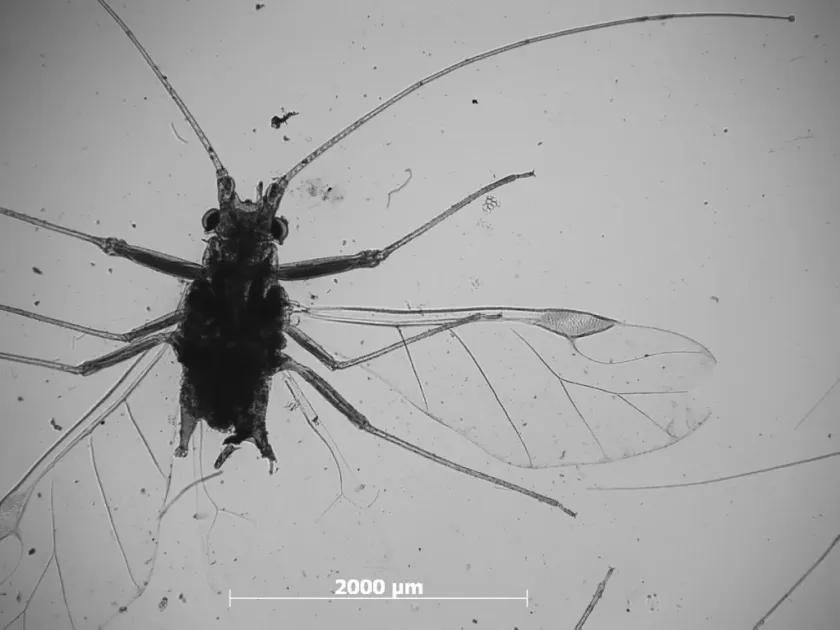
Adults are small, with a yellowish or pale green coloration that allows them to blend in with the leaf tissue. Their bodies often feature distinct abdominal tubercles and long antennae, which are key diagnostic features for entomologists.
The life cycle involves both winged and wingless forms, allowing for efficient colonization of new leaves within the canopy. During the summer, they reproduce through parthenogenesis, enabling rapid population explosions.
Eggs serve as the overwintering stage, laid securely within the crevices of the tree bark. This strategy ensures the survival of the species through harsh winter conditions, leading to re-infestation in the following spring.
As host-specific insects, they primarily target various species of the genus Acer. Their presence is often detected only after the population has reached significant levels, making early monitoring essential.
What it damages
Damage is caused by the extraction of phloem sap from the leaves, which stresses the host tree. This leads to reduced nutrient transport, weakened vigor, and increased susceptibility to environmental stressors.
Infested leaves often display curling, yellowing, and deformation, which drastically reduces the aesthetic value of ornamental maples. In severe cases, premature leaf drop can occur, exhausting the tree's energy reserves.
The secretion of honeydew is a significant secondary problem. This sticky substance promotes the growth of sooty mold, a dark fungal layer that covers the leaves and inhibits photosynthesis.
Weakened trees are far more likely to suffer from drought stress or winter damage. Over several seasons, repeated infestations can lead to stunted growth and the overall decline of individual branches or the entire tree.
For city landscapes and private gardens, the aesthetic impact is the primary concern, as the canopy becomes sparse and discolored, losing its decorative appeal throughout the summer months.
When it appears
The activity cycle begins in early spring, synchronized with the bud break of the maple host. The first generation of nymphs emerges from eggs and immediately begins feeding on tender shoots.
Peak populations are usually observed in late spring and early summer, particularly when temperatures are moderate and rainfall is sparse. During this time, multiple overlapping generations can occur in rapid succession.
As late summer approaches, the population may fluctuate due to predation by natural enemies like lady beetles and lacewings. However, without intervention, large colonies often persist well into autumn.
As temperatures drop, the aphids shift to sexual reproduction, producing overwintering eggs. These eggs are carefully placed on twigs and bark, marking the end of the primary feeding season.
Consistent monitoring should be focused on the period from May through July, as this is when the most significant damage occurs and when management strategies are most effective.
Signs of infestation
The most obvious sign of infestation is curled, twisted, or stunted leaves on the terminal growth. Inspecting the undersides of these leaves will typically reveal groups of aphids.
A sticky residue, known as honeydew, on the leaves and branches is a definitive indicator of aphid presence. This substance is frequently colonized by black sooty mold, creating a dirty appearance on the foliage.
Increased ant activity on the trunk and branches is a strong indirect sign. Ants act as tenders to the aphids, protecting them from predators in exchange for the sweet honeydew they produce.
Yellowing of the foliage, even when there is sufficient soil moisture, can be a symptom of sap depletion caused by heavy aphid feeding. This often leads to a visible decline in tree health.
Early-season leaf drop and a general lack of luster in the foliage are classic signs that the tree has been colonized for an extended period, requiring immediate inspection and corrective action.
Control measures
Managing the American maple aphid requires a mix of chemical and cultural practices. Systemic insecticides applied to the soil or trunk can provide effective long-term protection for valuable trees.
When applying contact insecticides, ensure thorough coverage, especially on the undersides of the leaves. Always follow label directions to protect non-target beneficial insects, such as pollinators.
Encouraging biological control is a sustainable strategy. By creating a habitat for natural predators like ladybugs, syrphid flies, and lacewings, the need for chemical intervention can be significantly reduced.
- Pruning out heavily infested branches to reduce the total pest population.
- Applying dormant oil sprays in early spring to eliminate overwintering eggs before they hatch.
- Using sticky barriers on the trunk to prevent ants from protecting the aphid colonies.
Successful control depends on timing applications during the early stages of infestation. Regular scouting of the canopy allows for targeted treatments, which are safer and more efficient for the environment.
Taxonomy
- Latin name
- Drepanaphis monelli
- Order
- Hemiptera (bugs, aphids, leafhoppers)
- Family
- Aphididae
- EPPO code
- DRENMO
Discussion
No discussions yet — be the first.