
Painted maple aphid
Drepanaphis acerifoliae
Description
How to identify
The Painted maple aphid (Drepanaphis acerifoliae) is an aphid species belonging to the family Aphididae. It is a highly specific pest that targets various maple species as its primary host plants.
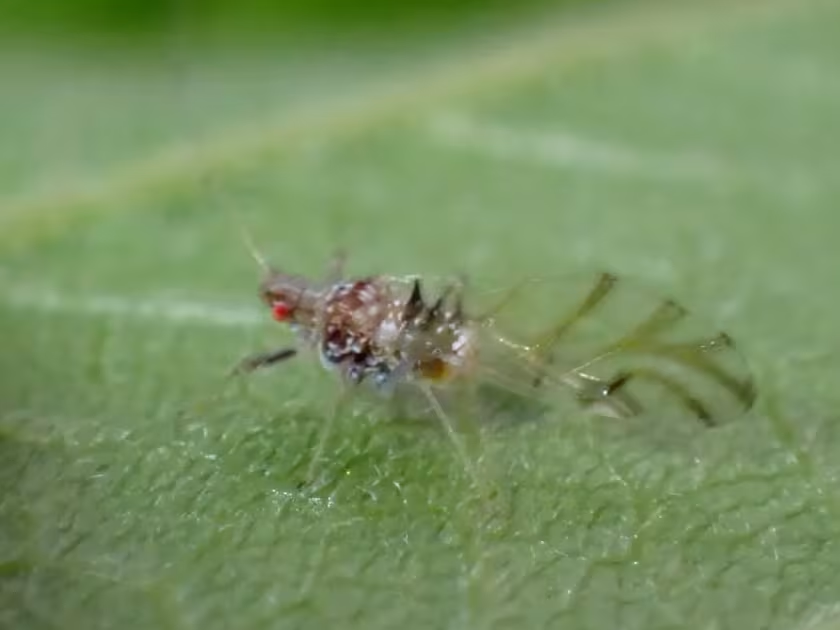
These insects are characterized by their elongated body shape and prominent siphunculi (cornicles). Their coloration is often pale green or yellow with distinct markings, providing camouflage on the underside of maple leaves.
The species completes its entire life cycle on the maple tree, overwintering as eggs in the crevices of bark on younger branches and twigs.
As spring temperatures rise, the eggs hatch into fundatrices (stem mothers), which initiate the first colonies as leaves begin to unfurl.
Throughout the growing season, the population increases through multiple generations of both winged and wingless forms, allowing the aphid to colonize the entire canopy rapidly.
What it damages
The Painted maple aphid primarily attacks species such as Norway maple and other deciduous maples. They prefer feeding on young, tender foliage where the sap flow is most nutrient-rich.
Heavy feeding by large colonies leads to significant physiological stress for the tree. The aphids extract vast amounts of phloem sap, which can stunt shoot growth and distort leaf development.
A major indirect impact of this pest is the production of copious amounts of honeydew. This sticky substance covers the leaves and branches, creating a favorable substrate for sooty mold fungi.
The development of sooty mold coats the leaves, effectively blocking sunlight and inhibiting photosynthesis, which can result in leaf yellowing and premature abscission.
In cases of severe infestation, the tree's overall vigor is compromised, leading to reduced winter hardiness and increased susceptibility to other environmental stressors.
Signs of infestation
The first indicator of an infestation is the curling and distortion of leaves. Close inspection of the abaxial (underside) surface of the leaves will reveal aphid clusters.
The presence of sticky honeydew on foliage and the ground beneath the tree is a classic symptom of an active aphid population. Ants are frequently observed crawling along branches, tending to the aphids to collect the honeydew.
Black, soot-like fungal growth on the leaves is a secondary sign that indicates a long-standing aphid presence, as the mold feeds directly on the honeydew deposits.
Premature leaf drop during mid-summer is a clear symptom of tree decline caused by excessive sap removal and blocked photosynthesis.
- Aphid colonies on leaf undersides.
- Sticky honeydew residue on foliage.
- Increased ant activity on the tree trunk.
- Sooty mold on leaf surfaces.
- Premature yellowing and leaf shed.
Control measures
Integrated Pest Management (IPM) is essential for managing the Painted maple aphid. Early detection through regular monitoring of the canopy during spring is critical for effective control.
For chemical control, systemic insecticides applied as soil drenches or foliar sprays can effectively eliminate populations. It is important to target the colonies before significant leaf curling occurs.
Biological control is highly effective if aphid-predators such as lady beetles, lacewings, and syrphid fly larvae are present. Reducing the use of broad-spectrum pesticides helps maintain these natural populations.
In nursery settings, regular inspections ensure that outbreaks are localized and treated quickly, preventing spread to healthy stock plants.
Maintaining tree health through proper irrigation and balanced fertilization helps trees withstand minor infestations and recover more effectively from potential feeding damage.
Taxonomy
- Latin name
- Drepanaphis acerifoliae
- Order
- Hemiptera (bugs, aphids, leafhoppers)
- Family
- Aphididae
- EPPO code
- DRENAC
Discussion
No discussions yet — be the first.