
Maple aphid
Drepanaphis
Description
How to identify
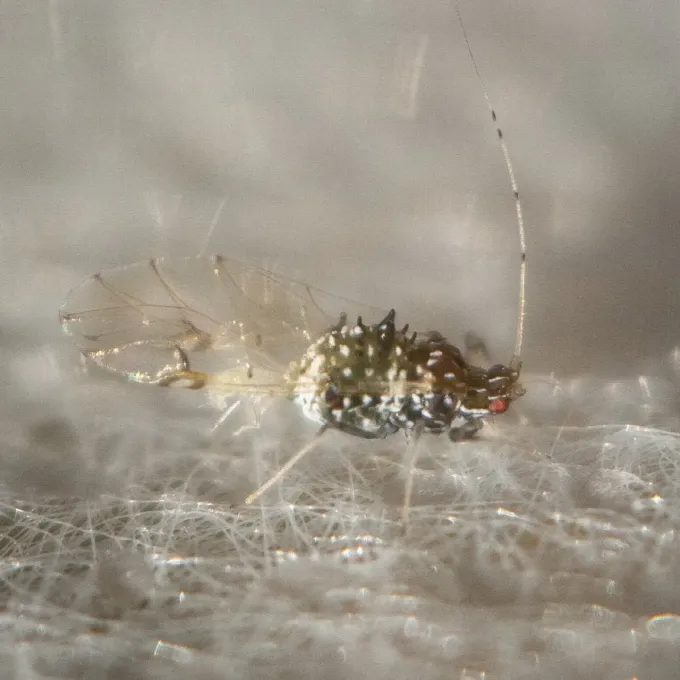
The maple aphid, belonging to the genus Drepanaphis, is a small insect within the family Aphididae (order Hemiptera). These aphids are highly specialized and adapted to feeding on specific host plants, primarily various species of maple trees.
Members of this genus are characterized by distinct abdominal tubercles and elongated cornicles, which are often dark-pigmented. Their body structure allows them to cling effectively to the underside of maple leaves where they congregate.
Their life cycle typically involves both sexual and asexual reproduction, allowing for rapid colonization of maple trees throughout the growing season. They are known for their ability to produce winged forms that migrate between parts of the canopy.
Overwintering occurs in the egg stage, with eggs laid in protected sites like bark crevices on the host tree. As temperatures rise in spring, these eggs hatch, leading to the rapid development of new aphid populations.
Identification is best achieved by inspecting the underside of leaves and along leaf veins, where these aphids form dense colonies. Their specific morphology under magnification is a key factor for precise identification.
What it damages
The primary hosts for Drepanaphis are maple trees (Acer species), including the sugar maple, silver maple, and Norway maple. The aphids specifically target tender new growth during the spring and early summer.
By piercing the plant tissues and extracting sap, they cause a nutrient deficit that weakens the host tree. This depletion can result in diminished vigor and reduced resistance to environmental stressors.
Severe infestations can lead to leaf yellowing, early leaf drop, and stunted growth in young saplings. While mature trees are often more resilient, they may still show signs of decline under heavy pressure.
The aesthetic damage is also significant, as the aphids compromise the appearance of the foliage, which is particularly problematic for ornamental trees in parks and residential gardens.
Secondary damage occurs when the tree is weakened to the point where it becomes susceptible to opportunistic diseases and other wood-boring pests that take advantage of the compromised vitality.
Signs of infestation
A hallmark sign of a Drepanaphis infestation is the production of honeydew, a sticky, sugary substance excreted by the aphids that coats the surface of the leaves.
This honeydew serves as a growth medium for sooty mold, a fungus that covers the leaves in a black, powdery substance. This inhibits photosynthesis and gives the tree a distressed, unsightly appearance.
Leaf curling and deformation are common symptoms of aphid feeding, as the insects introduce saliva into the plant that can cause localized growth irregularities in the leaf tissue.
Increased ant activity on the tree is a strong indicator of an aphid colony. Ants act as tenders, protecting the aphids from predators in exchange for the sugary honeydew produced by the insects.
- Sticky honeydew on foliage and surrounding surfaces.
- Black, powdery sooty mold growing on leaves.
- Twisted, curled, or yellowing leaves.
- Visible colonies of aphids on the undersides of leaves.
- Increased presence of ants patrolling branches.
Control measures
Cultural control practices, such as maintaining proper tree hydration and balanced fertilization, are essential for ensuring that maple trees remain robust enough to withstand aphid feeding.
For minor infestations, mechanical control such as spraying affected leaves with a sharp stream of water can physically dislodge and kill many aphids without the use of chemical agents.
If the infestation reaches threshold levels, systemic insecticides or horticultural oils may be required. These should be applied carefully, keeping in mind the safety of beneficial insects and the surrounding environment.
Encouraging biological control is highly recommended. Predators such as lady beetles, lacewings, and syrphid fly larvae are natural enemies that can effectively suppress aphid populations if their habitat is preserved.
Regular monitoring from early spring onwards allows for early intervention, preventing the build-up of massive populations that are much harder to manage during the mid-summer peak.
Taxonomy
- Latin name
- Drepanaphis
- Order
- Hemiptera (bugs, aphids, leafhoppers)
- Family
- Aphididae
- EPPO code
- DRENSP
Discussion
No discussions yet — be the first.