
Bulb stem nematode
Dolichorhynchus lamelliferus
Description
How to identify
Dolichorhynchus lamelliferus is a microscopic worm classified as a nematode. Taxonomically, this species belongs to the family Dolichodoridae, within the order Tylenchida.
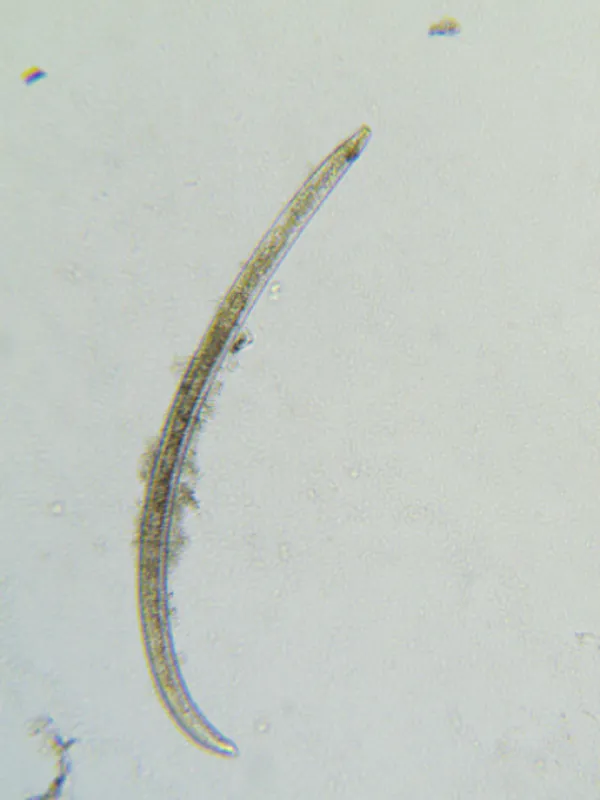
The adult body is thread-like and nearly transparent, typically measuring between 1 and 1.5 mm in length. Due to its minute size, detection with the naked eye in soil or plant tissues is practically impossible.
A key diagnostic feature of this genus is the presence of a distinct needle-like organ called a stylet, which the nematode uses to pierce plant cell walls to extract nutrients.
Unlike many other plant-parasitic nematodes, this species primarily leads an ectoparasitic lifestyle, inhabiting the rhizosphere and feeding on the surface tissues of roots.
The life cycle encompasses an egg stage, four larval stages, and an adult stage. The speed of development is highly dependent on soil temperature and moisture content.
What it damages
This pest affects a wide range of agricultural, vegetable, and ornamental crops, with bulbous plants being particularly vulnerable to its feeding activity.
The primary damage to bulbous plants involves the invasion of the basal plate and scales, which often results in tissue softening and subsequent decay during storage or growth.
Damage to the root system inhibits the plant's ability to absorb water and essential nutrients, leading to stunted growth and the development of chlorosis.
Feeding wounds often serve as entry points for secondary pathogens, such as fungi and bacteria, which accelerate tissue destruction and total plant death.
The severity of the damage is often amplified in heavy, waterlogged soils where the movement of the nematode through soil pores is significantly facilitated.
When it appears
Nematode activity typically commences in the spring once soil temperatures rise to a level conducive to the pest's metabolic processes.
During the summer months, given sufficient soil moisture, mass reproduction occurs, leading to a significant increase in the pest population within the soil.
As autumn approaches and temperatures drop, the nematode enters a state of diapause or slows its vital processes, overwintering in the soil or in root residues.
The highest risk of infestation occurs during phases of active root growth, as nematodes are highly mobile and actively migrate towards potential food sources.
In greenhouse or indoor conditions, Dolichorhynchus lamelliferus can maintain a continuous life cycle throughout the entire calendar year.
Signs of infestation
Visual symptoms of infestation often appear as patches of stunted plants that lag significantly behind healthy specimens in growth and development.
Leaves of affected plants often turn yellow, curl, or become deformed, reflecting the internal stress caused by the disruption of the root system.
Detailed examination of underground parts, such as bulbs or roots, often reveals necrotic lesions or areas characterized by browning and tissue rot.
- Stunted development of aerial parts;
- Softening and rotting of the bulb basal plate;
- Discoloration and necrosis of lateral rootlets;
- Presence of secondary fungal or bacterial rots.
If left unmanaged, the infestation patches within a field or garden bed will expand rapidly, resulting in localized areas of crop failure or plant death.
Control measures
A primary strategy for control is strict adherence to crop rotation, which deprives the nematode of its specific host plants for several seasons, thereby reducing its population.
The use of high-quality, certified, and disinfected planting material is essential to prevent the introduction of this pest into previously uncontaminated fields.
Removing infested plants along with the surrounding soil is a necessary procedure to isolate and contain outbreaks, preventing further spread of the infestation.
Cultural practices, such as deep plowing and soil pH adjustment, create environments that are significantly less favorable for nematode survival.
In cases of severe infestation, specialized nematicides may be applied, though their use must strictly follow safety regulations due to their high environmental impact.
Taxonomy
- Latin name
- Dolichorhynchus lamelliferus
- Order
- Nematodes
- Family
- Dolichodoridae
- EPPO code
- TYLRLA
Discussion
No discussions yet — be the first.