
Russian wheat aphid
Diuraphis
Description
How to identify
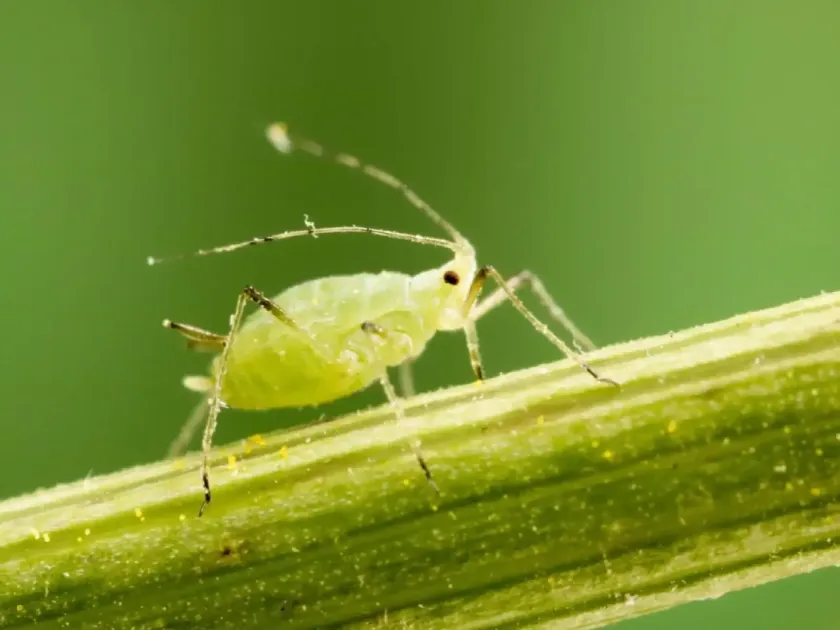
The Russian wheat aphid (Diuraphis noxia) belongs to the Aphididae family. It is a small, light green insect characterized by a distinct projection on the posterior part of the abdomen that resembles two tails or small teeth.
Unlike many other aphid species, it has very short antennae and short siphunculi (cornicles) on its abdomen, which gives it a somewhat streamlined appearance.
The adult aphid is approximately 2 mm long and spindle-shaped. It exists in both winged (alatae) and wingless (apterous) forms, allowing for rapid colonization of host plants.
The species is highly specialized to feed on small grain cereals, and its saliva contains specific toxins that cause systemic damage to plant tissues upon feeding.
The population growth rate is extremely high, especially in optimal temperatures, which can lead to severe infestations in a short period of time.
What it damages
This pest is a major threat to wheat, barley, and triticale crops. It feeds by extracting phloem sap, simultaneously injecting toxic compounds into the plant.
The damage is not just due to sap removal; the injected toxins interfere with the plant's growth processes, causing severe stunting and discoloration.
Losses can be significant in terms of both grain yield and quality. In severely infested fields, the total collapse of the wheat crop is possible if left uncontrolled.
In addition to direct damage, it serves as an efficient vector for several plant viruses, such as Barley Yellow Dwarf Virus (BYDV), which further harms the crop.
The damage is most severe during the tillering and elongation stages, which are critical periods for grain development and yield potential.
When it appears
Infestation usually begins in early spring as temperatures rise, with aphids migrating from overwintering sites or volunteer cereals into new crops.
Warm, dry weather is ideal for its development, leading to rapid increases in aphid populations and potential outbreaks during the summer.
In the autumn, the pest moves onto newly emerged winter cereal seedlings, where it will spend the winter to initiate the cycle for the following year.
The life cycle is complex, involving multiple generations per season through parthenogenesis, meaning a large population can arise from very few initial individuals.
Understanding the seasonal patterns is crucial for timing scouts and implementing preventative measures before the aphid population reaches critical levels.
Signs of infestation
The most diagnostic sign is the presence of white, yellow, or purple longitudinal streaks on the leaves, which are the result of the aphid’s toxic saliva.
Leaves tend to roll tightly inwards, forming protective tubes that shield the aphids from both natural predators and applied insecticides.
Infested plants often display stunted, prostrate growth, and ears may become trapped in the flag leaf sheath, resulting in empty or malformed grain heads.
Stunted growth, chlorosis, and the failure of tillers to develop properly are common symptoms in fields with heavy aphid pressure.
Visible colonies of small green insects can be found inside the rolled leaves, accompanied by the presence of honeydew and potentially sooty mold growth.
Control measures
Effective management relies on scouting and economic threshold assessments to decide when chemical intervention is necessary to prevent significant damage.
Chemical control focuses on the use of systemic insecticides that are absorbed by the plant, providing residual protection against feeding aphids.
Integrated Pest Management (IPM) strategies emphasize the use of natural enemies, including parasitic wasps, lady beetles, and hoverflies.
- Planting resistant or tolerant cereal varieties.
- Controlling volunteer wheat and grassy weeds before planting.
- Adjusting planting dates to avoid peak aphid flight periods.
Rotation of insecticides with different modes of action is essential to manage the risk of resistance, which is common in highly mobile pest populations.
Taxonomy
- Latin name
- Diuraphis
- Order
- Hemiptera (bugs, aphids, leafhoppers)
- Family
- Aphididae
- EPPO code
- DIURSP
Discussion
No discussions yet — be the first.