
Potato leafhopper (Dikraneura carneola)
Dikraneura carneola
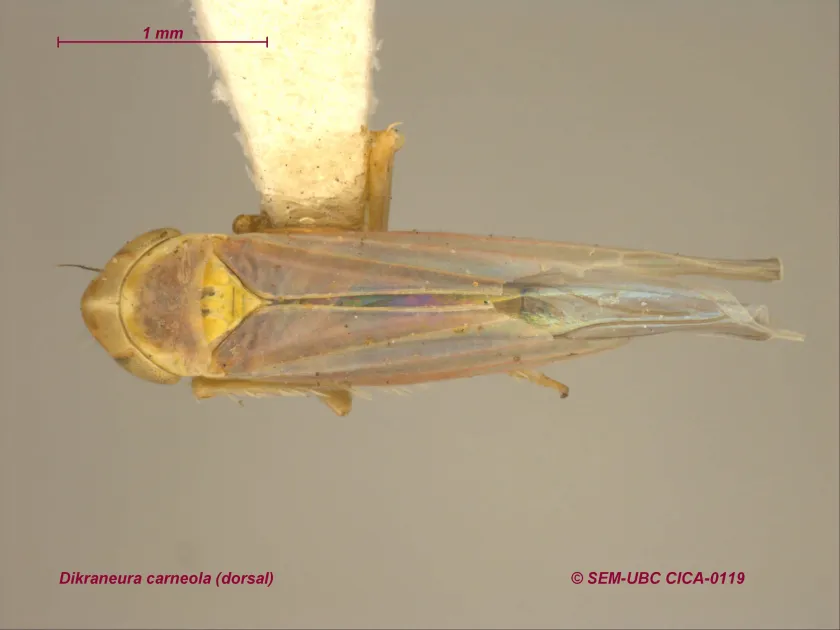
Description
How to identify
The potato leafhopper, scientifically classified as Dikraneura carneola, is a small insect belonging to the Cicadellidae family. It is recognized by its slender, pale green or yellowish body that provides excellent camouflage against potato foliage.
Adult insects typically measure about 3 to 4 millimeters in length. They possess long, folded wings that allow them to jump and fly quickly when the plant is disturbed during field inspections.
Nymphs resemble smaller versions of the adults but are wingless. They are often found on the underside of leaves, where they undergo several molts before reaching maturity.
These insects have a specialized piercing-sucking mouthpart designed to penetrate leaf veins and feed on plant sap, which is their primary source of nutrition.
Due to their small size and rapid movement, they are often overlooked until significant damage to the crop becomes visible to the agronomist.
What it damages
This pest primarily targets potato plants, but it also colonizes other Solanaceous crops, often causing severe stress to the plant's vascular system.
By extracting sap, the leafhopper deprives the plant of essential nutrients and moisture, which leads to reduced photosynthesis and overall stunted development.
The saliva injected during feeding often contains toxins that cause localized damage to plant cells, leading to chlorosis and necrotic lesions on the leaves.
Beyond physical injury, Dikraneura carneola is known to facilitate the transmission of various pathogens, increasing the risk of virus spread within the field.
Heavy infestations can significantly lower the yield of tubers, as the plant lacks the energy reserves required for proper development during the growing season.
When it appears
The life cycle begins in early spring, as rising temperatures trigger the emergence of nymphs from eggs that overwintered on plant debris or nearby vegetation.
The population density typically peaks during mid-summer, coinciding with the rapid growth phase of the potato crop and favorable weather conditions.
The insect produces multiple generations per season, allowing its numbers to increase exponentially if not controlled early in the year.
Cooler autumn temperatures signal the end of the active feeding period, leading the insects to seek overwintering sites in soil or perennial weeds.
Environmental factors, such as humidity and temperature, play a critical role in the rate of development, with warm and dry summers being particularly conducive to outbreaks.
Signs of infestation
The earliest symptom of an infestation is the appearance of tiny, light-colored spots on the leaves, a condition commonly referred to as stippling.
As feeding continues, these spots merge, causing the leaf margins to turn yellow and eventually curl upward, resulting in a burnt, brittle appearance.
Agronomists should examine the underside of leaves to find the insects or their cast skins, which are indicative of an established population.
Stunted growth, uneven foliage color across the field, and premature wilting are strong indicators that the leafhopper population has reached a damaging level.
In severe cases, the entire plant may collapse prematurely, leading to a significant reduction in tuber size and quality at harvest time.
Control measures
Effective management begins with robust sanitation practices, such as removing crop residues and weeds that serve as alternative hosts for the pest.
Crop rotation remains a fundamental strategy to disrupt the life cycle of the leafhopper and prevent it from accumulating in the same field over multiple years.
Chemical control involving systemic insecticides is recommended when pest counts exceed the established economic threshold for the region.
- Utilizing targeted insecticide applications during the early nymph stage.
- Encouraging natural predators, such as lady beetles and lacewings, which provide biological suppression.
- Deploying yellow sticky traps for consistent monitoring and early detection of adult migration.
Regular field scouting is essential to identify the start of an infestation and ensure that protection measures are implemented at the most vulnerable stage of the insect's life cycle.
Taxonomy
- Latin name
- Dikraneura carneola
- Order
- Hemiptera (bugs, aphids, leafhoppers)
- Family
- Cicadellidae
- EPPO code
- DIKRCA
Discussion
No discussions yet — be the first.