
Dictyna
Dictyna
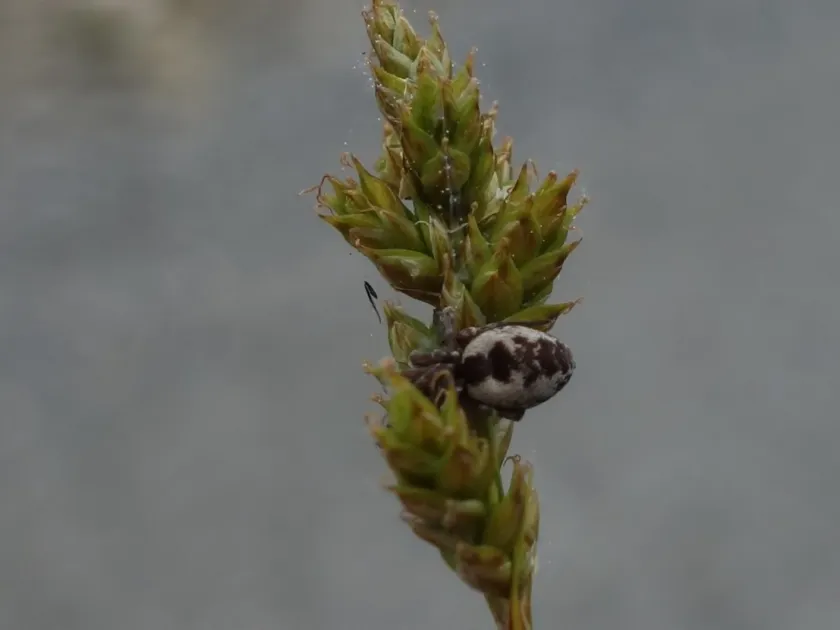
Description
How to identify
Dictyna is a genus of spiders belonging to the family Dictynidae, order Araneae. These are small, non-aggressive spiders that often inhabit agricultural crops, ornamental bushes, and field vegetation.
The body size of an adult spider usually ranges from 2 to 5 mm. Their coloration is generally cryptic, varying from gray to dark brown, which provides excellent camouflage against bark or leaves.
A key identifying feature is their ability to produce cribellate silk. This creates a distinctive, messy, woolly appearance in their webs, typically located on the terminal parts of plant branches.
Females are sedentary and remain within or near the center of their nest to protect egg sacs. This behavior makes them easy to identify during the peak of the growing season when looking for spider colonies.
While they are technically predators, their presence is often viewed as a nuisance in commercial agriculture, particularly in greenhouses and nurseries where cleanliness is essential for product quality.
What it damages
Dictyna spiders are not phytophagous; they do not feed on plant tissues or sap. However, their physical presence and web-building activities can cause significant secondary damage to crops.
The dense, woolly webs trap excess moisture, creating micro-environments suitable for fungal pathogens. This often leads to the growth of sooty mold on the foliage, which blocks sunlight and hinders photosynthesis.
For ornamental plants and flowers, the presence of webs reduces market value and aesthetic appeal. Plants infested with these nests may look neglected and poorly maintained, which is a major concern for growers.
The mechanical stress caused by the web, which often ties young leaves together, can lead to stunted growth or deformation of terminal buds, affecting the overall vigor of the plant shoots.
Furthermore, the accumulation of organic debris, dust, and spider waste on the leaves can clog leaf stomata, potentially impacting the gas exchange and metabolic processes of the host plant.
When it appears
Activity typically begins in early spring as temperatures rise, allowing the spiders to emerge from their overwintering sites and begin building new webs on young plant growth.
The population reaches its peak density during the summer months. During this period, reproductive cycles are in full swing, and nests become more widespread across the vegetation.
As autumn approaches, activity decreases. The spiders seek refuge in protected areas such as bark crevices, dried stems of perennials, or piles of leaf litter near the base of the plants.
The duration of the life cycle is heavily influenced by regional climatic conditions. High ambient humidity tends to promote more robust web construction and colonization by the spiders.
In indoor environments or glasshouses, the life cycle may extend throughout the year if climate control systems keep the temperature stable, necessitating year-round monitoring.
Signs of infestation
The primary sign of infestation is the presence of small, woolly-looking clumps of webbing on the tips of branches or within flower clusters. These webs are quite distinct from those of orb-weaving spiders.
Close inspection reveals curled or distorted leaves surrounding the webbed area. The spiders use the foliage as a structural foundation, causing the leaves to grow in unnatural positions.
Observing small spiders within these nests confirms their presence. During dry periods, dust particles adhere to the woolly silk, making the nests much easier to spot against the green foliage.
Development of dark, discolored patches on the leaves beneath the web indicates the growth of secondary microorganisms thriving in the damp conditions generated by the nest.
Reduced shoot elongation and a general lack of vigor in the terminal growth points are tell-tale signs that a plant has been subjected to prolonged occupation by a spider colony.
Control measures
Cultural control is the most effective strategy. Removing plant debris, dead flower stalks, and overwintering habitats during the winter and early spring is vital for population management.
- Manual removal of webs during routine garden maintenance;
- Proper pruning to improve air circulation and sunlight penetration;
- Maintaining optimal irrigation to avoid excessive moisture accumulation on leaves;
- Using biological control agents if the spider population becomes excessively high.
Chemical control is rarely necessary for Dictyna spiders. If treatment is deemed essential, use products with a low impact on beneficial insects to ensure that natural enemies of other pests remain present.
Consistent monitoring and early detection allow for manual intervention, which is usually sufficient to manage the population without the need for broad-spectrum synthetic pesticides.
Taxonomy
- Latin name
- Dictyna
- Family
- Dictynidae
- EPPO code
- DICNSP
Discussion
No discussions yet — be the first.