
Citrus whitefly
Dialeurodes vulgaris
Description
How to identify
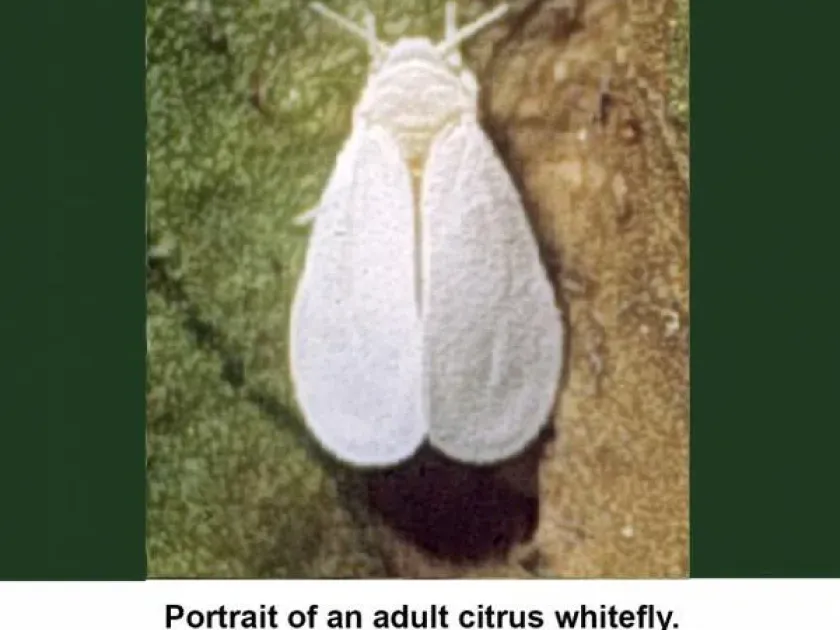
The citrus whitefly (Dialeurodes citri) is a member of the Aleyrodidae family within the Hemiptera order. Adults are small insects, approximately 3 mm in length, with wings covered in a characteristic white powdery wax.
The adult stage is mobile, often seen flying near the plant canopy during the day. In contrast, the larval stages are sessile, remaining attached to the underside of leaves throughout their development.
Females lay eggs in dense clusters, which then hatch into crawlers. These crawlers have functional legs for a short period before they attach themselves to the host tissue to begin feeding.
The life cycle involves incomplete metamorphosis, including the egg, nymph (four stages), and adult stages. Depending on environmental conditions, multiple generations can occur per year.
Overwintering typically occurs as late-stage larvae on the undersides of leaves. In climate-controlled environments like greenhouses, the whitefly can continue breeding throughout the entire year.
What it damages
This pest primarily targets citrus species, including lemons, oranges, and grapefruits. It also frequently infests ornamental plants such as gardenias, laurels, jasmines, and coffee plants.
Larvae feed by extracting sap from the leaves, causing chlorosis, leaf curling, and overall plant weakening. Severe infestations can result in stunted growth and total leaf drop.
The insects excrete a sugary substance known as honeydew. This honeydew serves as a growth medium for sooty mold, a fungus that covers the leaves and blocks essential sunlight.
Significant infestations reduce the plant's photosynthetic capacity, leading to decreased fruit quality and yield. The economic impact is particularly high in citrus orchards and commercial nurseries.
Infested plants become highly susceptible to stress and secondary infections. Managing the pest is essential to maintain the health and aesthetic value of the affected vegetation.
Signs of infestation
The most noticeable sign of an infestation is a cloud of tiny white insects flying up when the plant foliage is agitated. This is a clear indicator of a mature population present on the plant.
Upon inspecting the underside of the leaves, small, flat, yellowish-green nymphs can be seen attached to the plant tissue. They are often stationary and resemble small, waxy scales.
The presence of a sticky, shiny substance on the leaves is a primary symptom of honeydew secretion. This often leads to the development of black, powdery sooty mold on the foliage surface.
Leaves may exhibit yellowing or mottled spots where the larvae have been feeding. Over time, these leaves often become brittle and drop off prematurely, weakening the tree.
An increased presence of ants on the plant is a common indirect sign, as they are attracted to the honeydew produced by the whitefly colonies.
Control measures
Managing the citrus whitefly requires an integrated pest management (IPM) approach that combines physical, biological, and chemical control methods to be effective.
Physical controls include pruning infested branches and washing foliage with water to dislodge nymphs. Maintaining proper ventilation in greenhouses helps to create unfavorable conditions for the pest.
Biological control is highly effective, particularly the use of the parasitoid wasp Encarsia formosa. These beneficial insects target the whitefly larvae and help maintain population levels below economic thresholds.
Chemical control involves the use of systemic insecticides, such as neonicotinoids or insect growth regulators. Applications should be timed carefully to address all developmental stages of the pest.
- Deploy yellow sticky cards to monitor adult flight and population density.
- Apply systemic insecticides to ensure control of feeding nymphs.
- Introduce predatory wasps or beetles as natural enemies in greenhouses.
- Clean leaves periodically with insecticidal soaps to remove honeydew and sooty mold.
- Quarantine new plants to prevent the introduction of whitefly into existing areas.
Taxonomy
- Latin name
- Dialeurodes vulgaris
- Order
- Hemiptera (bugs, aphids, leafhoppers)
- Family
- Aleyrodidae
- EPPO code
- DIALVU
Discussion
No discussions yet — be the first.