
Pale whitefly
Dialeurodes pallida
Description
How to identify
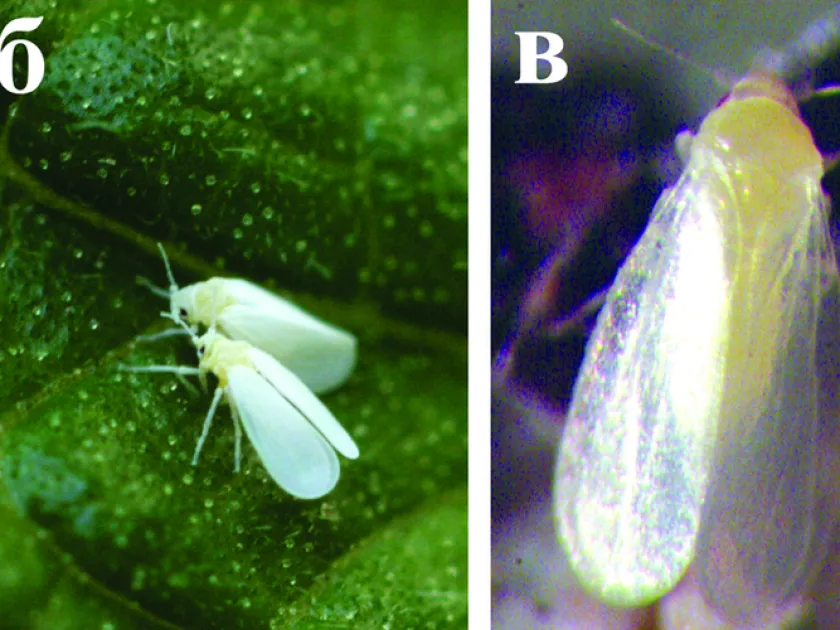
The pale whitefly (Dialeurodes pallida) is a small insect belonging to the family Aleyrodidae, within the order Hemiptera. Adults are characterized by their pale, whitish wings covered in a fine waxy powder, usually reaching a size of 2–3 mm.
The life cycle consists of the egg stage, the nymphal stage (often referred to as the puparium in later instars), and the winged adult. Nymphs are typically flat, immobile, and translucent, making them difficult to spot on leaf undersides until high populations develop.
These insects thrive in warm and humid environments, which makes greenhouses and sheltered agricultural areas ideal for their proliferation. They reproduce sexually, and females lay clusters of eggs on the undersides of young leaves.
Due to their high reproductive rate and mobility, they can spread rapidly across a field or glasshouse. The ability to complete multiple generations per season is a hallmark of their persistent nature as a pest.
Identification is best confirmed through visual inspection of the leaf underside and the use of sticky yellow traps. Monitoring these traps provides an accurate assessment of the population level and identifies the presence of adults early in the season.
What it damages
The pale whitefly is a polyphagous pest, meaning it feeds on a wide range of host plants, including ornamentals, vegetables, and various tree species. Damage is caused by the insect using its piercing-sucking mouthparts to extract plant sap.
Heavy feeding removes essential nutrients from the plant, leading to stunted growth, reduced vigor, and chlorotic spotting on leaves. In severe cases, this results in significant yield reduction and the loss of crop quality.
A major indirect threat is the production of honeydew, a sugary byproduct of the insect's feeding. This honeydew coats the leaves, providing an ideal substrate for the growth of sooty mold, which is a black fungal layer.
The sooty mold covering the leaf surface interferes with the plant’s ability to photosynthesize, further weakening the plant and potentially leading to premature leaf drop. This combination of sap extraction and mold growth can be devastating to production.
Furthermore, whiteflies act as vectors for various plant viruses. Once the pest transmits a virus to a host, the infection spreads throughout the plant, often causing systemic damage that cannot be cured with insecticides.
Signs of infestation
The most recognizable sign is the presence of small, white, moth-like insects that flutter away when the foliage is disturbed. This indicates an active infestation that requires attention.
Examination of the underside of leaves will reveal clusters of tiny, translucent nymphs or egg deposits. Their presence may also be indicated by irregular yellowing or chlorosis, which develops where the insects have been feeding for prolonged periods.
Sticky residue on the leaves or stems is a strong indicator of honeydew production. If left unchecked, this residue will darken as sooty mold colonizes the area, creating a dirty, dark appearance on the plant surfaces.
Plant leaves may appear wilted, curled, or distorted, particularly at the terminals. As the plant loses vitality, growth slows down, and the overall plant structure becomes weak and unsightly.
Ant activity on plants can also signal an infestation. Ants are attracted to the sugary honeydew excreted by the whiteflies and will often protect the whitefly colony from natural predators, complicating biological control efforts.
Control measures
Effective management begins with good cultural practices, such as removing infested plant debris and controlling weeds that might serve as alternative hosts during the off-season.
Biological control methods include the introduction of natural enemies, such as parasitic wasps of the Encarsia genus. These predators specifically target the nymphal stages, helping to keep whitefly populations at manageable levels.
Chemical control should focus on the use of systemic insecticides that are taken up by the plant tissue. These are particularly effective against sucking insects, though they must be used carefully to avoid harming beneficial pollinator populations.
Maintaining a regular schedule of monitoring with yellow sticky traps allows for early detection. Timely application of products, ideally during the early stages of an infestation, is essential to prevent rapid population explosions.
After the harvest, thorough sanitation of the growing area is crucial. Cleaning structures and removing all plant material ensures that pupae and adult whiteflies do not survive the winter to infest the next crop cycle.
Taxonomy
- Latin name
- Dialeurodes pallida
- Order
- Hemiptera (bugs, aphids, leafhoppers)
- Family
- Aleyrodidae
- EPPO code
- DIALPA
Discussion
No discussions yet — be the first.